

Introduction: Cinema as Narrative Power
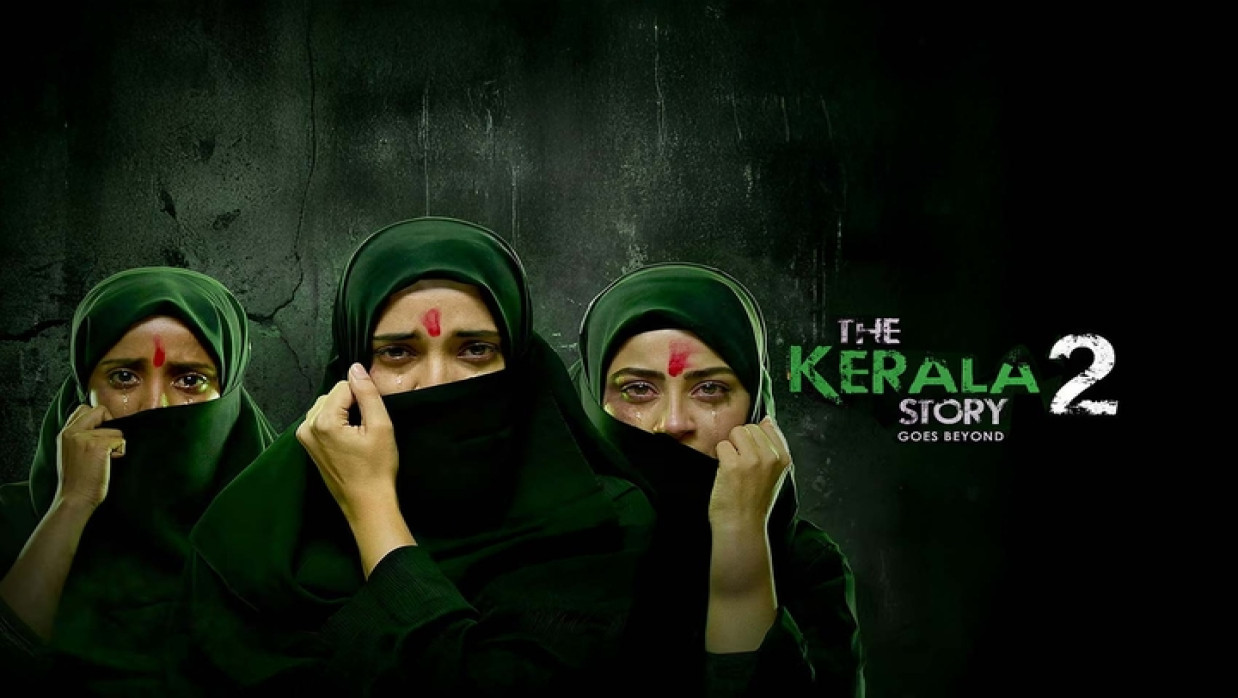
Movies have never been "just movies" in South Asia. Bollywood has long been used to produce memories of the nation and anxieties about Indian politics. Recently, though, in the last 10 years or so, there has been a disturbing trend of films coming out depicting Pakistanis and Muslims as threats to Indian security, culture, and harmony. Many of these movies closely follow the ideology of the BJP and the RSS. One film causing quite a controversy right now is The Kerala Story, due to its blatant lies exaggerating "love jihad" and Muslim radicalization. It's currently doing well at the box office and has received praise from BJP politicians. Bollywood reflects the societies we live in. So to understand films like this, we have to look at who's supporting them: the BJP.
Bollywood and the Politics of Representation
Movies have held a special place in Indians' imagination since independence. Before the 1990s, Bollywood movies had reflected India's pluralist ethos, where Muslims were fellow citizens who contributed to the Indian nation through poetry (Mirza Ghalib), bravery (Mother India), music (Aradhana), etc. Muslim characters were also portrayed sympathetically as victims in some movies, such as Garam Hawa.
Post 1990s (following the Babri Masjid demolition and Hindu right-wing ascendance), Muslims were increasingly portrayed as terrorists, infiltrators, or ideological enemies (Ghajini). Pakistan soon became Bollywood's favorite enemy villain.
Post-2014, with the BJP sweeping to power at the center, the movies seem to have picked up speed. Uri: The Surgical Strike. Then came The Kashmir Files. Mission Majnu. Just last week, The Kerala Story was released to much fanfare. These movies highlight threats to national security emanating from Muslims or Pakistan.
Pakistanophobia aside, these movies often do not distinguish between terrorism and Islam. Framing long-standing geopolitical issues as tales of national pride taps into people's emotions and clouds the larger reality. When India is politically polarized, movies that reinforce one's ideological worldview are guaranteed crowd-pullers.
The Ideological Context: Hindutva and Cultural Messaging
Ideologically, many of these films subscribe to Hindutva. Hindutva is the right-wing ideology that seeks to promote India as a Hindu nation-state. Muslims are seen through this lens as invaders/settlers and/or as a threat to Hindu hegemony through their higher birth rates.
Movies inspired by this ideology tend to have common themes of terrorism imported from across the border (read: Pakistan)
Schemes to convert Hindus to Islam
Fear of Muslims outbreeding Hindus
Treason committed by Muslims within India
Period drama with religious overtones
No single movie is an outright propaganda, but the collective milieu normalizes aggression against minorities.
Movies form part of this ecosystem. Hate speech by politicians, debates on news channels, online trolling, and voter campaigns are among others.
Movie Title: The Kerala Story, Story, Facts, Drama
Synopsis: According to The Kerala Story, Hindu and Christian girls are lulled into false relationships by ISIS recruiters, converted to Islam, and then transported across the border.
The Kerala Story is another film produced by Vipul Amrutlal Shah and directed by Sudipto Sen. It claims to portray the "rescue" of Hindu and Christian girls "radicalized" by ISIS recruiters.
In promotions for the film, Shah claimed that Islamic terror groups had recruited 32,000 women from Kerala.
He later stated under oath that neither 32,000 nor any other number was factual and that the film was fictional.
Despite Shah's statement, his initial version of events was widely used to advertise the movie. In the film, a young Hindu woman is allegedly duped by her boyfriend and an ISIS recruiter. She's flown across the border and becomes a terrorist training camp recruit. Later, she's asked to become a suicide bomber.
Political opponents of the BJP claimed that The Kerala Story grossly exaggerated real-life incidents and inflated them into a national conspiracy theory. Congress MP Shashi Tharoor tweeted, "How many love-jihadis are we talking about? Dozens in several years. Why make a travesty of real lives by turning them into jingoistic wallpaper?"
Concept of love jihad exploited in Bollywood flick
Accusations of love jihad have featured heavily in The Kerala Story. Love jihad is the false claim that Muslim men target women from other communities for conversion to Islam. Several probes by police forces and courts across India have found no evidence of a conspiracy. Yet claims of love jihad remain prevalent both in political rhetoric and entertainment. Movies especially help normalize the idea. If you spend two hours watching a tearjerker about sweet relationships being used against Hindu women, you might believe it happened before. Especially when India has 1.3 billion people, and many don't interact with other religions that don't live in their city or state.
Political Promotion and Electoral Timing
What surprised many about The Kerala Story was its political backing. Senior BJP leaders campaigned for it during the elections. Screenings for select audiences, including young women, were also arranged. It was even announced tax-free in multiple BJP-ruled states, helping it rake in huge box office numbers. Little did movie-goers know that this movie was part of a political communication campaign. Politics in India has always used cinema to push certain agendas during elections. What's different now is how film narratives match party messaging.
Constructing the "Internal Enemy"
Movies like The Kerala Story are part of a larger storytelling arc. Instead of casting Pakistan as our enemy, we're taught to fear and suspect those within India.
It matters.
These stories equate Indian Muslims with terrorists and extremist plots. They erase the line between everyday citizens, entire communities, and terror groups. They normalize suspicion and divide.
Film becomes a means of training us in how to see as insiders and outsiders.
The Pakistan Trope in Bollywood Storytelling
Running alongside India Muslim Enemy films is the continued representation of Pakistan as India's biggest external enemy.
Whether it is spy thrillers or war films, Pakistan's intelligence agencies and military officers are staple villains. Pakistan is often reduced to convenient storytelling tropes of India's macho heroes triumphing over traitorous villains.
India and Pakistan do have security issues. But rather than exploring the grey areas, films often peddle negative stereotypes.
Back when America was at war with Russia, Hollywood had no qualms painting Moscow as evil, either.
Media Ecosystems and Narrative Reinforcement
Movies don't exist in a vacuum. The ideas they project intersect with television debates, WhatsApp forwards, and political leaders' speeches.
If it aligns with a narrative already dominant in political conversations, the film finds new validation. Audiences receive the same messaging through several channels. Each repetition legitimizes the information further.
Think about it.
Political leaders mention scenes from movies in their speeches at rallies
News channels discuss whether they are "factually correct."
Social media memes forward scenes from the movie as proof
Sometimes teachers ask you about it in school, too!
Movies then become a way to spread political ideas far and wide.
Money isn't losing sleep over political correctness
The other reason filmmakers make movies like this is money.
Movies with hyper-nationalistic themes are booming at the box office. Patriotic movies make audiences react. They know how to whip up fandom and get audiences to turn up for movies that validate their identities as Indians.
Movie producers don't want to risk rejecting hyper-nationalistic politics. The Kerala Story earned hundreds of crores worldwide. If it's doing well, why wouldn't they want to make more?
Awards, Recognition, and Cultural Legitimacy
The awarding of the film at national-level award functions courted further controversy. It was felt that rewarding a film that had drawn sharp criticism for propagating falsehoods belittled India's rich heritage of pluralism in cinema. Others said that artistic merit and freedom of speech should be the criteria.
Regional Resistance and Public Protest
Many Indians didn't simply endorse the ideology that the film expressed. Political parties and sections of civil society in Kerala, Tamil Nadu, and West Bengal agitated against screenings, arguing that the film stoked communal discord. State governments briefly banned portions of the film for fear of communal disharmony.
Indian audiences, then, are not unified and agree in their reading of films promoting nationalism. Debates over films like these question the nation's secular nature.
Cinema and the Manufacturing of Consent
Political scientists have shown how cultural production helps manufacture consent for policy agendas. Film is one medium through which citizens learn to make sense of insecurity, demographic shifts, and national belonging.
Films that consistently cast Muslims as ideological threats or Pakistan as America's eternal foe reinforce narratives that legitimize spying, exceptionalist policies, or hyper-militarized discourse.
These stories change what citizens expect about national membership over time.
Historical Memory and Selective Storytelling
Selectivity of History is another facet of the same problem.
Movies focused on Islamic extremism never bother to show Muslim contributions to India's freedom struggle or literary or cultural achievements. They also don't bother to show diversity among Muslims themselves.
By being selective in their stories, they oversimplify issues into ideologically convenient binaries instead of complex social realities.
Omissions can speak volumes.
Democracy, Diversity, and Cultural Responsibility
India survived because it was pluralistic. Movies helped keep India that way through the 60s, 70s, and beyond.
In today's hyper-partisan climate, films face complex choices.
Should movies side with political correctness, or honest storytelling?
Should cinema be in the business of reinforcing stereotypes?
Of course, political films have been made. But should they strive to be fair and responsible?
Conclusion: Cinema at a Crossroads
The emergence of movies like The Kerala Story didn't just happen in a vacuum. Instead, it speaks to significant shifts in India's political and cultural terrain. The Bollywood industry has been an arena where ideologies around Muslims and Pakistanis have long been built and perpetuated.
India isn't alone in grappling with issues like national security and identity. However, films like The Kerala Story exploit real anxieties and package them into easily digestible good-versus-evil narratives. When movies play into bias, are politically endorsed, churn massive profits, and receive national accolades, they can be potent tools of propaganda.
Whether Indian cinema amplifies divisions or revives Bollywood's pluralistic legacy remains to be seen. What's certain is that the stories Indians watch will shape how they perceive each other for decades to come.

0 Comments
LEAVE A COMMENT
Your email address will not be published