

YOGI FEBRIANDI
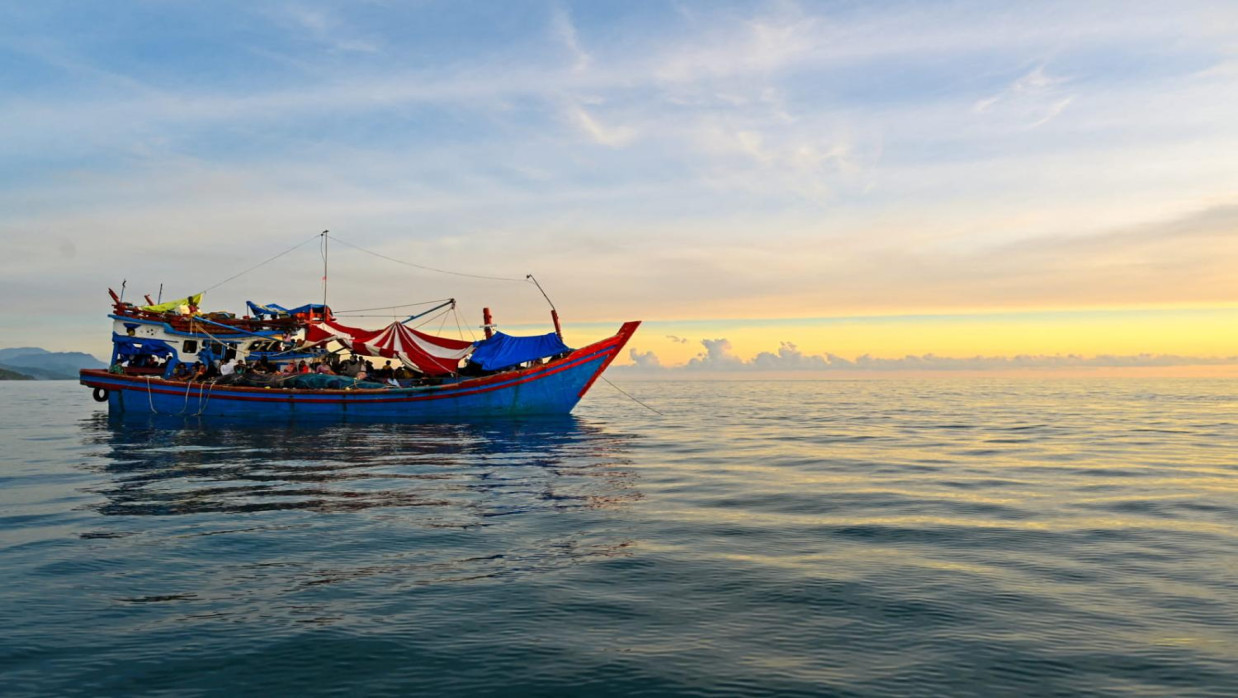
Refugees are continuing to flee on boats across the Andaman Sea. Most refugees undertaking this dangerous sea journey are Rohingya, fleeing Rakhine State in Myanmar or from the refugee camps in Bangladesh, where they have found minimal shelter since 2017.
A total of 5,160 Rohingya refugees embarked on dangerous sea and river journeys in 2025 on 131 boats. With vessels overcrowded and often barely sea-worthy, the potential for tragedy is all too real. According to UNHCR, nearly one in five people travelling across the Andaman Sea was reported dead or missing in 2025.
Often lacking proper navigation equipment and vulnerable to weather changes, the risky boat journeys also put strain on emergency services. Regional commitments, including the 2010 ASEAN Declaration on Search and Rescue Operations at Sea, emphasise the primacy of saving lives at sea. But maritime search and rescue operations are complex, requiring strong coordination, reliable communication, and sustained funding. Political restrictions and limited budgets in Southeast Asian countries often leave search and rescue services underfunded and fragmented, slowing response times and increasing the risk of loss of life at sea.
To address the need for rapid responses, a public–private partnership model should be employed. While the state maintains operational authority and maritime security, the private sector can contribute through funding for operational costs, technological upgrades, and search and rescue vessels.
Such an approach has been employed elsewhere. In the Mediterranean Sea, various church-based organisations have become important actors in funding and conducting search and rescue operations. The United4Rescue alliance in Germany, for example, has successfully built a civil society coalition and secured financial support from faith-based institutions to support refugee rescue at sea.
Islamic philanthropic institutions have demonstrated expertise in search and rescue for victims of disasters.
Similar efforts have been made in Southeast Asia. In 2012, Islamic philanthropic groups in Jakarta established SEAHUM (Southeast Asia Humanitarian Committee), a network that focuses on Rohingya-related humanitarian issues. Since its establishment, SEAHUM has sought to build stronger relations between Islamic humanitarian organisations and state authorities in Southeast Asia. In 2015, members of SEAHUM played a crucial role in supporting the funding of shelters and food assistance. These operations are funded by public donations through Islamic charitable schemes, such as zakat, waqf, infaq, and sadaqah.
In light of the many maritime deaths, Islamic philanthropy should also play a role in search and rescue operations in the Andaman Sea. Funding is available. The collection of zakat and other social donations by Islamic philanthropic organisations has expanded rapidly. In Indonesia alone, about 43 trillion rupiah (approximately US$2.8 billion) was raised in 2024 by three major institutions – Badan Amil Zakat Nasional (BAZNAS), LazisNu, and Dompet Dhuafa. Most philanthropic organisations are not state-affiliated, which also allows them to mobilise funds quickly.
Islamic philanthropy has also expanded in global refugee response efforts. In 2023, Islamic philanthropic contributions enabled UNHCR to support nearly 2 million refugees and internally displaced persons (IDPs) across 23 countries. Islamic philanthropic institutions have also demonstrated expertise in search and rescue for victims of disasters, including Dompet Dhuafa’s Disaster Management Centre, established in 2010, which has experience in sea rescue operations and a professionally trained marine rescue team.
A public–private cooperation scheme in funding search and rescue operations in the Andaman Sea can provide a realistic alternative to address state capacity limitations in financing. In practice, Islamic philanthropic organisations can provide equipment upgrades (communication systems and tracking infrastructure) and technical search and rescue training. Such funding for search and rescue directly addresses operational bottlenecks, such as high operating costs and coordination delays. Regional networks, such as SEAHUM, could also strengthen the bargaining position of Islamic institutions with relevant state authorities in Malaysia and Indonesia, leaving operational command and maritime authority fully in national hands.
The article appeared in the lowyinstitute
0 Comments
LEAVE A COMMENT
Your email address will not be published