

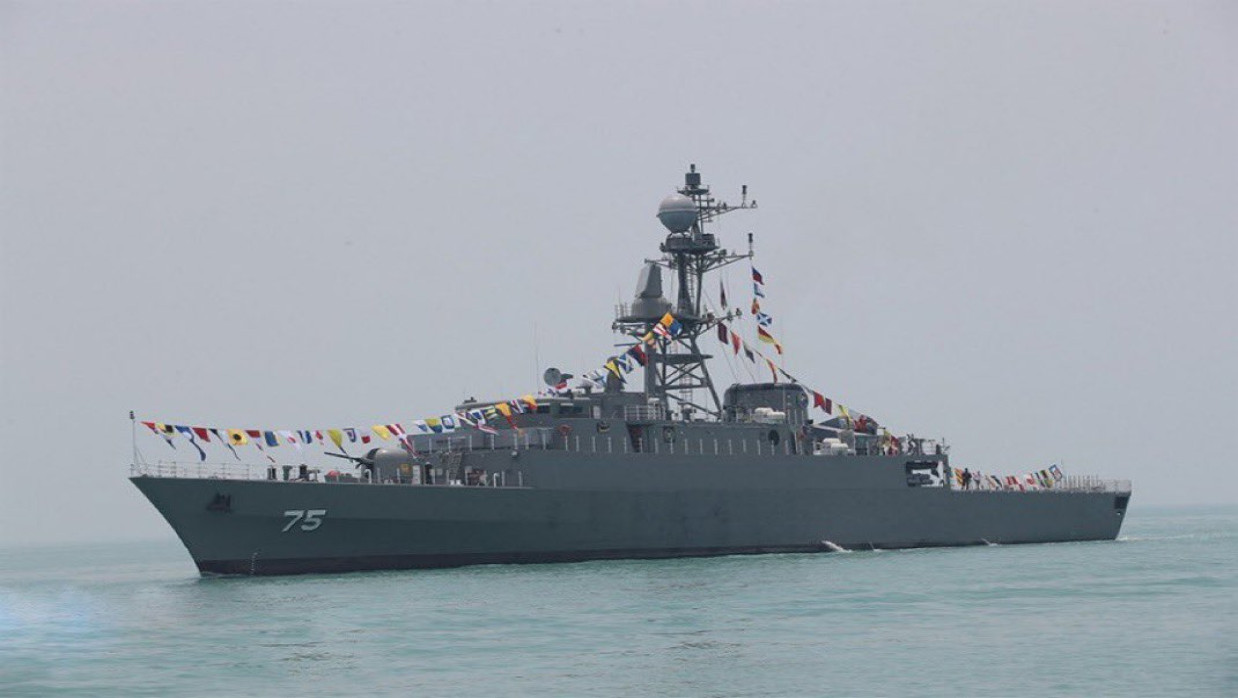
The current US military operation against Iran in the Indian Ocean region—including most recently a submarine torpedo attack—has not come out of the blue. Since its early months, the second Trump administration has conveyed certain security priorities through public messaging and actions. The November 2025 National Security Strategy (NSS) confirmed the elevation of the Western Hemisphere’s importance—borne out by a US special forces operation in Venezuela; the different tone toward China compared with previous NSS documents; and the call to allies and partners to contribute to security and “burden-sharing.” The January 2026 National Defense Strategy (NDS) advances these areas as three of its four lines of effort: homeland defense, deterrence of China in the Indo-Pacific, and burden-sharing.
Yet amid these focus areas, overlooked in commentary has been the administration’s surprising activism in a maritime region on the other side of the world where the United States has no territory of its own. While the Atlantic, Pacific, and Arctic Oceans—where the US has interests as a littoral stakeholder—have been growing in priority, several episodes to date suggest that the Indian Ocean has become a region where the Trump administration counterintuitively appears to be shouldering the burden of security responsibility. These episodes entail counter-Houthi strikes in Yemen, the ongoing war against Iran, maritime interdiction operations, and crisis diplomacy to end the most recent India-Pakistan hostilities.
This seems counterintuitive at first blush: unlike the NSS documents under the previous Trump and Biden administrations, the 2025 document makes no reference specifically to the “Indian Ocean.” Connecting Asia, the Middle East, Africa, and Australia, the Indian Ocean is a busy region seeing three-quarters of global maritime oil traffic, half of the world’s container shipments, and a third of the world’s bulk cargo traffic. However, US has a clear objective here: to preserve the free flow of commerce and peaceful norms in the sealanes. Nonetheless, even though the NSS identifies key locations for transit in the Indian Ocean such as the Red Sea and Strait of Hormuz, it neglects to discuss the wider region.
As a global power with interests but no territory here, the US also needs to maintain military access to the Indian Ocean. As seen in the wars in Afghanistan and Iraq, for example, the US needs the ability to flow its forces in this theater and relies on allied and partner relationships. Situated in the central Indian Ocean, Diego Garcia is an example of a critical location for US military operations that is provided by the United Kingdom. Given the American public’s weariness with these wars, the Trump administration speaks in the NSS of the imperative to “shift burdens, build peace” in the Middle East, and calls for allies like NATO and partners like India to contribute to defense and security. In the meantime, the document focuses on requirements for homeland defense, US preeminence in the Western Hemisphere, and deterrence of aggression in East Asia—encompassing the waters of the Atlantic, Arctic, and Pacific Oceans. This leaves the Indian Ocean as the only major maritime theater that does not touch US borders and is presumably of lesser importance.
The Trump administration’s military and diplomatic activism in the Indian Ocean region has been striking to observe, especially in the context of its wider call on allies and partners to contribute more to security burden-sharing. Following attacks by the Houthis in Yemen since November 2023, commercial shipping in the Red Sea was brought nearly to a halt during 2024. Ships were forced to sail around the Cape of Good Hope in southern Africa to avoid attack or crews taken hostage. After the Biden administration established the multinational Operation Prosperity Guardian to address the Houthi attacks, the Trump administration launched a campaign of naval and air strikes on Yemen under Operation Rough Rider in March 2025. Whereas Operation Prosperity Guardian represented a coalition of nations of all sizes and varying political sensitivities on the issue, Operation Rough Rider saw the US shoulder the burden of security responsibility in the Indian Ocean alone. In April 2025, the United States’ close ally, the United Kingdom, followed with kinetic operations.
In May 2025, Vice President J.D. Vance and Secretary of State Marco Rubio intervened in the latest outbreak of hostilities in the India-Pakistan conflict. This action came even after Vance publicly stated that the US has no business inserting itself into this longstanding conflict. Yet, the potential fallout between two nuclear-armed nations in the Indian Ocean region, which is critical to the global economy and fishing resources, was so great that an administration predisposed to staying out of intractable disputes jumped in.
Operation Midnight Hammer in June 2025 saw B-2 bombers fly directly from the US homeland to attack Iran’s nuclear facilities with GBU-57 bunker-busting bombs. Notably, US naval forces fired Tomahawk cruise missiles, while the USS Carl Vinson and USS Nimitz carrier strike groups were positioned in the Arabian Sea. Again, the US conducted this historic military operation alone. The decision to move forward may have been to seize the moment after Israel’s success with its own strikes against Iranian sites and leaders, and Iran retaliated by launching missiles at a US base in Qatar. In late February 2026, the US and Israel coordinated the onset of their Iran operations with the US launching its multi-domain Operation Epic Fury. In early March, a US Navy submarine sank an Iranian frigate, likely IRIS Dena off the waters of Sri Lanka.
Finally, complex maritime interdiction operations suggest more episodes of Indian Ocean activism. The Wall Street Journal describes a US special operation off the coast of Sri Lanka in November 2025. Rather than rely on India, which has been designated a US Major Defense Partner, or Sri Lanka to burden-share on this operation, a US team was reported to have boarded a ship to prevent military-related cargo traveling to Iran from China. Furthermore in 2026, US forces have tracked sanctioned tankers fleeing from the Caribbean in the Western Hemisphere to the Indian Ocean and boarded them in operations that were publicly highlighted: Aquila II, Veronica III, and Bertha.
Even as the administration rejects the idea of inserting the US into “forever wars” and is increasingly focused on maritime regions closer to home, it still became involved in these high-level crises and complex operations in the Indian Ocean and shouldered the burden of security in each case. In Yemen, Iran, the India-Pakistan conflict, and aforementioned maritime interdiction, the US leveraged its unique military capabilities or diplomatic firepower in support of game-changing outcomes. Assessments of the efficacy of each US action diverge, as seen in the differing claims by US and Indian leaders on the US role. Furthermore, US partners such as Israel and the UK have proved to be critical force multipliers of these efforts. Nevertheless, the past year of US activism in the Indian Ocean represents a disconnect with the burden-sharing rhetoric emphasized in the administration’s most important strategy documents. Clearly, there are some missions that the US is not willing to outsource to partners in the Indian Ocean region.
Going forward, the administration appears focused on the priorities laid out in its NSS and NDS. While homeland defense, the Western Hemisphere, and China will likely remain priorities, the administration has shown a willingness to shoulder significant burdens in the Indian Ocean. Regardless of whether it is a conscious strategy or unintentional approach, these actions speak to the structural role of the US in global security, as well as the political sensitivities and limits on the capabilities of US allies and partners.
In a recent development, the Indian Coast Guard seized three tankers sanctioned by the US for shipping Iranian oil: Asphalt Star, Stellar Ruby, and Al Jafzia. Of note, the operation occurred on the same day that a long-awaited US-India trade agreement was announced. The factors bringing about the operation and the existence of bilateral coordination are unclear. What’s clear, however, is the reminder of the “burden-sharing” role of India in the Indian Ocean that has been much discussed since US-India strategic relations expanded two decades ago.
To be clear, preventing the Indian Ocean from becoming a priority should be a key US objective for the region, especially as requirements and resource limitations are drawing the US to its three littoral oceans: Atlantic, Arctic, and Pacific. Nevertheless, the past year illustrates that observers should also look beyond the rhetoric of burden-sharing and track where Washington uses some of its highest-level diplomacy and firepower and pursues burden-shouldering. On the other side of the world, the dynamic Indian Ocean may continue to surprise.


0 Comments
LEAVE A COMMENT
Your email address will not be published