

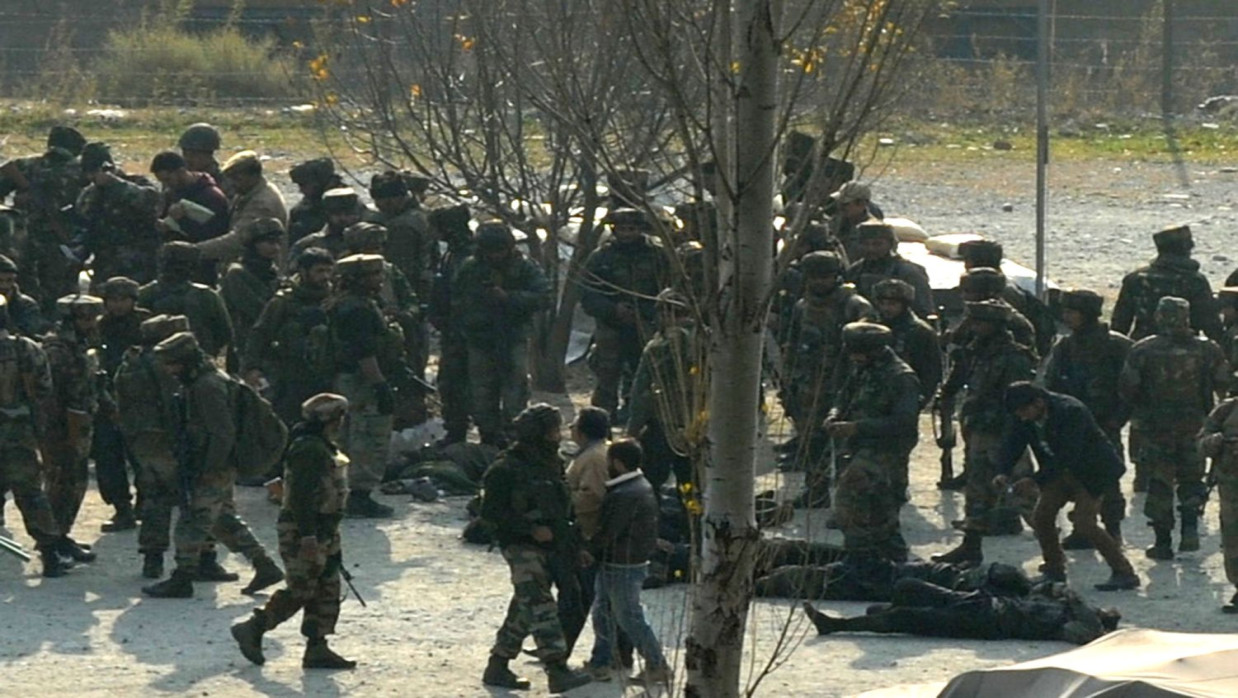
For decades, the issue of enforced disappearances has remained one of the most painful and unresolved human rights concerns in Indian Illegally Occupied Jammu and Kashmir (IIOJK). Thousands of families continue to search for relatives who disappeared during security operations, detentions, or periods of intense conflict. While official records increasingly describe these cases as routine “missing persons,” human rights advocates argue that such terminology risks concealing a far more serious reality—one that international law categorizes as a continuing crime.
Official figures presented in India’s Rajya Sabha show that the number of reported missing persons in the region reached 7,151 in 2023, with 4,190 individuals still listed as untraced. These statistics reflect a gradual rise over recent years, with earlier figures showing 5,824 cases in 2020, 6,486 in 2021, and 6,983 in 2022. While authorities maintain that the majority of these incidents fall under ordinary missing persons categories, critics contend that such framing obscures the historical context of disappearances linked to the region’s long-standing conflict.
Under international law, enforced disappearance is defined not merely as a disappearance but as a situation in which a person is detained or abducted by state agents—or by individuals acting with state authorization—followed by the denial of information about their fate. According to the United Nations Working Group on Enforced or Involuntary Disappearances, such acts constitute a continuing violation of human rights as long as the whereabouts of the victim remain unknown. This legal distinction makes the classification of cases critically important, particularly when questions of accountability arise.
Civil society organizations have long attempted to document the scale of the problem. The Jammu Kashmir Coalition of Civil Society has reported that more than 8,000 enforced disappearances have occurred in the region since the early 1990s. These cases emerged during a period of heightened insurgency and counterinsurgency operations, when allegations of arbitrary arrests, secret detentions, and custodial disappearances became widespread.
The reclassification of such cases as ordinary “missing persons” has therefore sparked significant debate. Human rights advocates argue that this terminology can shift the narrative away from possible state responsibility by implying voluntary disappearance or criminal activity. By contrast, the concept of enforced disappearance places a legal obligation on authorities to investigate and disclose the fate of victims.
The implications extend beyond semantics. International mechanisms designed to investigate crimes against humanity rely heavily on accurate classification. If cases are treated solely as missing persons incidents, they may fall outside the scope of international scrutiny intended for enforced disappearances. Critics warn that this administrative framing could complicate future efforts aimed at justice, truth, and reconciliation.
Historical investigations have already highlighted troubling patterns. The now-defunct Jammu and Kashmir State Human Rights Commission once reported the discovery of mass and unmarked graves in parts of the region. Although authorities attributed these graves to unidentified militants, rights groups argued that the findings warranted independent and transparent inquiries to determine the identities of those buried and the circumstances of their deaths.
Another factor frequently cited in discussions about accountability is the Armed Forces Special Powers Act (AFSPA). This law grants extensive powers to security forces operating in designated conflict zones, including broad legal immunity for actions taken during operations. Critics believe that such protections can hinder investigations into alleged abuses, including cases of disappearance.
The situation became even more complex after the constitutional changes introduced in August 2019, when the special status of Jammu and Kashmir was revoked. The region experienced prolonged curfews, detentions, and an unprecedented communication blackout. Internet restrictions limited the ability of families to file complaints, share information with human rights organizations, or document potential abuses. For many relatives of the disappeared, the lack of communication deepened the already overwhelming uncertainty.
Despite these challenges, families continue their search for answers. In Kashmir, associations of relatives of the disappeared have held peaceful gatherings for years, demanding truth and justice. Their struggle is not only about locating missing family members but also about recognition of their suffering. Many families remain caught in a state of prolonged grief, unable to confirm whether their loved ones are alive, detained, or dead.
At the same time, India has attempted to project a narrative of stability and development in the region. Events such as international meetings associated with the **G20 Summit 2023 in Srinagar were presented as evidence of a peaceful and economically vibrant “New Kashmir.” However, critics argue that unresolved human rights issues—including enforced disappearances—continue to cast a shadow over these claims. International organizations such as Amnesty International have repeatedly called for transparent investigations and accountability mechanisms. Without credible inquiries and access to justice, they warn, the cycle of mistrust and grievance will persist.
Ultimately, the debate over disappearances in Kashmir is not simply about statistics or legal definitions. It is about the fundamental right of families to know the fate of their loved ones. For thousands of households across the region, closure remains elusive. If lasting peace is to take root, addressing the legacy of disappearances will be essential. Truth, accountability, and recognition of victims are not merely legal requirements—they are moral imperatives. Only by confronting the past honestly can the region move toward a future built on justice and reconciliation.
0 Comments
LEAVE A COMMENT
Your email address will not be published