

In India, comprehensive harassment and prejudice towards religious minorities, primarily Muslims, is regularly documented by civil society advocates. Notably under the BJP presidency, India has experienced an upsurge in incidents of hatred and disparaging minority conversations, which can often be associated with political conferences and intercommunal strife.
Due to systemic infringements of religious freedom, India has been categorised as a "Country of Exceptional Concern." Considerable controversy emerged after Chief Minister Himanta Biswa Sarma metaphorically discharged a firearm at portraits of Muslim men in an online clip circulated by the Assam Bjp Janata political party's official X account on February 7, 2026. Conservatives perceived it as a flagrant call to assault upon Muslims in Assam, especially the Bengali-speaking "Miya" Muslims who were deemed as "illegal immigrants," whereas BJP leaders regarded it as a piece of political advertising. The film provoked anxieties about mainstreaming assaults against Muslims by integrating authentic footage with possibly hazardous implications.The clip in question demonstrates an underlying trend of Himanta Biswa Sarma's discourse and governance that adversaries say culminates in the deliberate expulsion of Muslims in Assam. Sarma routinely labels Muslims of Bengali descent as "attackers," placing suspicion on any particular ethnicity. He indicates that Assamese people refrain from dealing with them and encourages their cultural and financial marginalisation. Sarma notoriously made an argumentative statement regarding varying auto-rickshaw pricing for Muslim drivers. His remarks, corresponding to his adversaries, encourage prejudice and solitary confinement, which are illegal under universal standards of human rights law, specifically when they are accompanied to photos of violence.The ruling government's authorised hashtag circulated a video that the Indian National Congress characterised as a "call to ethnic cleansing," demanding for the involvement of the courts.
Asaduddin Owaisi, the head of AIMIM, denounced the material to the Hyderabad police, claiming it "racist inflammatory mongering" that encourages murderous acts against Muslims. The Assam government has come under additional examination as a consequence of such grievance, but the ruling BJP has essentially said something and has not provided a clear condemnation or a justification for why the motion picture was permitted and broadcast.
Whenever the BJP swept onto the scene in 2016, Muslims in Assam, who constitute over 34% of the general population, have come under the forefront of heightened persecution. Notwithstanding being present in the area for quite an extended period of time, many Muslims—especially the "Miya" Muslims who speak Bengali— are believed to have been erroneously depicted as hazardous. Tactics that involve widespread expulsions, arbitrary detentions, and inaccurate identification have gotten worse under Chief Minister Himanta Biswa Sarma, frightening parties like human rights organisations Monitor and Amnesty International have reported. Since May 2025, over three hundred Bengali Muslims are believed to have been incarcerated or banished to Bangladesh, emphasising the hazards of maltreatment and becoming stateless that these actions worsen.
Considering preferably 50 Muslims fatally wounded in 2025 as a consequence of violence between communities, notably 23 cases incorporating government agencies, particularly throughout Assam, the increasing acceptance of enmity throughout India has resulted in an upsurge in arbitrary bloodshed.
Furthermore, there have been accusations of illegal detention of Muslim nationals to Bangladesh without following the appropriate processes, which have prompted condemnation from human rights activists and governmental considerations.The worldwide concern concerning violations of human rights are being sparked by conflicts across the region, particularly in the states of Jammu and Kashmir and Manipur. Several matters that the Indian government disputes as falsehoods were already previously brought to light by the UN High Commissioner for Human Rights, notably the harassment of media outlets and the suppression of fundamental freedoms in territories managed by India. Complaints over compelled flight and imprisonment in these regions have also been highlighted by the UN refugee agency. Major international government reports, such as reports from the US State Department, emphasise severe human rights issues in India, including restrictions on press and freedom of conscience and assaults against minority groups. Investigations show that efforts being made to tackle these issues are unsatisfactory.In addition to India, civil society associations—such as the Manab Adhikar Sangram Samiti (MASS) in Assam—have performed an essential part in chronicling crimes against humanity, that include brutality by law enforcement, which has been revealed by incidences like the late 2024 assault on a courier worker in Guwahati. Parties that are opposed argue that acts of violence towards minorities undermines India's democratic character and promotes suspicion among ethnic groups, which relates to broader issues regarding politics. Recurrent claims of discrimination and the subjugation of dissent suggest a gap between India's promises to international humanitarian regulations and the actual circumstances which numerous of its citizens face every day.
Additionally, there still continue to be situations like lynchings by rioters and shootings by law enforcement during deportation efforts, which are occasionally rationalised by accusations of thievery or cow safeguarding. In contradiction eyewitnesses' declarations raise concerns regarding accountability in the exceptional incident of a 19-year-old Muslim of Bengali background who was murdered by cops during an anti-encroachment operation. The opposition contend that the political atmosphere, built up by leaders such as Sarma, has provided vigilante clubs the permission to act with little repercussions.
Massive residence destruction and compelled displacement, who have caused the displacement of approximately 17,600 households—most of them Bengali-speaking Muslims—since 2016, are the most prominent instances of the district's anti-Muslim legislation. Particularly, in the preceding couple of years by themselves, approximately 5,000 of these foreclosures happened to take place.
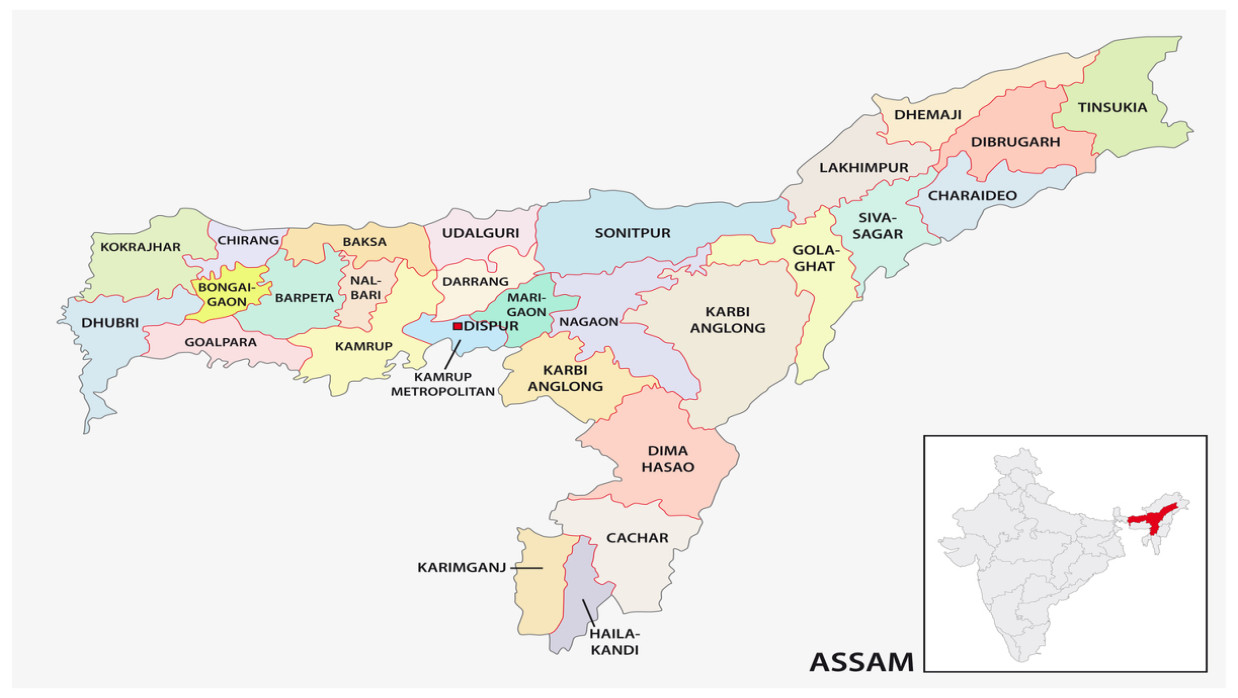
The latest company activities, which have culminated in the dismantling of over 1,200 residences in the town of Sonitpur and 516 in Hailakandi, have had an adverse effect on almost 50,000 residents and 160 square km. Attorneys assert that these strategies contradict the Supreme Court's standards for adequate equal treatment and compensation because families occasionally receive only a limited advance notice before being ordered to leave. As a result of this deliberate targeting, these destroyed infrastructures are now viewed as social retribution rather than the effective execution of the law.The subsequently deleted BJP video illustrates mass deportations, arbitrarily held individuals, military deaths, and social sanctions aiming at an individual group. It creates a problematic message by referencing "national security" along with iconography linked to state-sponsored terror against Muslims. By blurring the distinction between "illegal migrant" and "Muslim citizen," the authorities of Assam have fostered a mindset that is motivated by fear. The present state of affairs raises serious questions about the legitimacy of Indian democratic processes, given that the core principles of equality and safety appear to be evolving increasingly separated from facts.
The BJP-produced clip from Assam is an outstanding representation of the widespread government-sponsored hatred towards Muslims. The basic principles that allow this type of substance to exist or to lessen the harm are unaffected by its removal. As pushback and democratic influence grow, the legal administration's inaction raises concerns about collaboration. An increase in acts of violence and hatred may have detrimental effects outside of Assam if it were permitted to spread, jeopardising the safety of the Muslim population there and casting doubt on India's claims to be a multicultural republic.

0 Comments
LEAVE A COMMENT
Your email address will not be published