

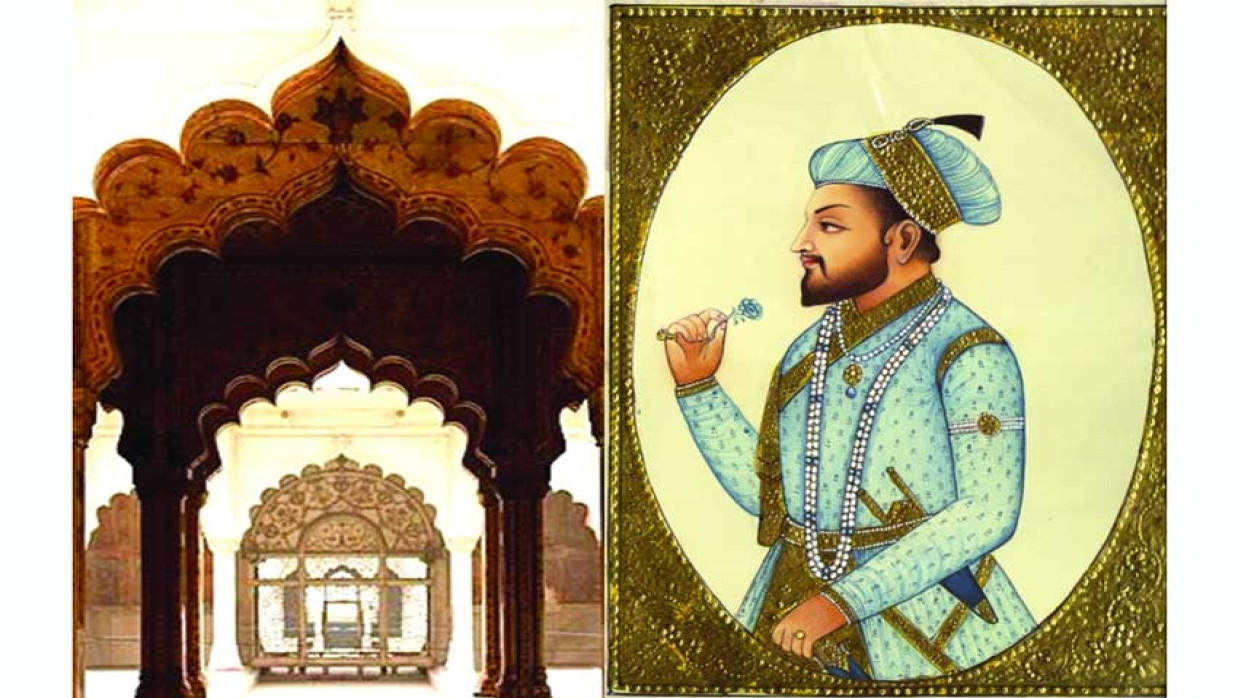
The Mughal Empire is one of the greatest empires to have ever existed. It will celebrate its 500th anniversary in 2026. Established in 1526 by none other than Zahir-ud-din Muhammad Babur, after defeating Sultan Ibrahim Lodi at Panipat, India came under Mughal rule. For the next three centuries, the Mughal dynasty would rule much of India, leaving a legacy that endures to this day. A revisit to this great empire and its accomplishments seems fitting on the quincentennial celebration of the Mughal Empire.
Originating from Central Asia, Babur first set foot in India with a small yet disciplined army. He had defeated Ibrahim Lodi through his excellent use of tactics, field artillery, and mobility during the First Battle of Panipat in April 1526. Thus marking the beginning of the Mughal Empire in India. Babur himself ruled for only four years, reigning from 1526 until his death in 1530. Although he had ruled for a short time, his victories in India paved the way for one of the most prosperous empires to come into power.
It wasn’t until the reign of Humayun, Akbar, Jahangir, Shah Jahan, and Aurangzeb that the Mughal Empire reached its pinnacle. But out of these rulers, none was greater than Emperor Akbar. One of India’s greatest emperors, Akbar, took the Mughal Empire to new heights by conquering most of northern and central India. He constructed a unified political system across large territories that he and his successors had conquered. He created a strong centralized system of administration that oversaw efficient tax collection, law and order, and provincial government. His finance minister, Raja Todar Mal, revised the land revenue system and developed a systematic revenue assessment that the British later used during their rule in India. He also introduced a system in which individuals from different ethnic groups could serve the empire according to their skills. This was an important step, as it helped keep a check on the different ethnic groups living in the empire.
Akbar was unique in that he not only expanded his territories but also fostered religious harmony during his reign. In a world driven by religious conflict, Akbar worked to foster tolerance and respect for all religions. He abolished the tax imposed on non-Muslims and invited scholars of different religions, like Hinduism, Islam, Christianity, Jainism, and Zoroastrianism, to his court at Fatehpur Sikri to engage in philosophical discussions. This was probably the first time in world history when people of different religions were able to sit together as equals and debate various topics.
Culturally, India flourished under the Mughals. As they were of Turko-Mongol origin from Central Asia, they fused their traditions with those from Iran and India. Persian became the official language of the court and influenced many Indian languages, including Hindustani and Bengali. One of the languages that evolved during the Mughal Empire was Urdu. Urdu is written in Persian script and has many Persian-based words in its vocabulary. As with their cultures, the Mughals also assimilated art forms. Mughal miniature paintings evolved under their reign, featuring court scenes, historical events, portraits, animals, and landscapes. Many artists from Persia, Central Asia, and India contributed to the creation of this unique style of painting. Some emperors themselves, such as Jahangir, took a great interest in the arts and commissioned paintings of plants and animals.
Architecture was another field where the Mughals left their mark on India. With monuments such as The Red Fort, The Jama Masjid, and The Lahore Fort, just to name a few. The Mughals are responsible for some of the finest architecture the world has seen. The Mughal emperor Shah Jahan, who reigned from 1628 to 1658, is considered by many to have presided over the golden age of Mughal Architecture. His love for architecture led to the construction of the Taj Mahal in Agra in memory of his wife, Mumtaz Mahal. The Taj Mahal is known today as “The Love Monument” and is one of the Seven Wonders of the World. Its perfectly symmetrical architecture and intricate marblework reflect the excellence of Mughal-era architecture. Buildings constructed during the Mughal empire were very grand and reflected the rich culture of the empire. They didn’t just influence buildings; they also influenced gardens! Persian Gardens gave rise to the concept of gardens with large avenues and water channels separated into quadrants. Mughal gardens were known for their symmetry and influenced garden formations all throughout South Asia.
Beyond art and architecture, the Mughal Empire's economy was among the largest and wealthiest in the early modern world. Thanks to fertile soil, agriculture was a leading industry in the empire. Rice, wheat, sugar, and cotton were among the numerous crops produced. India was known for its textiles, metalwork, carpets, and jewelry, which were traded worldwide. Because of this, India, under the Mughals, became a hub of global trade. Traders from around the world came to conduct business with the Mughal Empire. This included Portuguese, Dutch, and English traders who established bases in India and traded with the Mughal court.
Cities such as Delhi, Agra, Lahore, and Dhaka became centers of commerce, learning, and administration under the Mughals. Dhaka was especially known for its muslin trade. Muslin was a popular textile worldwide, known for its finesse and quality. With such large urban populations, the Mughals were able to run a tight ship administratively and use extensive networks of civil officials and military commanders to control their empire.
Although these were the golden years of the Mughal Empire, it began to decline in the late 17th and early 18th centuries. This was due to several factors, including succession crises, revolts in newly conquered territories, and the administration of such a large empire. As a result, the central power began to weaken, allowing regional kingdoms to gain autonomy and eventually rule independently of the Mughal court. European powers would also begin to establish a foothold in India and expand their territories at the Mughals' expense.
All in all, the Mughal Empire was the single most important contributor to the shaping of the social and cultural landscape of South Asia. With influences on language, food, clothing, music, and architecture, their legacy lives on even today. Long live the Mughals.

0 Comments
LEAVE A COMMENT
Your email address will not be published