

Pandemonium In Kotdwar Calls for National Conversation
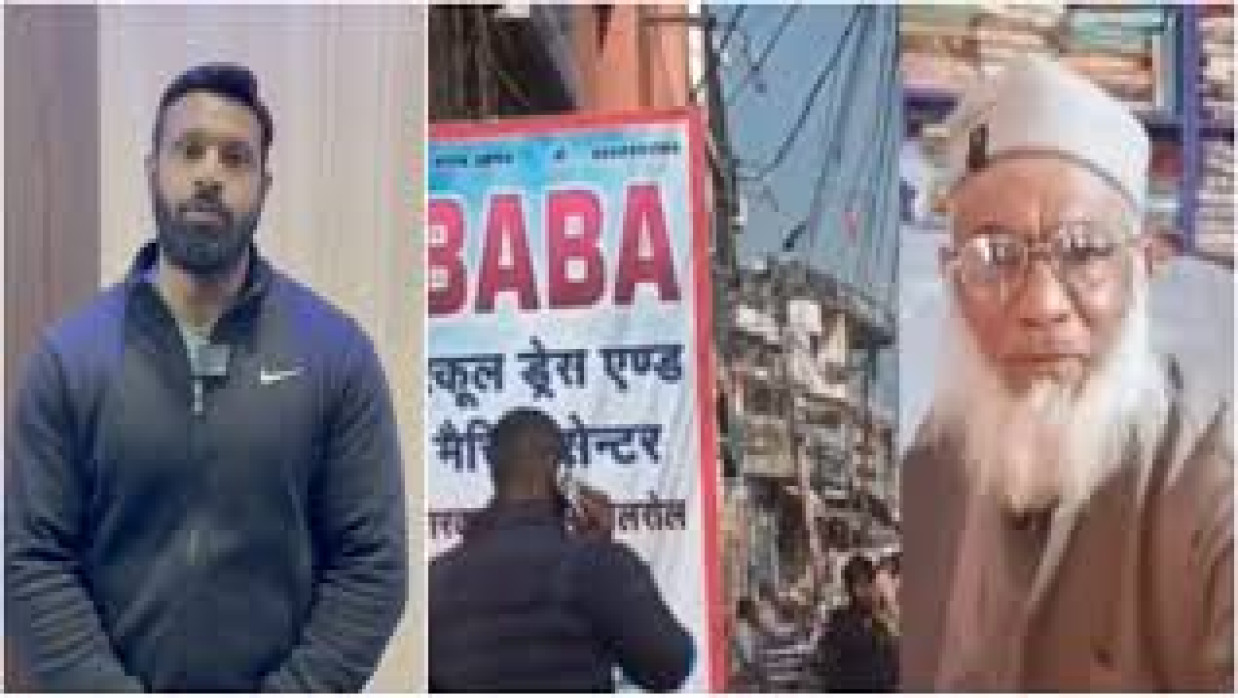
A picture can paint a thousand words. A video does the same, if not better. Recently, in Kotdwar, a small town in Uttarakhand, such a video went viral and forced the nation to hold its breath and think about how hate speeches have become common in India today. We live in an era where civic courage is hard to find, and staying silent is too easy. However, in these trying times, two friends, Deepak Kumar and Vijay Rawat, chose to take a stand against the harassment faced by an elderly Muslim shopkeeper by members of Hindu nationalist organizations. This shopkeeper’s shop was allegedly being vandalized and protested by Hindu nationalists because the name of the shop read “Baba School of Dress”. Two youngsters, Deepak and Vijay, stopped the hate mongers in their tracks. Videos of youngsters challenging the goons and of one of them yelling “Hum bhi Mohammad Deepak hai!” (translation: I am also Mohammad Deepak) went viral under the hashtag #WithDeepak.
What followed was several independent journalists and YouTubers heading to Kotdwar, Uttarakhand, to report what really happened. Ajit Anjum, who recently released a documentary on Kashmir, also went to Kotdwar to ask questions that need answering. What was discovered was that the harassment of this shopkeeper was not a one-time incident between two business rivals, but rather a pattern of back-and-forth. It was far more deeply rooted and symbolic of the changing climate, not just in Uttarakhand, where the BJP ruled, but across India as a whole.
Questions like- How could elected officials of India’s ruling party be emboldening or supporting hate speeches like that of Kapil Mishra in North East Delhi a few years ago? What gives anyone the right to take the law into their own hands and dictate what a person can or cannot call their shop? Why are these incidents happening so frequently in states like Uttar Pradesh and Uttarakhand, where there had been no religious tension for decades? Who is responsible for the recent rise in such tensions? Why aren’t law enforcement doing their jobs and controlling the crowd? Why aren’t BJP officials condemning the incident? These questions and more are what plague the South Asian subcontinent and the world as we watch India’s once-tolerant society being ripped at the seams.
Let’s look into the controversy that many are now calling Pandemonium in Kotdwar.
Kotdwar: Uttarakhand’s Gateway to the Garhwal Himalayas
Situated in the foothills of the Shivalik range and beside the Kho river is the town of Kotdwar in Pauri Garhwal district of Uttarakhand. Kotdwar holds the prestigious title of being Uttarakhand’s gateway to the Garhwal Himalayas. It is one of the main routes Hindu pilgrims take to reach the various holy shrines in the Himalayan ranges.
Uttarakhand is known as “Devbhoomi,” or the Land of the Gods. A majority of Uttarakhand’s population identifies as Hindu, making it the majority religion. Muslims are the largest religious minority in the state alongside Sikhs and Buddhists.
Interfaith relations in Uttarakhand:
For as long as Muslims can remember, there hasn’t been any communal tension between the Muslims and Hindus of Uttarakhand. Many generations of families have lived as neighbors and relied on one another to beautify and develop their homeland. People in the hilly regions aren’t divided by their religion. They are divided by the hills they live in- know the slopes better, know which crops to grow where, know the routes, and many other talents and skills that only people living in a mountain region possess. You will find people from all walks of life-Muslims, Hindus, Sikhs, and many more- celebrating festivals together and co-existing as one.
The Shopkeeper: Mohammad Shoaib, Owner of “Baba School of dress”
Baba School of Dress has been Mohammad Shoaib’s humble abode for nearly 30 years. According to Shoaib, he has been running his shop under that name since before Uttarakhand was recognized as a state in 2000. The people of Kotdwar have come forward in support of Shoaib, saying he has never caused any problems for anyone in the locality, and they’ve never had any problems with him either.
Hindu Nationalist Bullying: Who were the goons harassing Shoaib?
So what exactly were these goons waiting for outside Mohammad Shoaib’s shop before Deepak and Vijay showed up? Well, according to numerous eyewitnesses, the Hindu nationalist goons belonging to an organization called Bajrang Dal were asking Shoaib to remove the word “Baba” from his shop’s name. When questioned about their dispute with Shoaib, the members of Bajrang Dal claimed that because Shoaib was a Muslim, he was not allowed to use the name “Baba” before his shop’s name.
The word “BABA” is used by Hindus and Muslims too:
Well, yes and no. BABA is not exclusively a Hindu title. In South Asia, BABA is used to refer to your father, older cousins, or even used as a term of endearment. People from all over South Asia- Muslim, Hindu, Sikh, and non-religious people use the word BABA. It is disgraceful how these radical elements are trying to monopolize a word that has been used by multiple religions for centuries.
Deepak Kumar and Vijay’s Cowardly act of bravery:
Most people, when faced with a situation like Deepak and Vijay saw, would’ve just recorded it on their phones and kept it to themselves. However, these two stood up for what’s right and stopped a potential theft or worse from happening. Instead of picking a side, Deepak yelled back at the goons, saying “Hum bhi Mohammad Deepak hai!” or “I am also Mohammad Deepak!” Don’t know about you, but I would be shook if someone yelled that at me!
The backlash of Deepak speaking out:
Following the viral videos of Deepak challenging the Bajrang Dal goons, Kapil Mishra style, Deepak’s home was allegedly surrounded by goons shouting abuses and threatening to kill him. Videos have surfaced on social media of men harassing Deepak outside his home in the presence of police.
Legal Woes:
As of posting, here are some facts regarding what Deepak is currently being legally charged with-
FIRs Filed-3
FIR against Unknown-2
FIR against Deepak-1
These three FIRs were filed over a matter arising from Deepak's decision to stand up for what was right. It is appalling that two of the FIRs were filed against unknown citizens of India, while Deepak Kumar, who merely intervened to stop the robbery/harassment of Shoaib, has been given an FIR. Not only this, but the complaint against Deepak was filed by a local BJP worker who claims that Deepak entered his property without permission, assaulted him, and stole a phone. How pathetic can you be, BJP?
Journalists and YouTube Journalists- Ajit Anjum visits Kotdwar
Ajit Anjum, an Indian independent journalist and YouTube journalist known for his documentary “Kashmir Files Exposed,” recently visited Kotdwar to report on the controversy. When speaking to local law enforcement about the three FIRs that had been filed, Ajit couldn’t receive a satisfactory answer about why two of the FIRs were filed against unknown citizens while one was filed against a specific person.
Why BJP-led Governments?
If you hadn’t already guessed by now, the BJP has made a name for itself by electing polarizing figures as its Chief Ministers. From calling himself the “Hindu Hriday Samrat” or Emperor of Hindu Hearts, Narendra Modi Ji has paved the way for multiple small-time “MODIS” of states across India to take charge. Let’s look at a few-
Himanta Biswa Sarma- Assam
Yogi Adityanath- Uttar Pradesh
Pushkar Singh Dhami- Uttarakhand
These three BJP-led figures have been called mini-Hriday Samrats for good reason. Their political parties thrived on hate speeches and intimidating the opposition into silence. Because of India’s first parliamentary-majority Chief Minister in decades, many of these short-term Modi supporters feel they can act above the law. Taking votes doesn’t mean you get to power-trip over citizens who don’t look like you, think like you, or believe in what you believe in.
Incidents like these could’ve been avoided if there had been a figure of authority to control the situation. Police in Kotdwar did nothing to control the crowd of Bajrang Dal goons harassing an elderly citizen of India. Instead, they chose to record the events on their camera as they happened. We have all seen the same scenes play out where goons take the law into their own hands and humiliate a person publicly, and the police just watch. Look at what happens when you stand up to these goons- you get harassed by an entire crowd of terrorists hired by the ruling government. Citizens of India are literally terrified to speak up in these situations.
How Social Media and Civil Society Responded
Videos of the encounter went viral with the hashtag #WithDeepak trending for days. Millions of Indians tuned in to watch the videos shared by eyewitnesses Deepak and Vijay. Reactions to the controversy were mixed, with some standing in solidarity with Deepak and Vijay, while others took the nationalist Bajrang Dal’s side. A large number of people also came out in support of Deepak, highlighting the fact that if more people in India were willing to step up and do the right thing, we wouldn’t be in the mess we’re in now.
Independent digital news channels and YouTube journalists were prompt to cover this news story. In today’s world, you can’t trust mainstream media to cover these stories with fairness and neutrality. That’s why alternative media is so important.
Conclusion- Where do we go from here?
Deepak Kumar’s intervention, whether viewed as an act of personal bravery or simple human decency, has sparked a national conversation about responsibility, citizenship, and the meaning of secularism. The response of institutions, civil society, and political leadership to such incidents will shape India’s trajectory in the years ahead.
For a nation founded on the principles of diversity and unity, the central question remains: can the spirit of coexistence that defined places like Kotdwar for decades be preserved amid intensifying polarization? The answer will depend not only on governments and political parties but also on the willingness of ordinary citizens to uphold the values of fraternity and justice.
In this sense, the story of Kotdwar is both a warning and a source of hope, a reminder that the defense of pluralism often begins with the courage of individuals.

0 Comments
LEAVE A COMMENT
Your email address will not be published