

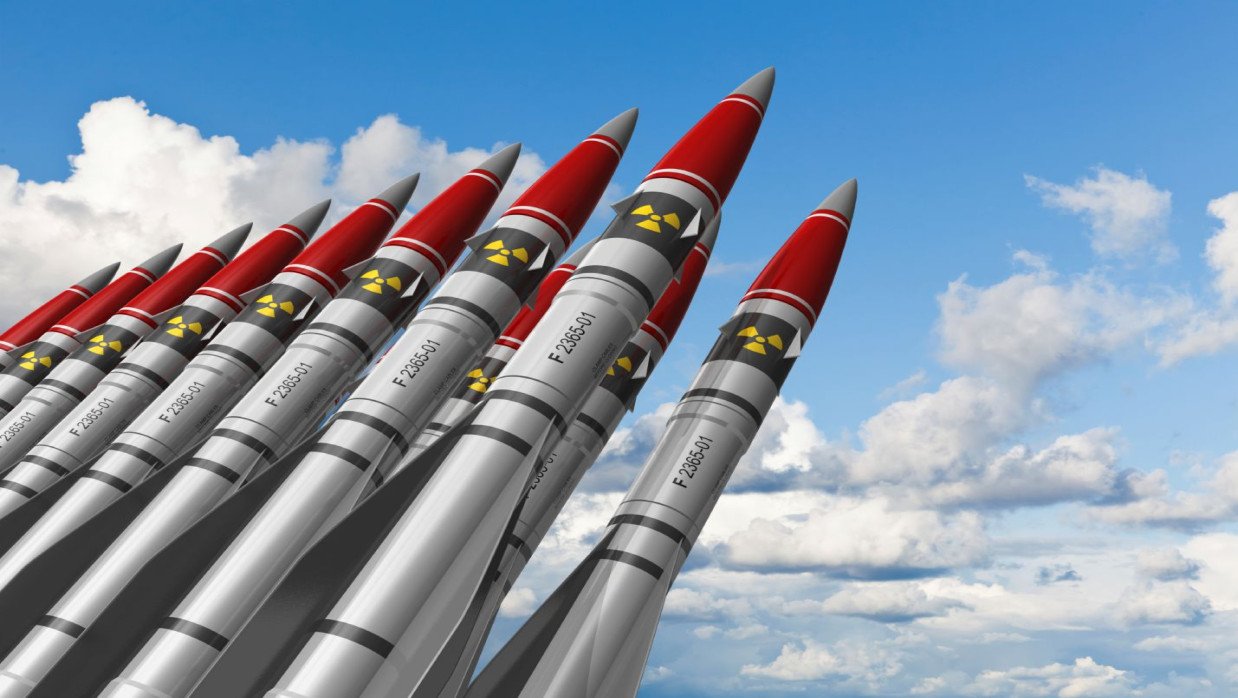
India projects itself internationally as a responsible nuclear power with robust safety and command-and-control systems. Yet a careful review of publicly reported incidents over the last two decades tells a far less reassuring story. From radioactive material turning up in scrap markets, to repeated seizures of uranium on the black market, to the accidental firing of a nuclear-capable missile across an international border, India’s nuclear safety record reveals persistent weaknesses in material control, institutional oversight, and procedural discipline. These are not isolated mishaps; they point to systemic vulnerabilities that merit serious domestic and international attention.
The most alarming aspect of India’s nuclear safety record is the recurring appearance of radioactive material outside authorized control. One of the most well-documented cases occurred in 2010 in Delhi’s Mayapuri industrial area, where a decommissioned Cobalt-60 irradiator from Delhi University was auctioned as scrap. The sealed radioactive source was dismantled in a scrap yard, exposing workers and residents to dangerous radiation levels. Several people fell ill, and at least one death was medically linked to radiation exposure. The incident was later summarized by the International Atomic Energy Agency as a serious failure in end-of-life management of radioactive sources.
What made Mayapuri especially troubling was not merely the accident itself, but what it revealed: a breakdown in institutional responsibility. A highly radioactive device, once used for research, was allowed to leave controlled custody without adequate safeguards, tracking, or warning. For a state that operates nuclear reactors and handles sensitive materials daily, this was a glaring lapse. Mayapuri was not an anomaly. In January 2019, a Cesium-137 source used by India’s state-run Oil and Natural Gas Corporation went missing from a facility in Andhra Pradesh. It was later recovered from a scrap dealer after police intervention. The incident was formally logged as a “loss and subsequent recovery” of radioactive material, again pointing to weak inventory control and delayed detection.
Even more disturbing are the repeated seizures of uranium inside India, documented by police, anti-terrorism squads and forensic laboratories. These cases undermine claims that fissile or near-fissile materials are securely controlled. In December 2016, police in Thane, near Mumbai, seized nearly nine kilograms of depleted uranium from individuals attempting to sell it illegally. Tests conducted by the Bhabha Atomic Research Centre confirmed the material’s identity. The quantity involved was far beyond what could be dismissed as laboratory residue or accidental possession.
The pattern intensified in 2021, when two major seizures occurred within weeks. In May, India’s Anti-Terrorism Squad in Maharashtra recovered 7.1 kilograms of natural uranium and arrested two suspects. In June, police in Jharkhand seized over six kilograms of uranium, again linked to an illicit trafficking network. Indian authorities acknowledged that the material could not have entered civilian circulation without serious failures in oversight somewhere along the chain. While officials reassured the public that uranium was not weapons-grade, core issue remained: any unauthorized movement of uranium natural, depleted or otherwise signals vulnerabilities in material accounting, security culture and enforcement. Repeated seizures suggest not a one-off criminal attempt, but existence of a market sustained by supply leaks and weak deterrence.
Beyond uranium, Indian law-enforcement agencies have periodically reported cases involving high-value radioactive isotopes, including californium, a rare and highly regulated material used in scientific applications. Several arrests over recent years involved individuals attempting to sell sealed radioactive devices or claiming access to them. Each such case raises uncomfortable questions: how are these materials leaving controlled facilities, who is responsible for tracking them, and why do such incidents keep recurring despite earlier “lessons learned”? The cumulative effect of these cases is reputational damage, but more importantly, real risk. Orphaned or stolen radioactive sources are a known pathway to radiological exposure incidents and in worst-case scenarios, malicious use.
If material mishandling exposes regulatory weakness, March 2022 accidental launch of a BrahMos missile exposed procedural and command failures at a strategic level. A missile was inadvertently fired during what Indian authorities later described as routine maintenance. It traveled across an international border before crashing. The BrahMos is a supersonic cruise missile developed jointly by India and Russia and is widely regarded as dual- capable, meaning it can theoretically carry either conventional or nuclear payloads. The fact that such a system could be launched accidentally and without immediate public explanation sent shockwaves through strategic communities worldwide. India eventually acknowledged the incident and announced disciplinary action against personnel involved. However, the episode highlighted deeper concerns: deviations from standard operating procedures, insufficient fail-safes and inadequate crisis-communication mechanisms. In nuclear-armed environments, accidents involving delivery systems are among the most dangerous failures imaginable, because they risk misinterpretation and escalation before facts are known.
India officially maintains a No First Use posture, but doctrinal declarations do not operate in isolation. Safety and stability depend on how doctrines interact with capabilities and behavior. Over the years, statements by senior officials and analysts have introduced ambiguity into India’s nuclear thinking, questioning whether No First Use is immutable or conditional. Simultaneously, India has invested heavily in advanced missile systems, precision strike capabilities, and discussions of deep-penetration conventional warheads delivered by ballistic or cruise missiles. These developments blur the line between conventional and nuclear operations, increasing the risk that accidents, misidentification, or false alarms could escalate rapidly. The BrahMos incident demonstrated that procedural lapses are not hypothetical risks. When combined with doctrinal ambiguity and expanding arsenals, even a single error can have disproportionate consequences.
India has regulatory bodies and safety mechanisms on paper, but repeated incidents suggest enforcement gaps. Disposal of radioactive equipment, tracking of sealed sources, accountability for losses and deterrent penalties for negligence all appear uneven. In several cases, recoveries occurred only after chance discoveries or police action, not through proactive monitoring.
International Atomic Energy Agency (IAEA) maintains databases of nuclear and radiological incidents worldwide. India’s recurring appearance in reports related to loss, theft, and recovery of radioactive materials should be a warning sign, not a public-relations inconvenience to be explained away.
Nuclear safety is not proven by speeches or strategic branding. It is demonstrated through mundane but essential practices: airtight inventory control, secure disposal, rigorous personnel vetting, redundant fail-safes, and a culture that treats deviations as systemic warnings rather than isolated embarrassments. India’s record in scrap-yard radiation exposure, multiple uranium seizures, missing radioactive sources and an accidental missile launch shows a pattern that cannot be dismissed as coincidence. Each incident on its own is serious; together, they point to structural weaknesses that demand reform.
A mature nuclear power confronts such evidence honestly, strengthens oversight, invites scrutiny, and fixes what is broken. Until that happens, India’s nuclear safety record will remain a subject of legitimate concern not because of rhetoric from others, but because of facts documented within its own borders. Accountability, not branding or strategic image-making, must be the benchmark of nuclear credibility and reforming institutional weaknesses is essential to protect both domestic populations and regional stability.

0 Comments
LEAVE A COMMENT
Your email address will not be published