

AARTI BETIGERI
“Nationwide meltdown” is not a phrase you want in a headline about your brand, but that’s exactly what Indian private carrier IndiGo Airlines encountered this month.
The Indian government is being criticised alongside IndiGo’s management for allowing this to happen.
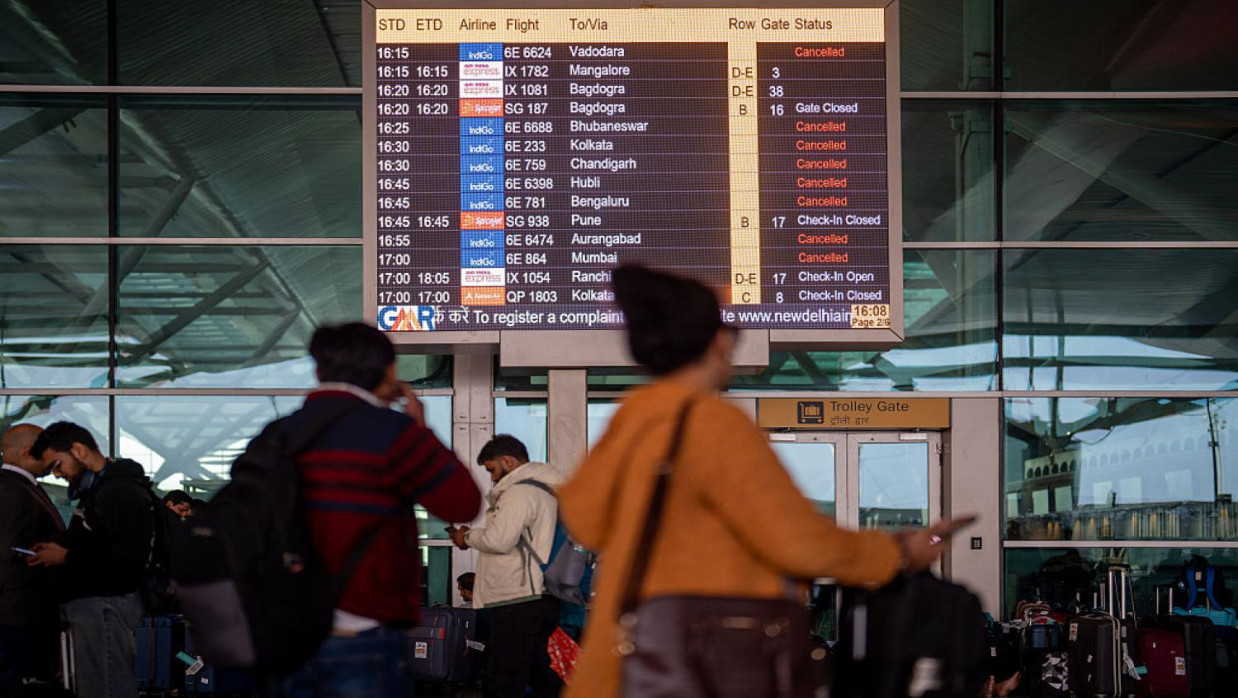
India’s aviation industry – a sector not exactly associated with stability – is again in the headlines after IndiGo cancelled thousands of flights in the space of a week, disrupting the travel plans of more than half a million passengers. The incident has severely impacted IndiGo’s reputation, despite its status as market leader.
It has also ignited heated debate over whether the country’s aviation sector has become too concentrated.
IndiGo has a 65 per cent share of India’s domestic air travel market. It is also Qantas’s codeshare partner in India. With a reputation built on punctuality in a sector plagued by flight delays and cancellations, IndiGo has – until now – put even Qantas to shame.
So what happened?
The crisis began in earnest on 3 December, when more than 200 flights were cancelled across India in just one day. This number increased the following day, and then again dramatically on 5 December, when more than 1600 flights across India were cancelled.
There was mayhem. Luggage arrived at destinations where passengers didn’t, call centres crashed, and passenger anger flared. There were wild scenes: acres of baggage spread out over airport floors, angry passengers, crying babies. In one memorable incident, a woman climbed onto the ledge of the airline desk and loudly repeated that she wanted to go home to France, in French, to amused onlookers who paused from their rage to film her for social media.
The fiasco laid bare the uncompetitive reality of India’s airspace.
An estimated 580,000 passengers were impacted and around 5000 flights cancelled in the space of ten days.
The genesis of the issue came in January 2024, when the Indian government implemented changes that included a rule increasing pilot rest time per week from 36 hours to 48. As a budget airline with slim margins, Indigo’s fortunes are built on squeezing as much juice from staff members as possible, so this clearly did not fit its business model. When the changes came into effect in early November, other airlines had accommodated them but IndiGo had failed to make any changes whatsoever.
There’s no real explanation for this. Perhaps IndiGo hoped to put pressure on the government to rescind the rules. In any case, the result was dire: IndiGo could not keep up and came off looking woefully unprepared.
The fiasco laid bare the uncompetitive reality of India’s airspace. After IndiGo at 65 per cent, Air India, the Tata-owned government carrier, has a 27 per cent market share, making the skies an effective duopoly. SpiceJet has a visible presence but a much smaller share.
This wasn’t always the case. Ten to fifteen years ago the space was much more competitive. Full-service operations Kingfisher Airlines and Jet Airways were popular. But Kingfisher, owned by liquor baron Vijay Mallya, collapsed in 2012 with a US$2.5 billion debt. Jet Airways, once India’s top airline and owner of low-cost subsidiary JetLite, entered insolvency in 2019. GoAir collapsed in 2023. In 2024 AirAsia India was acquired by the Tata Group, and Indian Airlines, a state-owned carrier, was folded into Air India, as was Vistara, which had been part-owned by Singapore Airlines.
Understandably, the Indian government is being criticised alongside IndiGo’s management for allowing this to happen. For its part, the government has been working to mitigate the drama by ensuring passengers get their luggage and refunds. It has also given IndiGo what it apparently wanted: an exemption from the pilot downtime rules, at least for now. The government has also conceded that the state of the airways is unedifying. Earlier this week, Aviation Minister Ram Mohan Naidu said India needs five airlines with fleets of at least 100 aircraft each and assured the public that the government was working to create the necessary conditions.
For one airline, however reliable, to have such a stranglehold on the market is not ideal. It is almost universally accepted that the airline sector will have to restructure, with conditions set to ensure that more competitiveness is baked in.
The article appeared in the lowyinstitute
0 Comments
LEAVE A COMMENT
Your email address will not be published