

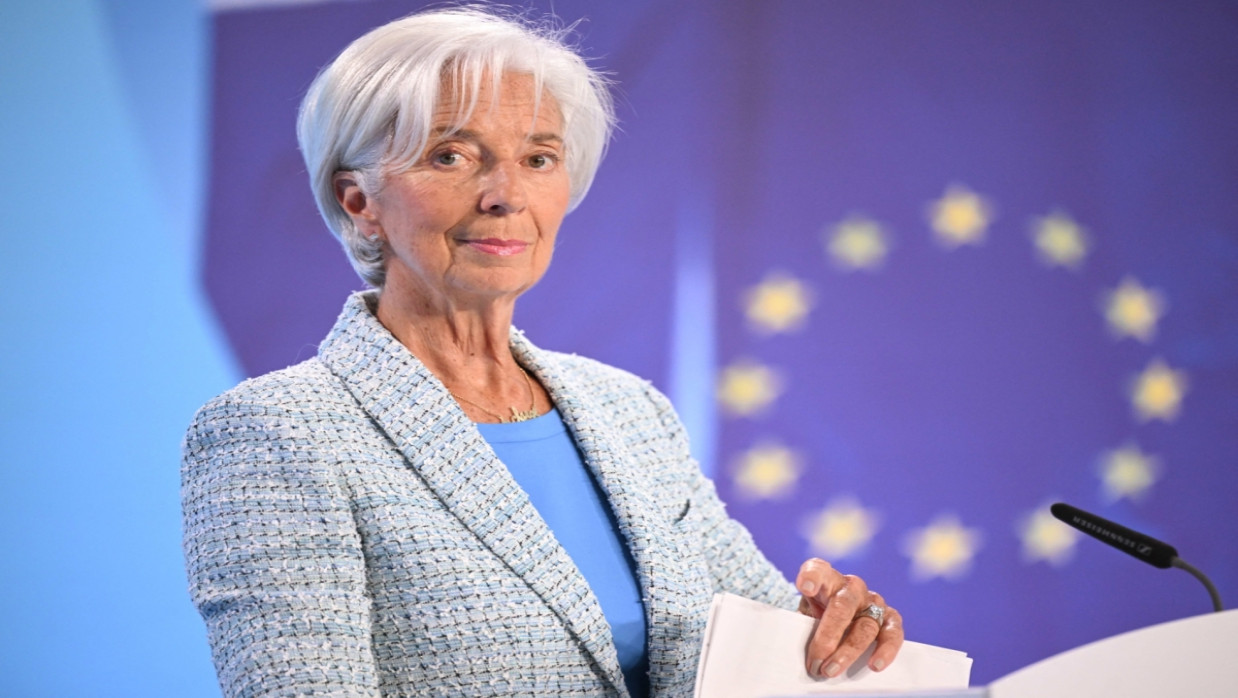
At this year’s World Economic Forum in Davos 2026, European Central Bank President Christine Lagarde asked the crowd a simple question: Are the 2020s the new 1920s? It was less rhetorical than it sounds. Beneath the bullishness about artificial intelligence, post-COVID normalization, and productivity gains from technology, Lagarde recognized a global economy with three dark clouds overhead: historic levels of debt, geopolitical fragmentation, and the belief that growth can outpace fundamental weaknesses indefinitely.
For South Asia, Lagarde’s question was jarring. Heading into the decade with significant population pressures and limited fiscal space, the region has less room for error than most. And if the original Roaring Twenties ended with a crisis of weak institutions struggling to contain bursts of innovation, South Asia risks learning that lesson anew and paying a higher price.
Dark Cloud No. 1: Debt Without Reserve Currency Privilege
Ask anyone at Davos 2026 what they worry about at the national level, and they will likely say sovereign debt. At around $38 trillion, the United States alone carries a staggering federal debt burden. Lagarde’s conversation with prominent financiers like Larry Fink of BlackRock and Ken Griffin of Citadel revolved around one key point: debt only becomes manageable in tandem with productivity gains and credible commitments to fiscal responsibility.
Unlike the US, South Asian economies do not issue reserve currencies, nor can they count on the open wallets of global markets forever. When global interest rates rise, capital first flees emerging markets. Sri Lanka defaulted in 2022 and is still cleaning up the mess left by years of unsustainable debt-fueled infrastructure buildup. Export revenues couldn’t keep up with the interest payments. Policymakers threw subsidies at every problem until the numbers made no sense. Enter the IMF, which bailed out Sri Lanka, but punishment is still being inflicted on the poor via austerity.
Pakistan is not quite there yet, but its cycle of reform euphoria under IMF programs, followed by political instability that delays necessary fiscal and structural reforms, has resulted in what economists call “adjustment without transformation.”
The point Lagarde was driving at rings particularly true: without institutions that follow through on reform, debt just kicks the can down the road.
Bangladesh: Miraculous Growth…and Decreasing Buffers
Bangladesh often gets left out of this negative narrative. The country has avoided default. Export growth has held up. Macro indicators look good (relative to Sri Lanka and Pakistan), largely due to successful macro management in past decades. Bangladesh has reeled in inflation. Its external debt is rising, but foreign exchange reserves and the balance of payments are holding up. Bangladesh even entered into an IMF standby arrangement this year…but it was precautionary.
Why does any of this matter? Growing external debt and low reserves aren’t a crisis…yet. Rising debt makes subsidy-heavy fiscal spending harder to manage. And while Bangladesh was able to avoid confrontation with the IMF this decade, entering into a program at all signals awareness that this stability is no longer guaranteed.
Bangladesh’s garment, remittance, and demographic-momentum-driven growth miracle is not immune to external forces. Automation is creeping into RMG. The nature of global trade is changing. America’s productivity boom of the late 1920s papered over structural weaknesses that collapsed a few years later.
India: Can Scale Buoy Confidence?
India has grown its way out of past economic troubles. Despite high debt levels in recent years, India’s overall public debt situation is not alarming by most estimates. Additionally, domestic investors finance the majority of India’s public debt, providing it with some insulation. Debt can’t grow infinitely, but it appears India has room to leverage its scale before markets react.
The danger with scale is that it can lull policymakers into overconfidence. Look at public investment. Clear multi-decade productivity gains will be needed to justify current levels of public spending. Fortunately for India, there is one such multiplier on the horizon: artificial intelligence.
Indian officials have touted AI as the key to future productivity increases that will put millions of people to work while expanding GDP. While AI can be that multiplier, Lagarde’s point about debt and trust still applies: strong productivity gains are not guaranteed. Investing in technology without parallel investments in worker training, labor mobility, and institutions more generally risks turning A.I. into a fiscal justification rather than part of a comprehensive growth strategy.
AI and South Asia’s Labor Challenge
Christine Lagarde wasn’t alone at Davos in praising artificial intelligence. At border meetings and keynote sessions, AI’s role as this decade’s leading driver of economic growth was endlessly repeated. For developed economies struggling with aging workforces, AI presents an opportunity to soften the blow. In South Asia, it threatens to displace low-skill jobs that no A.I. algorithm can replace.
Textiles. BPO. Accounting. Logistics. Software. Where will South Asia find the next export miracle to absorb millions of workers if A.I. replaces them first? Domestically, regulators and policymakers are racing to catch up to technology leaders. “If AI does not empower workers,” Lagarde told Davos, “it will replace them.” Wise words. Without AI governance and guardrails, what happens to displaced South Asian workers?
Consider the lessons of the 1920s. A golden age of technology culminated in extreme levels of inequality because institutions failed to adapt to changing conditions. The labor challenge heading into the next decade isn’t simply one of lost jobs. It’s about providing a social safety net once growth stalls.
IMF Conditionality in a Multipolar Monetary System
Central bank independence. Sovereign debt. Credit rating agencies. IMF conditionality.
Compared to the Great Roaring Twenties, South Asian economies today face these external validators of domestic economic policy wherever they turn. Sri Lanka signed off on an IMF package that called for tax increases, subsidy reform, and structural adjustment measures repulsive to most segments of society. The price of financing was high. Pakistan is in the midst of similar negotiations.
Christine Lagarde was telling South Asia what it doesn’t want to hear. Global financial markets have no patience for doublespeak. Fiscal slippage results in external intervention. Reform fatigue sparks political backlash. Growth forecasts powered by AI won’t matter if credibility continues to erode.
Dark Cloud No. 3: Fragile Confidence
In closing, Ken Griffin, founder and CEO of Citadel, an American billionaire investor, hedge-fund manager, and philanthropist, warned that “politics of irresponsibility” could burst debt markets and derail financial stability. Is it a coincidence that South Asia and frontier markets saw a flight of capital just this year? I think not. Like the late Roaring Twenties of yesteryear, capital flooded into emerging markets during the mid-2020s only to pull out when geopolitics turned, and the Fed tightened.
Trust is the foundation on which healthy capital markets are built, Lagarde said. To South Asia, I would add: trust your citizens by providing regulatory certainty, enforcing the rule of law, and exercising political maturity. Without trust, even countries with good growth stories will have trouble translating optimism into capital.
Is the 2020s South Asia’s New Roaring Twenties?
The 1920s weren’t great because they lacked innovation. They suffered from weak institutions, widening inequality, and geopolitical tensions that ultimately spiraled out of control. Lagarde wasn’t telling South Asia what to do. She was offering friendly advice before it was too late.
Elevated debt levels. AI is replacing jobs. Dependence on the IMF. South Asia has its work cut out for it if the 2020s are not to repeat the mistakes of the last century. Debt can be used to fund transformational growth or fund dependency on foreign capital. Institutions can build trust and stability or spark a crisis. AI can complement workers or replace them.
Which decade the 2020s become is up to policymakers. But one thing is certain: history rewards decisiveness and punishes delusion.


0 Comments
LEAVE A COMMENT
Your email address will not be published