


The recently concluded three-way dialogue between Afghanistan, China, and Pakistan in Kabul has ushered in a new period of regional diplomacy. The visits of Pakistan Deputy Prime Minister and Foreign Minister and Acting Foreign Minister of Afghanistan Mawlawi Amir Khan Muttaqi have showcased that the two countries are slowly but surely shifting away from suspicion heritage to an architecture of collaborative perception. The conversation functioned to establish that on both sides there exists a desire to redefine the relationship in terms of partnership not inherited enmity. Such a conversation functions to establish political will sustained by material action, not diplomatic bluff.
Most noteworthy of the session was the resumption of representation at ambassadorial level. In the fine art of diplomacy of the world, the gestures are symbolic and not anything else; they attested to the seriousness of the states in attempting to obtain permanent relations. The aspect that it is receiving and sending ambassadors that determines where the negotiations will be conducted and even enables sending of urgent business at hand in absence is only the beginning. To Pakistan, and to Afghanistan itself, it is an evasion as well of three decades of suspicion and persistent attempts at a guarded attempt at trying again on surer and consolidated terms.
Economic cooperation, in the form of trade and transit, has also become the balancer leg of the equation. Cross-border commerce has been a stabilizing force against political unrest for centuries, and in Kabul talks, it was of the highest import to resolve commerce and its implications to the man in the street as a neutral observer. Incentivization of border processes, improvement in transit infrastructure, and removal of red tapism were focused upon. They not only enhance confidence in the private sector but also generate employment seven days a week, which depends on cross-border enterprise. Economic interdependence is increasingly becoming the be-all and end-all surety of peace between the two neighbors.
That vision, however, goes beyond bilateral trade. Pakistan and Afghanistan geographically are the fulcrums of greater regional integration. Bridging Central Asia to South Asia and so indirectly to China, they have put themselves at a natural hub of future prosperity. Pipelines for energy, highways and rail networks, and communications infrastructure loom as a threatening reality in the making. In making connectivity the pillars of cooperation, they are opening doors to job prospects, foreign investment, and yet more exchanges of culture. In a region of the world stereotypically perceived to be unstable, this assertive move toward unification is reassuring toward stability.
The addition of Beijing is the introduction of another axis of usefulness to this trilateral coalition. As a rising world economic power with its Belt and Road Initiative (BRI) and China-Pakistan Economic Corridor (CPEC), Beijing brings capability and strategic heft to this new coalition. Afghanistan’s entry to this alignment has upped infrastructure, trade, and energy cooperation to a hitherto unprecedented level. All of them owe something to someone—Pakistan for more deepened foreign policy interaction, Afghanistan for investment and global legitimacy, and China for more regional prestige. All of them need to share a common requirement of being able to narrate a story of collective progress rather than zero-sum rivalry.
Security is not on the agenda. Pakistan has indicated that it is organizations such as the Tehrik-i-Taliban Pakistan (TTP) and the Balochistan Liberation Army (BLA) that work against its internal stability and regional stability. Credit is afforded to the statements of Afghanistan that its territory will never be used by terror groups, but most thankful for what can be done and brought to light to be done. Counterterrorism is not unilateral aid; it must be commonality equipment and concerted effort. If the evidence exists that it’s going on this path, there will be greater confidence, and cooperation will be firmly established.
Far more important, however, was the respect attitude each had for the other during the meeting. Pakistan’s recognition of Afghan hospitality and gratitude for Kabul’s symbolic act of opening the door to the negotiations, so to speak, were genuine. Diplomatic relations too often have stayed on unspoken gestures of deference, and the gestures are intended to provide cues to directions of willingness to cooperate rather than to place the burden upon the partner of patronizing assumption. Trust, however, can over time begin to persuade levels of suspicion and create cooperative stability.
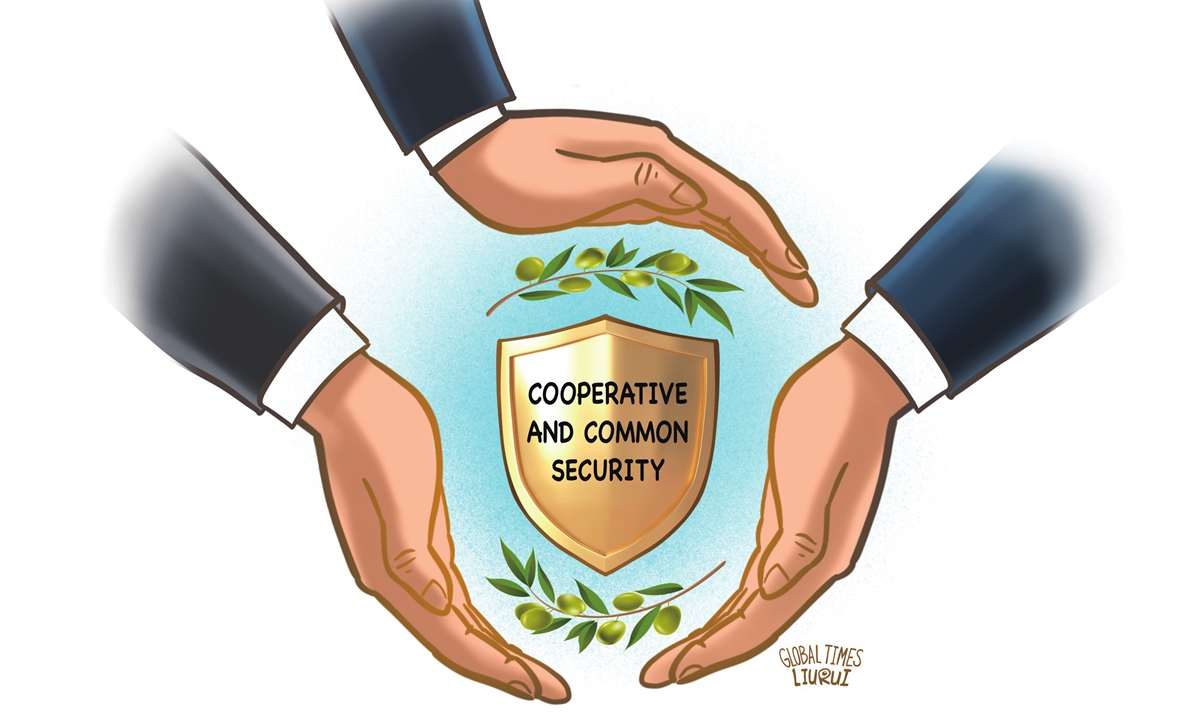
The Kabul trilateral saw Pakistan, Afghanistan, and China having a converging vision of regional connectivity, peace, and prosperity. The region has thus far been plagued by anarchy, extremism, and missed potential. The emerging trend is one of incremental but irreversible transition from war to cooperation. By placing highest importance on commerce, integration, and common security, the three nations are constructing the material of another regional narrative that is one of neighbors choosing to talk and not shoot, and economic and cultural linkages redefining their fate as one.


0 Comments
LEAVE A COMMENT
Your email address will not be published