


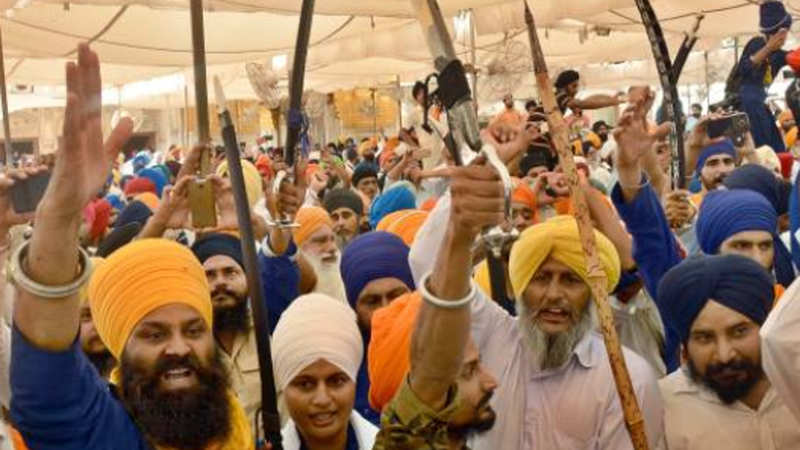
“We believe India faces a long-term terrorist threat from Sikh extremists that the government probably cannot eradicate…We believe Pakistan would significantly increase its support to Sikh extremists only if hostilities were breaking out with India over other issues, such as Kashmir”
– Excerpt from 1984 declassified CIA report “India and the Sikh Challenge”:
The Sikh separatist movement is again in the spotlight as US-based organization Sikhs for Justice promotes “Referendum 2020”, which asks Sikhs to vote on the formation of an independent country. Sikh unrest in Punjab has resulted in a crackdown on groups suspected of reviving militancy, using a new BJP anti-terror bill. Contemporaneously, Kashmiri activists are rioting against the revocation of the special status of Jammu and Kashmir. Under PM Modi, political power in India resides with Hindi-speaking Hindus in the center north; Kashmiri and Sikh activists have united in recent weeks to speak out against the status quo amidst a backdrop of rising tensions.
__________
When British India cleaved in 1947, Muslims got Pakistan, Hindus got India, and Sikhs, despite pleas for a homeland, wound up empty-handed. Sikh identity had been broadly rooted in northern India, but the Punjab as the spiritual heartland and rallying point took on special significance once it became clear that Sikhs would not have a nation to themselves. During Partition almost all Pakistani Sikhs migrated to Indian Punjab, choosing to ally with Hindus over their historical Muslim territorial rivals. Sikhs and Hindus lived in Punjab in relative harmony until the 1970s, when calls for a Sikh homeland “Khalistan” (derived from Arabic “khalisa”, to be free from) resurfaced. Relations quickly soured: in response to a cancelled election, a charismatic (and heavily armed) Sikh leader installed himself in a sacred complex, setting off a chain of events that ended with the assassination of Prime Minister Indira Gandhi and the near-destruction of the most holy shrine in Sikhism. The assassination united public opinion against the Sikhs, and calls for a homeland died down- until recently.
The resurgence of interest in Khalistan has been led by the Sikh diaspora in Canada, the US, and the UK. Young Sikh members of the diaspora are linked to the movement via a robust online presence, which highlights human rights abuses and state repression. Canadian Sikhs provide significant financial support to Khalistan, leading to Prime Minister Modi’s widely publicized snub of Prime Minister Trudeau in 2018.
Since PM Modi and his BJP party were re-elected by a landslide in 2019, they have doubled down on “Hindutva”, the ideology defining India as a Hindu nation. The revocation of Article 370 last week was a significant step: though Article 370 has been acknowledged as a mere symbol of autonomy for India’s only Muslim-majority state, the abrogation of Jammu and Kashmir’s regional authority sparked riots in India and condemnation from Pakistan and China.
The territorial claims of the Khalistan movement are not clearly defined: the annexation of Indian Punjab is a constant, but calls for Khalistan have sometimes included Pakistani Punjab and broad swaths of north India, including Jammu and Kashmir. With this in mind, it is not immediately clear how Khalistan-supporters viewed Article 370’s revocation.
Most Khalistan supporters would acknowledge that Khalistan as a wholly independent nation is unlikely to corporealize: for one, even in Punjab, Sikhs are only 60% of the population. Despite its small size, Punjab supplies more wheat and rice than any other Indian state, making its independence a matter of national security for India. The Khalistan movement is less about diplomatic recognition and more about a spiritual homeland and the “right to be different” in today’s India. Sikhs have complained that under PM Modi their religious practices are being subsumed into a broader Hindu identity, part of a long-standing practice of absorption of religious minorities by dominant Hindus. It is clear that Punjabi Sikhs, like Kashmiri Muslims, want to retain a separate non-Hindu religious identity. With this in mind, the revocation of Article 370 is a direct threat to the notion of Khalistan.
The shared aspirations of pro-Khalistan and pro-Kashmir activists were demonstrated on August 3 as Kashmiri separatist outfits extended support to Referendum 2020, hosting a joint press conference in London. PM Modi and the BJP have attempted to brand the Khalistan movement as a ploy by Pakistan to sow division in India, limiting Indian popular support for the movement. There is little evidence that Pakistan currently supports Khalistan, though Pakistan trained Sikh extremists through the 1980s. Sikhism is positioned geographically and ideologically between Hinduism and Islam, resulting in a complex relationship between Sikhs, Kashmir and Pakistan. Both Punjab and Kashmir have familial pre-Partition ties to Pakistan that challenge contemporary framing of India-Pakistan relations. Pakistan’s decision to keep open the Kartarpur Corridor, which links Indian Sikhs to an important religious site in Pakistan, could be interpreted as a sign of goodwill.
The shared struggle for self-determination unites Khalistan and Kashmir, and the BJP and its supporters are united in opposition, girded by insinuations that Pakistan is behind both movements. By intensifying pressure on non-Hindus, PM Modi risks that the global spotlight on Kashmir may spill onto Khalistan, and onto India’s other independence movements, like Nagaland and Manipur. With the revocation of Article 370, PM Modi fuels the fires of the Khalistan movement and increases the likelihood of escalation.

For those who ask Y Khalistan ? This is how the Dindoo Hindoos doomed the Khalsa Converting "Rajasthani Rajpoot trash rats". to Sikhism - with the caveat that the Rajpoot rats could worship the Whore Duo Doorga and Kali etc. Imposition of Nanakshahi and Jazia", on Kashmiri Muslims "Stealing 63 cartloads of gold", from Ranjit Singh's treasury "Deserting the Sikhs", just before the Khalsa-British War "Mercury Poisoning of Ranjit Singh's children" and converting them to opium addicts "Introduction of Dindoo Hindoo" worship, to Ranjit Singh "Destruction of Ranjit Singh's Empire" "Killing of Mata Gujri,Zorawar Singh" and Fateh Singh "Killing of Maharani Chand Kaur,Kharak Singh and Naunihal Singh" "Forging of Sikh Scriptures" "Forging of "Bachetar Natak" Conning Sikhs to state that ,"Sodhi and Bedi clans", were linked to "Lav and Kush" ! "Forging the vedas", to state that "Nanak was a Vishnoo" Gandoo avatar (Simple Dindoo Best Practice - Boodha was also a Vishnu avatar) "Killing of Tegh Bahadur" Conning "Tegh Bahadur". to Go to the Court of Aurangzeb - for the Pandits ! Introducing "Randi Doorga and Randi Kali worship" and animal sacrifices to Nihangs "Operation Bluestar" due to wrong advice by Brahmin/Bania/ Kayastha scum- not Mrs Gandhi) "Installation of Idols" and Hindu Temple Priests, in the Golden Temple (by Brahmin scum),till 1930
How can a Sikh live in Hindooosthan in light of the following : Is it a fair surmise to argue that Sikh Theology and Scripture consider Hindoo Faith to a demonic faith as the Granth regards the Sikh Trinity as Demonic https://dindooohindoo.page.tl/Granth-Says-Dindoo-Trinity-%3D-Trash.htm JAITSREE, THE WORD OF THE DEVOTEES: ONE UNIVERSAL CREATOR GOD. BY THE GRACE OF THE TRUE GURU: || 3 || Shiva cut off Brahma’s head,and Gautam’s wife and the Lord Indra mated; Brahma?s head got stuck to Shiva?s hand, and Indra came to bear the “marks of a thousand female organs”. || 4 || “These demons” have fooled, bound and destroyed me. RAAG MALAAR, THE WORD OF THE DEVOTEE NAAM DAYV JEE:ONE UNIVERSAL CREATOR GOD. BY THE GRACE OF THE TRUE GURU: || 1 || In His House,the “insane Shiva”, the Guru of the World, lives; he imparts spiritual wisdom to expain the essence of reality. WADAHANS, THIRD MEHL, FIRST HOUSE: ONE UNIVERSAL CREATOR GOD. BY THE GRACE OF THE TRUE GURU: 1 || The wise one, Shiva,pervades his own home, but he is “engrossed in dark passions and excessive egotism”. SOOHEE, FOURTH MEHL, SEVENTH HOUSE: ONE UNIVERSAL CREATOR GOD. BY THE GRACE OF THE TRUE GURU: || 1 || Pause || Brahma, Vishnu and Shiva suffer from the”disease of the three gunas”,the three qualities; they do their deeds in egotism. The “poor fools” do not remember the One who created them; this understanding of the Lord is only obtained by those who become Gurmukh. BHAIRAO, ASHTAPADEES, FIRST MEHL, SECOND HOUSE:ONE UNIVERSAL CREATOR GOD. BY THE GRACE OF THE TRUE GURU || 3 ||Brahma, Vishnu and Shiva are “diseased”; BHAIRAO, THE WORD OF THE DEVOTEES, KABEER JEE, FIRST HOUSE:ONE UNIVERSAL CREATOR GOD. BY THE GRACE OF THE TRUE GURU: || 3 ||Shiva, Shankara and Mahaysh “are polluted”. The Siddhas, seekers and strivers, and those who wear religious robes, are polluted. If So , then why do referebces in the Bachetar Natak indicate a God with Hindoo features ? Is it Hindoo Osmosis or just a forgery and why do Sikhs regard themselves as Hindoos RAAG MALAAR, FIFTH MEHL, CHAU-PADAS, FIRST HOUSE:ONE UNIVERSAL CREATOR GOD. BY THE GRACE OF THE TRUE GURU: || 2 ||Shiva,Brahma, angels and demons, all “burn in the fire of death”.
How can a Sikh live in nation run by Brahmin/Bania/Kayastha trash in light of the Granth Does the Granth revile Brahmins or Brahminism or Hindooism ? If so, then why did Sikh Gurus die for the Brahmins and allow them to steal and forge sikh scriptures, as well as,place idols in the Takht and the Golden Tempke , besides their priests in the Temple ? Is it because a bulk of Sikhs being Hindoo converts and resident in a Hindoo Nation failing to fform their Nation – suffered from the Osmois of the Hindoo and the Effect of Hindoo Transcendence Sample the love for the Brahmins in Granth dindooohindoo You may stand and recite the Shaastras and the Vedas, O Siblings of Destiny, but these are just worldly actions. “Filth cannot be washed away by hypocrisy”, O Siblings of Destiny; the filth of corruption and sin, “is within you”. (Guru Granth Sahib Ji, Ang 635) O Pandit, O religious scholar, “your filth shall not be erased”, even if you read the Vedas for four ages. (Guru Granth Sahib Ji, Ang 647) The Pandits, the religious scholars, and the silent sages, reading and studying the Vedas, have grown weary. The Messenger of Death “hovers over their heads”; they are ruined by the deceit within themselves. ||7|| (Guru Granth Sahib Ji, Ang 1277)
Are Sikhs Hindoos or Quasi Muslims ? What is the significance iof the word Allah in the Granth ? Why does it appear more often than the aggregate of all Hindoo Gods ? Is it a Quasi Islamic faith minus halal and circumcision and funeral rites ? https://dindooohindoo.page.tl/Allah-in-the-Granth.htm But the Granth Sahib itelf says “Pray to Allah”, the word Allah comes more often, than Limpdick Rama ! ONE UNIVERSAL CREATOR GOD. BY THE GRACE OF THE TRUE GURU:SIREE RAAG, FIRST MEHL, FIRST HOUSE, ASHTAPADEES: || 1 || O Baba, the Lord Allah is Inaccessible and Infinite ONE UNIVERSAL CREATOR GOD. BY THE GRACE OF THE TRUE GURU:SIREE RAAG, FIRST MEHL, FIRST HOUSE, ASHTAPADEES: || 5 || He is Allah, the Unknowable, the Inaccessible, All-powerful and Merciful Creator. BHAIRAO, FIFTH MEHL, FIRST HOUSE:ONE UNIVERSAL CREATOR GOD. BY THE GRACE OF THE TRUE GURU: || 1 || The One Lord, the Lord of the World, is my God Allah BIBHAAS, PRABHAATEE, THE WORD OF DEVOTEE KABEER JEE:ONE UNIVERSAL CREATOR GOD. BY THE GRACE OF THE TRUE GURU: || 6 || 2 || PRABHAATEE: First,Allah created the Light; then, by His Creative Power, He made all mortal beings. BIBHAAS, PRABHAATEE, THE WORD OF DEVOTEE KABEER JEE:ONE UNIVERSAL CREATOR GOD. BY THE GRACE OF THE TRUE GURU: || 3 || The Lord Allah is Unseen; He cannot be seen.
This is for the fools who state that Hindoos and Siksh are One Race and One Nation How can Sikhs, Muslims and Hindoos live together in light if the undermentioned verses https://dindooohindoo.page.tl/Dindoo_Muslim_Sikh-Bhai-Bhai.htm ਮੜ੍ਹੀ ਗੋਰ ਦੇਵਲ ਮਸੀਤਾਂ ਗਿਰਾਯੰ । ਤੁਹੀਂ ਏਕ ਅਕਾਲ ਹਰਿ ਹਰਿ ਜਪਾਯੰ । “Graves, Hindu temples and Mosques be destroyed” and that only Eternal, Hari is to be worshiped. ਮਿਟੇਂ ਵੇਦ ਸ਼ਾਸਤ੍ਰ ਅਠਾਰਾਂ ਪੁਰਾਨਾ । ਮਿਟੇਂ ਬਾਂਗ ਸਲਵਾਤ ਸੁੰਨਤ ਕੁਰਾਨਾਂ । That all “Vedas, Shashtras and Puranas to be destroyed”. Destroy prayer call, circumcision “and Quran”. ਸਗਲ ਜਗਤ ਮੇਂ ਖਾਲਸਾ ਪੰਥ ਗਾਜੈ । ਜਗੈ ਧਰਮ ਹਿੰਦੂ ਸਗਲ ਦੁੰਦ ਭਾਜੈ । In the whole world will roar the Khalsa Panth. Dharma will flourish and all else ‘Dund’ (Hindu and Islam) “will disappear.”
Y is there Soft Porn in the Granth ? Is it a forgery / insertion by the Hindoos ? By the Brahmins ? Y did the Sikhs not pay heed the advice by the Granth on the evil of Brahmins and Pandits ? Are these the Songs of Solomon ? Did any Sikh Seer live like Solomon – then Y is this muck STILL in the Granth ? IT IS PRIME PROOF OF FORGERY OF THE GRANTH AND SIKH THEOLOGY BY HINDOO BRAHMINS AND PANDITS ! https://dindooohindoo.page.tl/Granth–d–Semi_Porn-Language.htm Sri Guru Granth Sahib Ang 21 of 1430 ਕਾਇਆ ਕਾਮਣਿ ਜੇ ਕਰੀ ਭੋਗੇ ਭੋਗਣਹਾਰੁ ॥ Kaaeiaa Kaaman Jae Karee Bhogae Bhoganehaar || If I surrender my body like a bride, the Enjoyer will enjoy me. ਸਿਰੀਰਾਗੁ (ਮਃ ੧) (੨੦) ੩:੧ – ਗੁਰੂ ਗ੍ਰੰਥ ਸਾਹਿਬ : ਅੰਗ ੨੧ ਪੰ. ੧੮ Sri Raag Guru Nanak Dev ਤਿਸੁ ਸਿਉ ਨੇਹੁ ਨ ਕੀਜਈ ਜੋ ਦੀਸੈ ਚਲਣਹਾਰੁ ॥ This Sio Naehu N Keejee Jo Dheesai Chalanehaar || Do not make love with one who is just a passing show. ਸਿਰੀਰਾਗੁ (ਮਃ ੧) (੨੦) ੩:੨ – ਗੁਰੂ ਗ੍ਰੰਥ ਸਾਹਿਬ : ਅੰਗ ੨੧ ਪੰ. ੧੯ Sri Raag Guru Nanak Dev ਗੁਰਮੁਖਿ ਰਵਹਿ ਸੋਹਾਗਣੀ ਸੋ ਪ੍ਰਭੁ ਸੇਜ ਭਤਾਰੁ ॥੩॥ Guramukh Ravehi Sohaaganee So Prabh Saej Bhathaar ||3|| The Gurmukh is ravished like the pure and happy bride on the Bed of God, her Husband. ||3|| ਸਿਰੀਰਾਗੁ (ਮਃ ੧) (੨੦) ੩:੩ – ਗੁਰੂ ਗ੍ਰੰਥ ਸਾਹਿਬ : ਅੰਗ ੨੧ ਪੰ. ੧੯ Sri Raag Guru Nanak Dev ਸੇਜੈ ਕੰਤੁ ਨ ਆਵਈ ਨਿਤ ਨਿਤ ਹੋਇ ਖੁਆਰੁ ॥ Saejai Kanth N Aavee Nith Nith Hoe Khuaar || Her Husband Lord does not come to her bed; day after day, she grows more and more miserable. ਸਿਰੀਰਾਗੁ (ਮਃ ੩) (੪੬) ੧:੨ – ਗੁਰੂ ਗ੍ਰੰਥ ਸਾਹਿਬ : ਅੰਗ ੩੧ ਪੰ. ੯ Sri Raag Guru Amar Das ਮਿਠਾ ਬੋਲਹਿ ਨਿਵਿ ਚਲਹਿ ਸੇਜੈ ਰਵੈ ਭਤਾਰੁ ॥ Mithaa Bolehi Niv Chalehi Saejai Ravai Bhathaar || Her speech is sweet, and her way of life is humble. She enjoys the Bed of her Husband Lord. ਸਿਰੀਰਾਗੁ (ਮਃ ੩) (੪੬) ੨:੨ – ਗੁਰੂ ਗ੍ਰੰਥ ਸਾਹਿਬ : ਅੰਗ ੩੧ ਪੰ. ੧੨ Sri Raag Guru Amar Das ਜਾ ਪਿਰੁ ਜਾਣੈ ਆਪਣਾ ਤਨੁ ਮਨੁ ਅਗੈ ਧਰੇਇ ॥ Jaa Pir Jaanai Aapanaa Than Man Agai Dhharaee || If you know that He is your Husband Lord, offer your body and mind to Him. ਸਿਰੀਰਾਗੁ (ਮਃ ੩) (੪੭) ੧:੧ – ਗੁਰੂ ਗ੍ਰੰਥ ਸਾਹਿਬ : ਅੰਗ ੩੧ ਪੰ. ੧੬ Sri Raag Guru Amar Das ਬਿਨੁ ਸਬਦੈ ਪਿਰੁ ਨ ਪਾਈਐ ਬਿਰਥਾ ਜਨਮੁ ਗਵਾਇ ॥੨॥ Bin Sabadhai Pir N Paaeeai Birathhaa Janam Gavaae ||2|| Without the Shabad, she does not find her Husband Lord, and her life wastes away in vain. ||2|| ਸਿਰੀਰਾਗੁ (ਮਃ ੩) (੪੭) ੨:੩ – ਗੁਰੂ ਗ੍ਰੰਥ ਸਾਹਿਬ : ਅੰਗ ੩੧ ਪੰ. ੧੯ Sri Raag Guru Amar Das Ang 38 of Guru Granth Sahib. ਇਕਿ ਪਿਰੁ ਰਾਵਹਿ ਆਪਣਾ ਹਉ ਕੈ ਦਰਿ ਪੂਛਉ ਜਾਇ ॥ Eik Pir Raavehi Aapanaa Ho Kai Dhar Pooshho Jaae || Some enjoy their Husband Lord; unto whose door should I go to ask for Him? ਸਿਰੀਰਾਗੁ (ਮਃ ੩) (੬੨) ੧:੧ – ਗੁਰੂ ਗ੍ਰੰਥ ਸਾਹਿਬ : ਅੰਗ ੩੮ ਪੰ. ੮ Sri Raag Guru Amar Das ਸਤਿਗੁਰੁ ਸੇਵੀ ਭਾਉ ਕਰਿ ਮੈ ਪਿਰੁ ਦੇਹੁ ਮਿਲਾਇ ॥ Sathigur Saevee Bhaao Kar Mai Pir Dhaehu Milaae || I serve my True Guru with love, that He may lead me to Union with my Husband Lord. ਸਿਰੀਰਾਗੁ (ਮਃ ੩) (੬੨) ੧:੨ – ਗੁਰੂ ਗ੍ਰੰਥ ਸਾਹਿਬ : ਅੰਗ ੩੮ ਪੰ. ੯ Sri Raag Guru Amar Das ਅਨਦਿਨੁ ਰਾਵਹਿ ਪਿਰੁ ਆਪਣਾ ਸਹਜੇ ਸਚਿ ਸਮਾਇ ॥੧॥ ਰਹਾਉ ॥ Anadhin Raavehi Pir Aapanaa Sehajae Sach Samaae ||1|| Rehaao || Night and day, you shall enjoy your Husband, and you shall intuitively merge into the True One. ||1||Pause|| ਸਿਰੀਰਾਗੁ (ਮਃ ੩) (੬੨) ੧:੨ – ਗੁਰੂ ਗ੍ਰੰਥ ਸਾਹਿਬ : ਅੰਗ ੩੮ ਪੰ. ੧੧ Sri Raag Guru Amar Das ਸੇਜ ਸੁਹਾਵੀ ਹਰਿ ਰੰਗਿ ਰਵੈ ਭਗਤਿ ਭਰੇ ਭੰਡਾਰ ॥ Saej Suhaavee Har Rang Ravai Bhagath Bharae Bhanddaar || Upon her beautiful and cozy bed, she enjoys the Love of her Lord. She is overflowing with the treasure of devotion. ਸਿਰੀਰਾਗੁ (ਮਃ ੩) (੬੨) ੨:੩ – ਗੁਰੂ ਗ੍ਰੰਥ ਸਾਹਿਬ : ਅੰਗ ੩੮ ਪੰ. ੧੨ Sri Raag Guru Amar Das Ang 58 of Guru Granth Sahib. ਨਾ ਮਾਣੇ ਸੁਖਿ ਸੇਜੜੀ ਬਿਨੁ ਪਿਰ ਬਾਦਿ ਸੀਗਾਰੁ ॥ Naa Maanae Sukh Saejarree Bin Pir Baadh Seegaar || She does not enjoy the pleasure of His Bed; without her Husband, her ornaments are absurd. ਸਿਰੀਰਾਗੁ (ਮਃ ੧) ਅਸਟ. (੯) ੧:੨ – ਗੁਰੂ ਗ੍ਰੰਥ ਸਾਹਿਬ : ਅੰਗ ੫੮ ਪੰ. ੧੩ Sri Raag Guru Nanak Dev ਦੂਖੁ ਘਣੋ ਦੋਹਾਗਣੀ ਨਾ ਘਰਿ ਸੇਜ ਭਤਾਰੁ ॥੧॥ Dhookh Ghano Dhohaaganee Naa Ghar Saej Bhathaar ||1|| The discarded bride suffers terrible pain; her Husband does not come to the bed of her home. ||1|| ਸਿਰੀਰਾਗੁ (ਮਃ ੧) ਅਸਟ. (੯) ੧:੩ – ਗੁਰੂ ਗ੍ਰੰਥ ਸਾਹਿਬ : ਅੰਗ ੫੮ ਪੰ. ੧੩ Sri Raag Guru Nanak Dev ਸਚਿ ਮਾਣੇ ਪਿਰ ਸੇਜੜੀ ਗੂੜਾ ਹੇਤੁ ਪਿਆਰੁ ॥ Sach Maanae Pir Saejarree Goorraa Haeth Piaar || Truly, she enjoys the Bed of her Husband, through her deep love and affection. ਸਿਰੀਰਾਗੁ (ਮਃ ੧) ਅਸਟ. (੯) ੨:੨ – ਗੁਰੂ ਗ੍ਰੰਥ ਸਾਹਿਬ : ਅੰਗ ੫੮ ਪੰ. ੧੫ Sri Raag Guru Nanak Dev Ang 126 of Guru Granth Sahib. ਕਾਮਣਿ ਪਿਰੁ ਰਾਖਿਆ ਕੰਠਿ ਲਾਇ ਸਬਦੇ ਪਿਰੁ ਰਾਵੈ ਸੇਜ ਸੁਹਾਵਣਿਆ ॥੭॥ Kaaman Pir Raakhiaa Kanth Laae Sabadhae Pir Raavai Saej Suhaavaniaa ||7|| That soul-bride keeps her Husband Lord clasped tightly to her heart, and through the Word of the Shabad, she enjoys her Husband Lord upon His Beautiful Bed. ||7|| ਮਾਝ (ਮਃ ੩) ਅਸਟ (੨੯) ੭:੩ – ਗੁਰੂ ਗ੍ਰੰਥ ਸਾਹਿਬ : ਅੰਗ ੧੨੭ ਪੰ. ੫ Raag Maajh Guru Amar Das Ang 359 of 1430 ਮਨ ਮੰਦਰਿ ਜੇ ਦੀਪਕੁ ਜਾਲੇ ਕਾਇਆ ਸੇਜ ਕਰੇਈ ॥ Man Mandhar Jae Dheepak Jaalae Kaaeiaa Saej Karaeee || If she lights the lamp in the mansion of her mind, and makes her body the bed of the Lord, ਆਸਾ (ਮਃ ੧) (੩੫) ੪:੧ – ਗੁਰੂ ਗ੍ਰੰਥ ਸਾਹਿਬ : ਅੰਗ ੩੫੯ ਪੰ. ੧੧ Raag Asa Guru Nanak Dev ਗਿਆਨ ਰਾਉ ਜਬ ਸੇਜੈ ਆਵੈ ਤ ਨਾਨਕ ਭੋਗੁ ਕਰੇਈ ॥੪॥੧॥੩੫॥ Giaan Raao Jab Saejai Aavai Th Naanak Bhog Karaeee ||4||1||35|| Then, when the King of spiritual wisdom comes to her bed, He shall take her, and enjoy her. ||4||1||35|| ਆਸਾ (ਮਃ ੧) (੩੫) ੪:੨ – ਗੁਰੂ ਗ੍ਰੰਥ ਸਾਹਿਬ : ਅੰਗ ੩੫੯ ਪੰ. ੧੨ Raag Asa Guru Nanak Dev Ang 737 of Guru Granth Sahib. ਆਸ ਪਿਆਸੀ ਪਿਰ ਕਉ ਲੋੜੀ ॥੧॥ Aas Piaasee Pir Ko Lorree ||1|| I am thirsty with desire and longing for my Husband Lord. ||1|| ਸੂਹੀ (ਮਃ ੫) (੪) ੧:੪ – ਗੁਰੂ ਗ੍ਰੰਥ ਸਾਹਿਬ : ਅੰਗ ੭੩੭ ਪੰ. ੧੦ Raag Suhi Guru Arjan Dev ਗੁਣ ਕਾਮਣ ਕਰਿ ਕੰਤੁ ਰੀਝਾਇਆ ॥ Gun Kaaman Kar Kanth Reejhaaeiaa || By the charms of virtue, I have enticed and fascinated my Husband Lord. ਸੂਹੀ (ਮਃ ੫) (੪) ੩:੧ – ਗੁਰੂ ਗ੍ਰੰਥ ਸਾਹਿਬ : ਅੰਗ ੭੩੭ ਪੰ. ੧੨ Raag Suhi Guru Arjan Dev ਵਸਿ ਕਰਿ ਲੀਨਾ ਗੁਰਿ ਭਰਮੁ ਚੁਕਾਇਆ ॥ Vas Kar Leenaa Gur Bharam Chukaaeiaa || He is under my power – the Guru has dispelled my doubts. ਸੂਹੀ (ਮਃ ੫) (੪) ੩:੨ – ਗੁਰੂ ਗ੍ਰੰਥ ਸਾਹਿਬ : ਅੰਗ ੭੩੭ ਪੰ. ੧੩ Raag Suhi Guru Arjan Dev ਸਭ ਕਾਮਣਿ ਤਿਆਗੀ ਪ੍ਰਿਉ ਪ੍ਰੀਤਮੁ ਮੇਰਾ ॥੩॥ Sabh Kaaman Thiaagee Prio Preetham Maeraa ||3|| Renouncing all other brides, my Beloved has become my lover. ||3|| ਸੂਹੀ (ਮਃ ੫) (੪) ੩:੪ – ਗੁਰੂ ਗ੍ਰੰਥ ਸਾਹਿਬ : ਅੰਗ ੭੩੭ ਪੰ. ੧੩ Raag Suhi Guru Arjan Dev ਸੇਜ ਵਿਛਾਈ ਸਰਧ ਅਪਾਰਾ ॥ Saej Vishhaaee Saradhh Apaaraa || I have prepared my bed with infinite care and faith. ਸੂਹੀ (ਮਃ ੫) (੪) ੪:੨ – ਗੁਰੂ ਗ੍ਰੰਥ ਸਾਹਿਬ : ਅੰਗ ੭੩੭ ਪੰ. ੧੪ Raag Suhi Guru Arjan Dev ਨਵ ਰੰਗ ਲਾਲੁ ਸੇਜ ਰਾਵਣ ਆਇਆ ॥ Nav Rang Laal Saej Raavan Aaeiaa || My Darling Beloved is new and fresh; He has come to my bed to enjoy me. ਸੂਹੀ (ਮਃ ੫) (੪) ੪:੩ – ਗੁਰੂ ਗ੍ਰੰਥ ਸਾਹਿਬ : ਅੰਗ ੭੩੭ ਪੰ. ੧੫ Raag Suhi Guru Arjan Dev Ang 770 of 1430 ਨਾਨਕ ਕਾਮਣਿ ਕੰਤੈ ਰਾਵੇ ਮਨਿ ਮਾਨਿਐ ਸੁਖੁ ਹੋਈ ॥੧॥ Naanak Kaaman Kanthai Raavae Man Maaniai Sukh Hoee ||1|| O Nanak, the soul-bride ravishes and enjoys her Husband Lord; her mind accepts Him, and she finds peace. ||1|| ਸੂਹੀ (ਮਃ ੩) ਛੰਤ (੪) ੧:੬ – ਗੁਰੂ ਗ੍ਰੰਥ ਸਾਹਿਬ : ਅੰਗ ੭੭੦ ਪੰ. ੩ Raag Suhi Guru Amar Das
Y did Tegh Bahdaur say to Aurangzeb that he was a Hindoo ? OR IS THAT ALSO A BRAHMIN/ PANDIT/ BANIA LIE ? https://dindooohindoo.page.tl/Sikh_Schism.htm Tin te sun Siri Tegh Bahadur Dharam nibaahan bikhe Bahadur Uttar bhaniyo, dharam hum Hindu Atipriya ko kin karen nikandu Lok parlok ubhaya sukhani Aan napahant yahi samani Mat mileen murakh mat loi Ise tayage pramar soi Hindu dharam rakhe jag mahin Tumre kare bin se it nahin – Guru Tegh Bahadur’s reply to Aurangzeb’s ordering him to embrace Islam. (In response, Shri Tegh Bahadur says, My religion is Hindu and how can I abandon what is so dear to me? This religion helps you in this world and that, and only a fool would abandon it. God himself is the protector of this religion and no one can destroy it.) Did he say that he was a Dindoo Hindoo ? Nanak never said so ! So then Y Tegh Bahadur ? When Gobind Singh destroyed idols,temples and kings who prayed to idols – why did Tegh Bahadur stand up for the Brahmin/Bania Filth ? That is the question ! Did Tegh Bahadur not know that Brahmins would his last words to build the thesis that Sikhs are Hindoos – and so it is in the Indian Constitution Sample the deeds of Gobind Singh ਮਨਮ ਕਸ਼ਤਨਮ ਕੋਹੀਯਾਂ ਬਤ ਪਰਸਤ ॥ ਕਿ ਓ ਬਤ ਪਰਸਤੰਦ ਮਨ ਬਤ ਸ਼ਿਕਸਤ ॥95॥ I have killed the hill Rajas (kings) who were bent on mischief. They were stone idol worshippers, I am the breaker of idols and I worship the one Lord (Zaffarnama, Guru Gobind Singh Ji) Sample the “Granth Sahib” on the “Dindoo Idol Worshuppers” VAAR OF BIHAAGRAA, FOURTH MEHL:ONE UNIVERSAL CREATOR GOD. BY THE GRACE OF THE TRUE GURU: FIRST MEHL: The Hindus have forgotten the Primal Lord; they are going the wrong way.As Naarad instructed them, they worship idols. They are “blind and mute, the blindest of the blind”. The “ignorant fools” pick up stones and worship them. But when those stones themselves sink, how will they carry you across ?
What is the truth about lineage to Luv and Kush ? dindooohindoo In his autobiography Bachitra Natak, Shri Guru Govind Singh Dev has claimed that he was a descendant of Lord Rama’s younger son Lava, and that Guru Nanak Dev was a descendant of Lord Rama’s elder son Kusha (2/18-34, 2/52, 4/1-10 and 5/1-10). But Nanak not even once said so ! Y ? IS THAT ALSO A LIE AND FORGERY BY THE HINDOOO BRAHMINS/BANIAS/KAYASTHAS ?
Many Sikhs feels they were Kshatriyas in the past ? Really ? dindooohindoo Why this association ? Is it a complex ? Is it not that you were reborn as a Sikh – shedding your past ? Would you trace your lineage to Huns,Persians,Greeks,Afghans,Mughals,Mongols …or the Kshatriyas – who were – as per the Mahabharata – born of prostitutes As per the Mahabharata – Kshatriyas are sons of prostitutes Kshatriyas – As per the Mahabharata, Kshatriyas were born, when Kshatriya women (on heat) “were raped by Brahmins”, w/o marriage and hence, were “born as a bastard race” with the “zero IQ and potency of Brahmins” and the “cowardice, treachery and chicanery of the Brahmins” SECTION LXIV – Mahbharata – Adivansavatarana Parva The son of Jamadagni (Parasurama), after twenty-one times making the earth bereft of Kshatriyas wended to that best of mountains Mahendra and there began his ascetic penances. And at that time when the earth was bereft of Kshatriyas, the Kshatriya ladies, “desirous of offspring”, used to come, O monarch, to the Brahmanas and Brahmanas of rigid vows had connection with them during the womanly season alone, but never, O king, lustfully and out of season. And Kshatriya ladies by “thousands conceived from such connection” with Brahmanas
Y do Sikhs try to trace their lineage to Hindoos ? Is It Osmosis ? Is that Y you need a separate nation where your culture is preserved ? dindooohindoo Is cohabiting with the Hindoo and eating poisoned urea – arsenic laced rice for centuries and snorting coke for the last 30 years – damaging the gene pool of the Sikh ? Hindooosthan is the Impotentica Capital of the world ! https://www.outlookindia.com/magazine/story/india-is-the-impotence-capital-of-the-world/239548 People ask Y ? It is simple ! Hindoos are the sons of Rama ! Rama was an Impotent Gay Pansy – as per Seeta ! And the proof is the impotentica of Rama ! This is Hanooman describing the UNDERSIZED VIRILE MEMBRANE OF RAMA ! (Don’t ask how did Hanooman know) Book V : Sundara Kanda – Book Of Beauty Chapter [Sarga] 35 18. “He has three folds in the skin of his neck and belly. He is depressed at three places (viz. the middle of his soles, the lines on his soles and the nipples). He is undersized at four places (viz. the neck, membran virile, the back and the shanks). He is endowed with three spirals in the hair of his head.
Y this desire of Sikh Theology and Ontology to trace its lineage to Rama and Luv and Kush ? dindooohindoo Rama told Sita to whore herself- this is in the Valmiki Ramayana ! Can such a man be linked to Nanak – who challenged the core of Hinddoism https://dindooohindoo.page.tl/Rama-Tells-Sita-to-whore-herself.htm Chapter [Sarga] 115 तद्गच्छ त्वानुजानेऽद्य यथेष्टं जनकात्मजे | एता दश दिशो भद्रे कार्यमस्ति न मे त्वया || ६-११५-१८ “O Seetha! That is why, I am permitting you now. Go wherever you like. All these ten directions are open to you, my dear lady! There is no work to be done to me, by you.” तदद्य व्याहृतं भद्रे मयैतत् कृतबुद्धिना | लक्ष्मणे वाथ भरते कुरु बुद्धिं यथासुखम् || ६-११५-२२ “O gracious lady! Therefore, this has been spoken by me today, with a resolved mind. Set you mind on Lakshmana or Bharata, as per your ease.” įatrughne vätha sugréve räkņase vä vibhéņaëe | niveįaya manaų séte yathä vä sukhamätmanaų || 6-115-23 “O Seetha! Otherwise, set your mind either on Shatrughna or on Sugreeva or on Vibhishana the demon; or according to your own comfort.”