

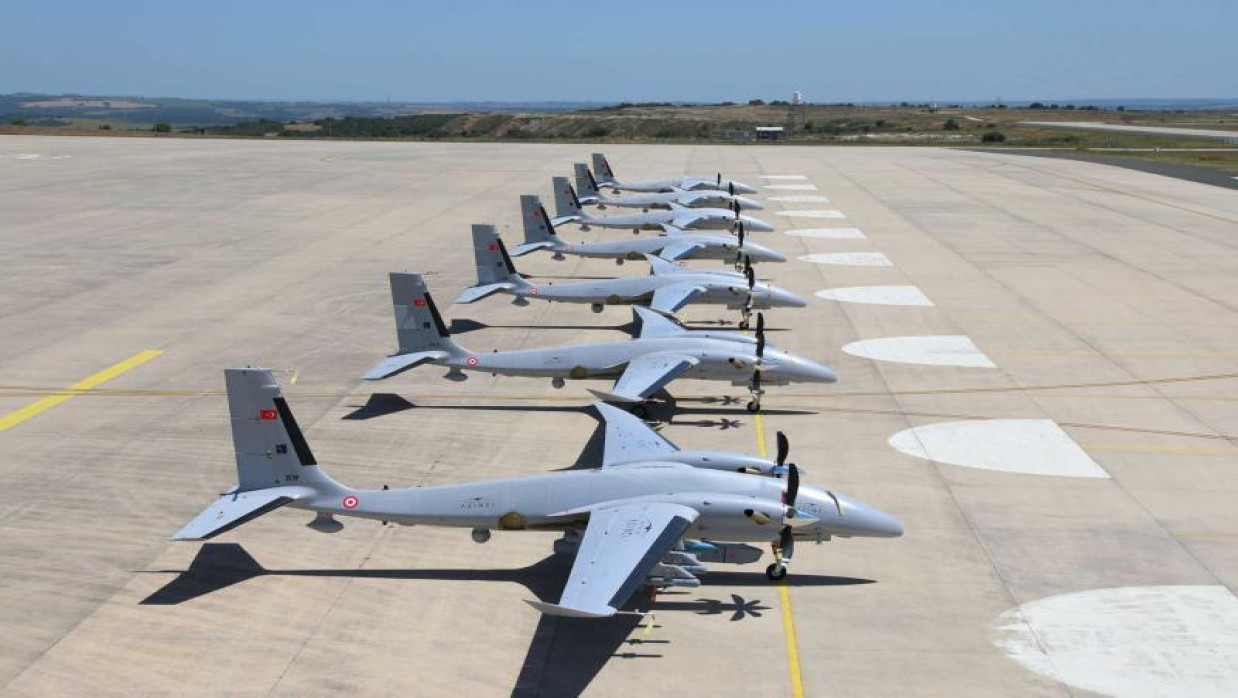
Bangladesh is pursuing partnerships with Turkey and China as it works to build a domestic defense industry through drone manufacturing, marking a shift from importing military hardware to developing local production.The Bangladesh Air Force, which is leading the drone production push, has partnered with a Turkish entity to build an unmanned aerial vehicle manufacturing plant in the northern city of Bogura, alongside a planned air force base.
The proposed venture was announced last month, but Bangladesh has released few details, including the partner's identity, its investment value, ownership structure, production capacity, implementation timeline or the types of drones it plans to produce.
The Bangladesh Armed Forces, the Ministry of Foreign Affairs and the Turkish Embassy did not respond to requests for comment.
The announcement of the joint venture followed a January agreement between the Bangladesh Air Force and China's state-owned CETC International to establish a UAV manufacturing and assembly plant, also in Bogura. The initial phase is intended to give the BAF the capability to manufacture and assemble "medium altitude long endurance" and "vertical take-off and landing" UAVs. The BAF also said the project would eventually enable it to develop and produce its own UAVs.
"This will include technology transfer, capacity building, industrial skill development, and joint technical cooperation, which will help achieve long term self reliance in UAV production," the Air Force said in a statement at the time.
Taken together, the two initiatives suggest Bangladesh is laying the foundations for a domestic drone industry rather than pursuing isolated procurement projects. They also form part of an overarching 860 billion taka ($6.9 billion) military modernization project set out by Prime Minister Tarique Rahman in July that includes a national defense industrial policy, defense industrial zones, technology transfer and closer collaboration between the military, universities and industry. It identifies drone technology, sensors, electronics and other advanced defense equipment for local production.
Thomas Kean, senior consultant for Bangladesh and Myanmar at the International Crisis Group, said cooperation with both China and Turkey was unsurprising given Beijing's long-standing role as Bangladesh's biggest arms supplier and Ankara's growing presence in the defense market, particularly when it comes to drones.
"The more significant aspect is Bangladesh trying to move beyond importing complete systems and build up its defense industrial base," Kean said.
He said the China project appeared more advanced than the Turkish proposal but still reflected Bangladesh's intention to expand its defense manufacturing capability.
Analysts say Bangladesh's interest in drone production reflects how warfare has evolved, with relatively inexpensive unmanned systems playing an increasingly important role in conflicts from Ukraine and Myanmar to the Middle East.
"Drones are relatively lower cost to manufacture than, for example, combat aircraft, so this is a natural area for Bangladesh to pursue localization," Kean said. Beyond the battlefield, drones could also support border management, maritime surveillance, disaster response and search-and-rescue operations, he added.
Retired Maj. Gen. Md. Shahidul Haque, a defense analyst and former Bangladeshi ambassador to Libya, said the projects should be viewed as part of Bangladesh's military modernization rather than a shift in foreign policy.
"If you look at Libya, then Ukraine and now the Middle East conflicts, one overriding technological development is the extensive use of drones and UAVs."
Whether Bangladesh ultimately benefits from the partnerships, analysts say, will depend largely on the extent of technology transfer. Rahman said only that the government has taken "various initiatives" to develop a domestic defense industry aimed at strengthening national defense capabilities, reducing dependence on foreign suppliers and achieving long-term self-reliance.
Kean said the projects would bring lasting benefits only if Bangladesh gained manufacturing know-how that could be applied across both military and civilian industries. Otherwise, there was a risk the country would simply assemble imported components while key technologies and intellectual property remained overseas.
"That would bring much more limited benefits for Bangladesh," he said.
Haque sees the two projects as part of a broader shift from importing defense equipment to producing it domestically. He said that while Bangladesh's immediate priority should be to use the new capacity to meet its own military requirements, success would ultimately depend on whether it can develop products competitive enough for foreign markets.
"If we manufacture more than our armed forces require, we will have to export," Haque said. "Otherwise, sustaining production will be difficult."
The article appeared in the asia.nikkei
0 Comments
LEAVE A COMMENT
Your email address will not be published