

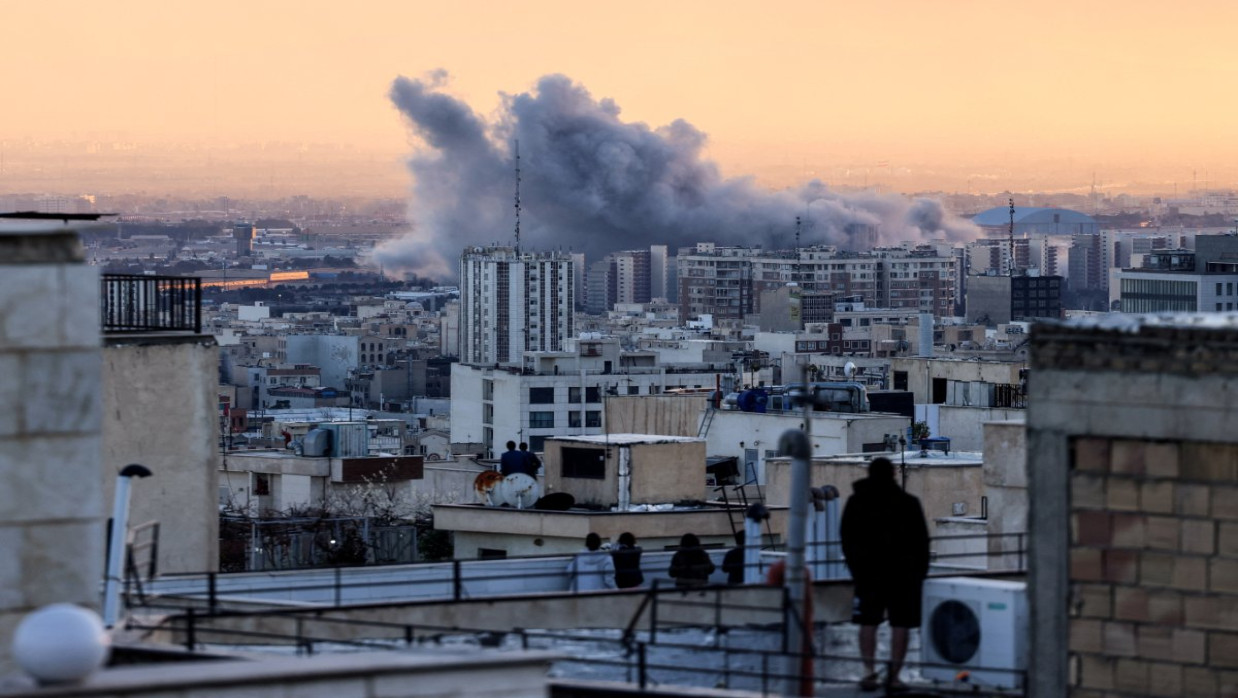
Climbing down from the threat of destroying the Iranian civilization, the US President Donald Trump has announced two-week ceasefire on April 7 as proposed by Pakistan with the condition that Iran would keep the Strait of Hormuz open. Pakistan has urged Iran to keep the Strait open. Iran has proposed its 10-point sweeping peace plan for permanently ending hostilities. The US had to deescalate primarily because the options to manoeuvre against Iran have been limited from the beginning pointing to the US-Israel joint military campaign’s inherent fragilities. However, Israel’s strikes on Hezbollah in Lebanon has not only demonstrated the frailty of the ceasefire, it shows Tel Aviv’s dissatisfaction with the outcomes of the war as of now. Ceasefire was perhaps considered the best way to keep Iran constrained through American willingness to halt strikes and its offer of off-ramp while Israel could get more leeway to strike its proxy in Lebanon.
Success of war strategy of an intervening state must be measured along four parameters, a. clarity of objectives b. tactical abilities to attain the objectives with maximum precision and minimum collateral damage c. objectives resulting in desired outcomes d. clear exit strategy. If the intervening state deviates from these parameters and still attains battlefield gains, these can be described as mere tactical gains. In the current war in the Middle East, the US and Israel can be clubbed as intervening states because they planned and initiated the war whereas Iran sought to defend itself and survive through calibrated retaliation.
Nebulous War Objectives without Tactical Finesse
The US and Israel might have calculated that hitting Iran hard and collapsing its leadership structure at the moments of its serious domestic weakness defined by protests against radical laws and economic stagnation would energize the dissenters and protesters and culminate in regime change. The US President Donald Trump called on the Iranian protesters to take over the regime following the assassination of Supreme Leader Ali Khamenei and his family members in missile strikes on February 28 this year. This led to backlash from regime rather than regime change and bred the devastating war in the Middle East. He was led by a false belief that the leader's loss would open the Pandora's box and the weakened regime would collapse without a predetermined successor. The aggressor states also targeted and claimed the lives of several key security and intelligence officials of Iran in a bid to pave the way for regime change. However, these feats of assassination precipitated unexpected results by casting a rally around the flag effect. Mojtaba Khamenei, who shared close relationship with Islamic Revolutionary Guard Corps (IRGC) was declared the new supreme leader and IRGC took up the mantle to execute the war with a decentralised strategy. The strategy facilitated the survival tactics by granting more operational freedom to commanders at different levels. On the other side, the US struck almost all targets within Iran but airstrikes have their limits. Afghanistan and Iraq demonstrated successful cases of regime change by the US which were not achieved by airstrikes alone. American ground troops were instrumental in running the counterinsurgency operations with local support for years to make the transition happen. But, both the cases also illustrate how miserably American mission failed to stabilize the countries. So far, Trump has not shown any willingness to commit ground troops to move into Iran. He would not like to push the US to another quagmire in the Middle East rather he has been more critical of the former American leaders who had enmeshed the country in prolonged wars farther away from home. The US certainly did not have the tactical abilities to attain this objective. Hence, another limited objective was manufactured that was to significantly destroy Iran's nuclear programme, degrade its conventional military capabilities and decimate its missile programme so that it could no more be threat to the US as well as Israel. The US would require ground forces to end Iran's nuclear weaponization program in real terms. Missile strikes have delivered serious blows to the programme but these are unlikely to end it. Iran has the technical know-how and materiel to set the clock back. Reports suggest that the uranium used for the weaponization programme is stored in gas form in canisters and would involve delicate handling makes to transport it from one place to another considering the possible leakages of dangerous substance. Instead of missiles, Iran carried on a low-cost war by resorting to cheap drones with the capacity to strike precise locations and mount casualties. In contrast to this, the American and Israeli operations relied on expensive military systems including bombers, long-range missiles and aircraft carriers.
Collateral Damage Without Clear Exit Point
For whatever tactical gains the aggressor states attained, they contributed to significant collateral damage in terms of civilian deaths in Iran and around the Middle East, destruction of civilian infrastructure, financial instabilities with global impacts and regional disorder. In the initial strikes conducted by the US, 168 civilians of Iran lost their lives among whom 100 were school-going children. The strikes lacked enough precision preventing Iran from launching its attacks indiscriminately. Iran, in retaliation and in order to mount costs on the aggressors and its allies, launched drones and short-range missiles across the Middle East targeting at the financial lifelines such as ports, banks, oil depots and hotels apart from American military bases and diplomatic presence. It was accused of holding the global economy hostage by effectively closing the Strait of Hormuz through which around 20 percent of global oil and natural gas traverses apart from fertilizers and petrochemicals. Pressured by Iran’s asymmetric war strategies and closure of the Strait, President Trump earlier had floated the ceasefire plan through Pakistani mediators but Iran did not apparently demonstrate interest in it considering it unconditional surrender and the US also did not wait until the completion of the grace period. Trump suddenly shed his dovish gestures and took to a hawkish disposition. As circumstances moved from bad to worse, lack of a clear strategy of the war became fairly perceptible as the US found it difficult to exit. The US plan for exit would have spelt victory for Iran as it survived with the existing regime. Claims about destruction of Iran’s military power would have been viewed a lie as well simply because Iran continued to strike drones and short-range missiles around the Middle East and impose unacceptable costs on the aggressor states.
Outcomes
Trump sought to align US objectives such as regime change with outcomes ushering in democracy and degrading its nuclear and conventional military power with turning Iran into an emasculated state without the capabilities of become a threat to either the US or Israel. As regime change did not happen, the first and most significant objective remained unfulfilled. Destroying Iran's military capabilities will likely not result in any peaceful and democratic regime change within the country. After the guns will fall silent, the remnants of the current regime will still remain hardliners and carry anti-American disposition. So far as degrading Iran as a military threat is concerned, it is difficult to measure the success with accuracy. Iran can procure missiles, aircrafts and updated military technology from China, Russia and North Korea or from any other countries following a ceasefire. They can domestically develop drones and missiles as they did it swiftly after last year June attacks by US and Israel on its nuclear sites. Only by moving the troops deep into Iran can stop these activities but that would push the US into a hostile environment surrounded by outraged Iranian soldiers who would like to put everything to stake just to defend their sovereignty. As Iran has already embarked on a more radicalized path than before with IRGC at the helm and civilian administration completely side-lined, any ground offensives from the US would meet with high level of casualties. The US has threatened to take over Kharg island- the economic lifeline of Iran to put it under maximum pressure. The island is not deep inside Iran but it is well-fortified with Iran's tight military security and vigilance and the US occupation of the island would put American troops in a stationary position just 33 kilometres (21 miles) off Iran's coast, well within range of its arsenal of drones and missiles.

0 Comments
LEAVE A COMMENT
Your email address will not be published