

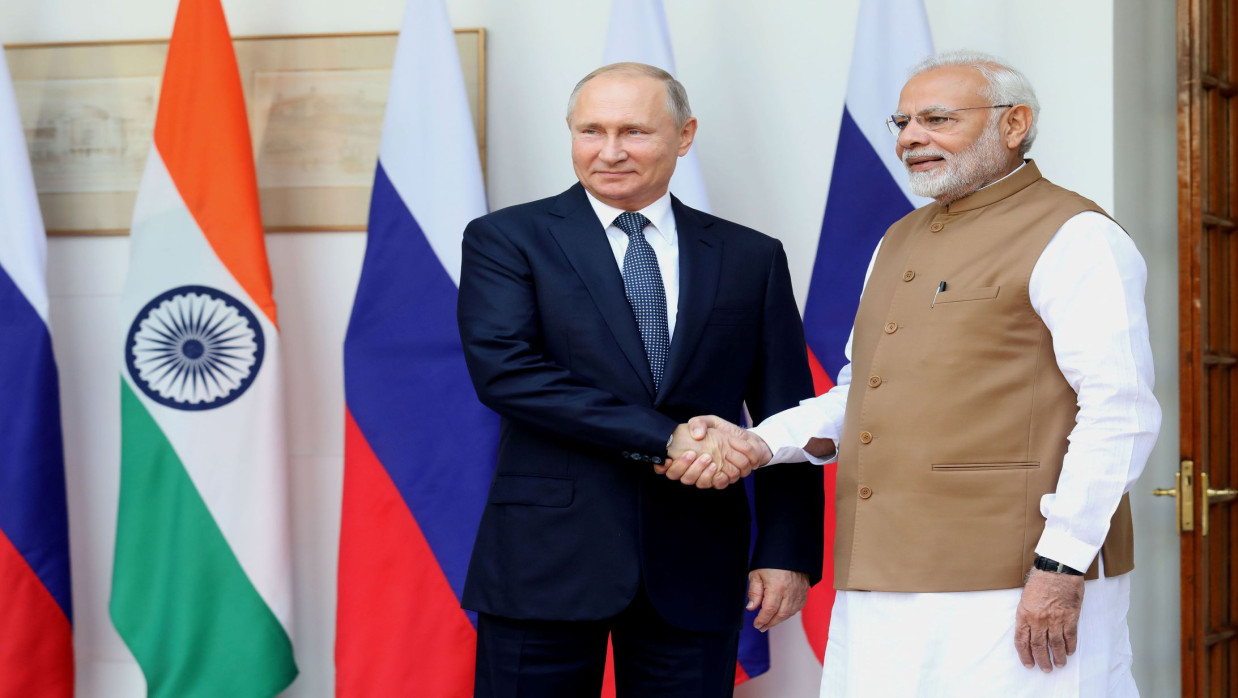
New Delhi and Moscow held 23rd annual Indo Pacific Summit on December 5–6, 2025, demonstrating Russia's dependence on important allies like India. The discussion brought to light India's nuanced diplomatic position, which was marked by officials' cautious optimism about possible results resulting from unresolved defence issues, such as delays in the supply of S-400 air defence systems and modifications to Sukhoi aircraft. Concerns regarding India's strategic manoeuvres and statecraft during international engagements were raised by security experts who noted a concerning trend of terrorist occurrences that coincided with high-profile foreign trips.
India's reaction to Putin's visit illustrates an amalgamation of staged negotiation, nervousness, and unreliability. While paying homage to Putin, Prime Minister Modi avoids a confrontation with the U.S. President, expressing India's sensitivity about American attitudes and a need to maintain relationships with Russia. In a contradictory move, India supports Russia's war economy through large oil purchases and delivers Ukraine with explosive compounds estimated at USD 1.4 million. Controversy regarding India's foreign policy goals has been heightened by public statements made by Indian leaders defending commercial relations with Russia.
With USD 80 billion in military shipments since 1947 and USD 50 billion anticipated during 2005 and 2025, India relies heavily on Russian missile defense systems. Su-30MKI aircraft, T-90 tanks, and BrahMos missiles constitute the platforms that make up approximately 68 and seventy percent of India's military stock. India also proposes to buy S-400 missile rounds for USD 1.2 billion. Like wise India supplies Russia with dual-use components worth USD 60–95 million every thirty days, while Russia is willing to share full capability for the Russian Su-57 stealth fighter. Another indication of an extensive operational working relationship is the inclusion of Indian citizens in Russian combat security forces.
In the fiscal year 2024–2025, transactions between Russia and India expanded to USD 68.7 billion, demonstrating a record trade deficit with USD 63.8 billion in Indian imports and only USD 4.9 billion in exports. Moscow has a lot of leverage because of its dependability on Russian goods. Additionally, since 2022, India's imports of Russian crude oil have shot up by 600%, encompassing 38% of Russia's oil exports while assisting Russia's military initiatives. Although India became Ukraine's biggest manufacturer of diesel in July 2025, Ukraine cut back on imports due to worries related to the diesel's source—it was refined from Russian oil.
In meanwhile, Indian businesses continue to provide Russia with needed goods, which enhances Russia's entrance into occidental markets and has been interpreted adversely by Western governments. The European Union and the United States of America have criticised India, labelling its actions a "destabilising factor." Former President Trump called India a "Kremlin laundromat," and India's contribution to security manoeuvres with Russia had been condemned by the EU. Concerns have been expressed by the United States and the European Union regarding India's attempts to bolster its defensive ties with Russia while purchasing American equipment and arsenals like the F-35. Putin's 2025 visit to India is exacerbated by threats of tariffs from the United States, conflicts over defence delivery, concerns about the confidentiality of Indian policy, and a greater likelihood of unanticipated incidents.In addition to the ambiguous and sometimes contradictory dynamics of India's contemporary foreign policy, significant developments are not envisaged by Indian officials. India is becoming one of Russia's greatest power allies during the war in an assortment of areas, including as political and military cooperation.
This point of view undermines QUAD solidarity, compromises Indo-Pacific stability, and preserves a regime that has come under international punishment. India's assertion of strategic autonomy appears fraudulent because its dual allegiance threatens the constitutionality of the international framework based on rules it proclaims to support and runs the risk of undermining both the USA as well as Russia.
During his two-day visit to India, Russian President Vladimir Putin condemned American sanctions on India concerning its imports of Russian oil, emphasising that if the United States is allowed to buy nuclear fuel from Russia, India should be authorised to do the same. Putin highlighted the extensive history between Russia and India while asserting that oil commerce is doing well despite an apparent decline in overall trade. By 2030, the two economies intend to reach $100 billion in bilateral commerce, with an emphasis on diversifying their exports beyond energy to include textiles, autos, and electronics. Putin was cordially welcomed by Indian Prime Minister Narendra Modi, underlining their close diplomatic ties.
In sum, India's dual alignment policy is a reflection of its will to maintain strategic autonomy while navigating a geopolitical environment that is changing quickly. New Delhi uses strategic ambiguity as a purposeful tool to retain flexibility and maximize national interest while simultaneously managing its complicated competition with China and fostering positive relationships with both Western countries and old allies like Russia. With this strategy, India may profit economically, technologically, and security-wise from various poles of power without being forced into inflexible alliances. However, this stance also creates inherent uncertainties for partners who want New Delhi to make more explicit promises. India's capacity to maintain this careful balancing act will influence not just its own strategic path but also the larger framework of Indo-Pacific geopolitics as international rivalry heats up, especially between the US and China.

0 Comments
LEAVE A COMMENT
Your email address will not be published