


6 MAY 2021
The border crisis in Ladakh may end in war or peace — or it may never end.

ARZAN TARAPORE
KEY FINDINGS
- The still-unresolved Ladakh crisis has created a new strategic reality for India, marked by renewed political hostility with China, and an increased militarisation of the Line of Actual Control.
- This new strategic reality imposes unequal costs on India and China. India is likely to defer much-needed military modernisation and maritime expansion into the Indian Ocean — which would impair its ability to compete strategically with China.
- In contrast, China incurred only marginal material costs; it was probably more concerned with the prospect of continued deterioration in its relationship with India. Even that cost was more threatened rather than realised, and largely reduced when the disengagement plan was agreed.
EXECUTIVE SUMMARY
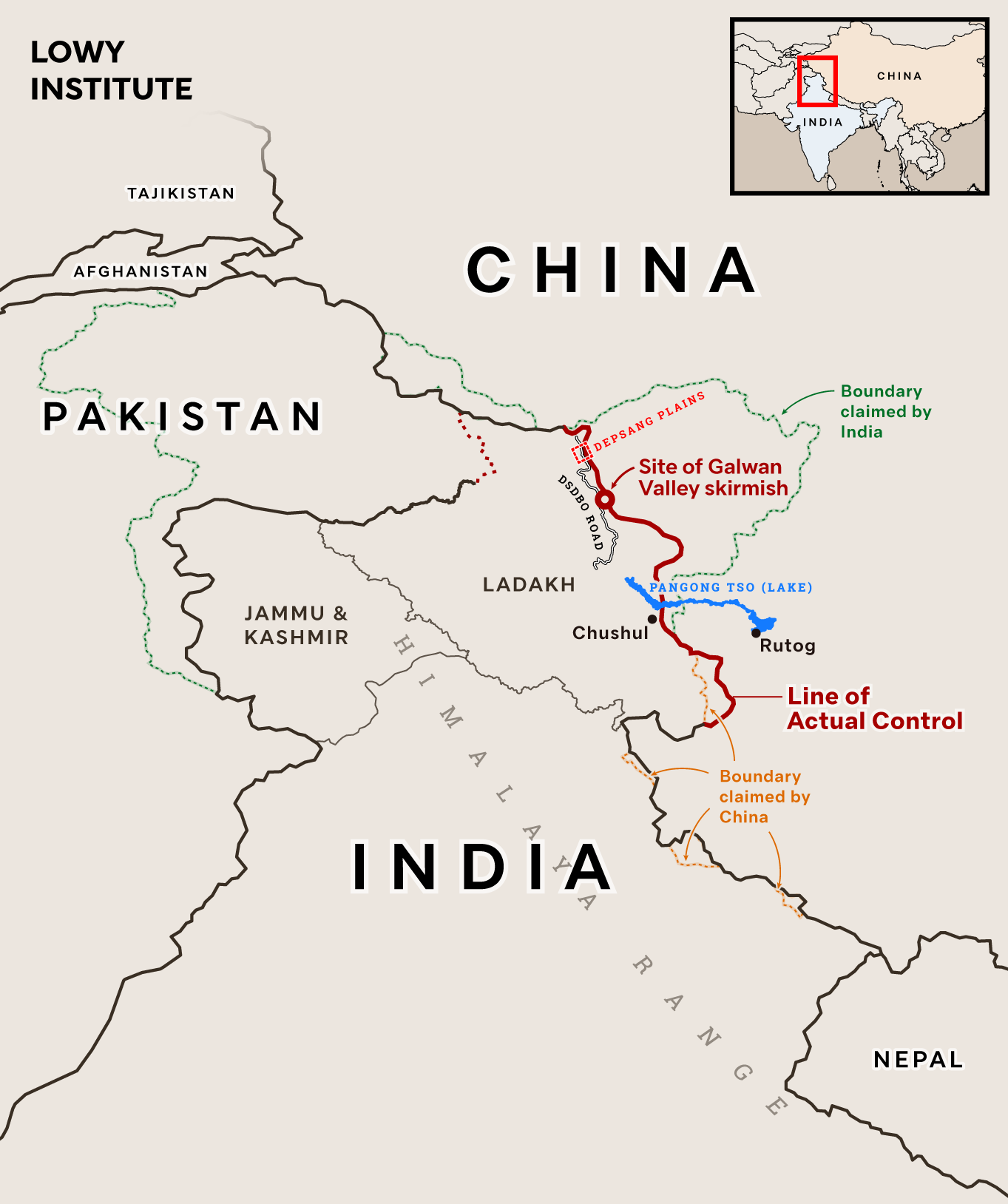
In May 2020, China launched several near-simultaneous incursions across the Line of Actual Control (LAC) in Ladakh, into territory hitherto controlled by India. Both sides reinforced their positions with tens of thousands of troops, engaged in a deadly skirmish, and reportedly came close to war. An agreement to disengage troops was announced in February 2021, but implementation has been halting. Regardless of how disengagement progresses, the crisis poses significant challenges for India’s long-term strategic competition with China.
As a result of the Ladakh crisis, India faces a new strategic reality in which China is a clear and abiding adversary. For India, the political relationship is now defined by hostility and distrust, and the LAC will remain more heavily militarised and violence-prone. Given this new reality, India is likely to further defer military modernisation and maritime expansion into the Indian Ocean. In the face of unremitting Chinese naval expansion, India risks losing significant political and military leverage in the Indian Ocean. At the same time, China appears to have escaped significant harm. Its better-resourced military could better absorb the material costs of the mobilisation. It may have been more concerned by the prospect of an increasingly hostile India, but the disengagement agreement has limited even those modest political costs.
The central policy challenge for India is balancing the heightened Chinese military threat on the northern border with the rapidly growing Chinese military presence in the Indian Ocean. It can manage this challenge by focusing on military strategies of denial rather than punishment, focusing on imposing political rather than material costs on China, and accepting more risk at the LAC in exchange for long-term leverage in the Indian Ocean region. How India responds will shape not only its strategic competition with China, but also the interests of likeminded partners including Australia, which depend on an increasingly capable and active India.
INTRODUCTION
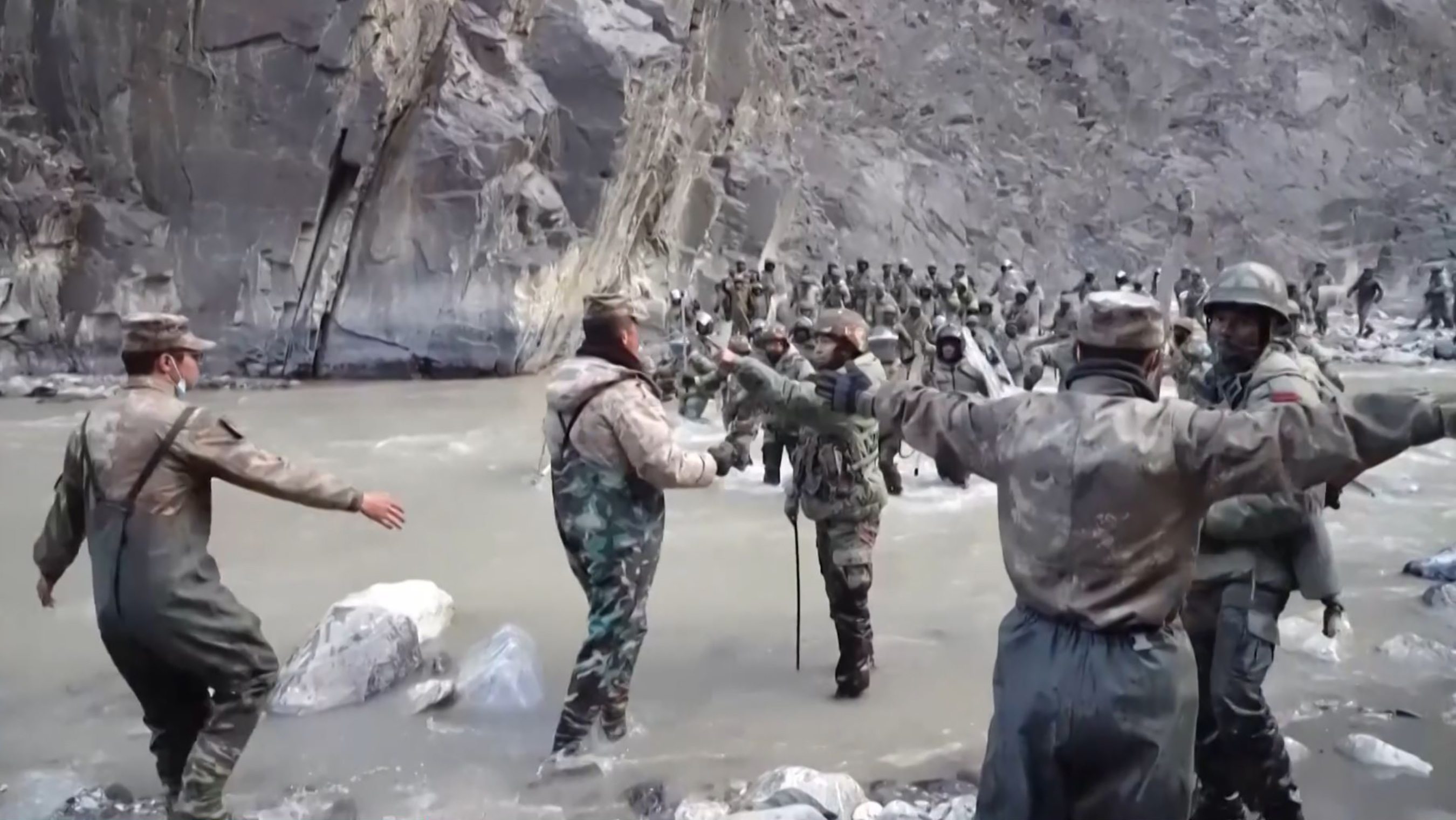
Beginning in May 2020, the People’s Liberation Army (PLA) launched incursions in several locations in customarily Indian-controlled territory across the Line of Actual Control (LAC).[1] Both sides reinforced their positions with tens of thousands of troops, as well as tanks and aircraft, and built infrastructure to sustain a long-term presence through the coming winter. The LAC had, in effect, been changed by force, with few apparent options for resolution.[2] The crisis escalated when a skirmish in the Galwan Valley left 20 Indian soldiers and an unknown number of Chinese soldiers dead. The two sides have endured several tense standoffs since their border war in 1962, but this was the first loss of life on the LAC since 1975. In late August, Indian forces occupied tactically-valuable peaks on the Kailash Range near Chushul — which, although on Indian-controlled territory, nevertheless gave India significant military leverage in the crisis.[3] Around Pangong Tso (lake), shots were fired for the first time in nearly half a century, and China launched cyber-attacks against Indian civilian infrastructure.[4] Tensions soared. The commander of the Indian Army’s Northern Command later revealed, “we were absolutely on the brink” of war.[5]
Chinese soldiers dead, marking the first loss of life on the Line of Actual Control (LAC) since 1975.
For months, China showed no signs of reversing the incursions until the surprise announcement in February 2021 of a phased disengagement plan.[6] In fact, the two foreign ministers had in September 2020 struck an in-principle agreement to disengage, which appeared to go nowhere until the details of the first phase of disengagement were secretly agreed at a Corps Commanders’ meeting in late January.[7] The crisis’ future trajectory remains unclear. Disengagement may proceed as intended, leading to new dispositions and procedures for managing the border. Or, if disengagement goes awry, the two sides may yet engage in open warfare. Or the crisis may never get its photo-opportunity handshake or climactic battle — keeping India and China perpetually close to conflict and becoming the central defining feature of an unstable relationship.
Whatever its denouement — whether war or peace or something in between — the crisis will further complicate India’s efforts to compete strategically with China.
Whatever its denouement — whether war or peace or something in between — the crisis will further complicate India’s efforts to compete strategically with China. The crisis has ushered in a new strategic reality, which includes deeper political antagonism between the countries, and a more militarised and violence-prone LAC, which will endure even if — a big if — disengagement continues as planned. This new strategic reality will pose yet another politically salient obstacle to the Indian military’s long-frustrated attempts to build power projection capabilities into the Indian Ocean region. Every quantum of scarce military resources that India invests in the land frontier — relatively unthreatening to China’s global ambitions — is a quantum that it will not invest to counterbalance China’s more consequential military expansion into the Indian Ocean. A relatively peripheral border crisis in Ladakh thereby risks generating a far more significant crisis in India’s strategic competition with China — the crisis after the crisis.
This paper is divided into three parts. First, I set a baseline understanding of the new political and military reality on the India–China border, emerging as a result of the Ladakh crisis. Second, I argue that this new reality will complicate India’s efforts to compete with China because it further defers India’s military modernisation and maritime expansion in the Indian Ocean and imposes only marginal costs on China. Third, I offer some recommendations for how India can use lessons from the Ladakh crisis to compete more effectively in the future.
THE NEW STRATEGIC REALITY
To the extent that the February disengagement plan entails at least a partial PLA withdrawal, it is an evolution in the crisis. But it does not in itself meet New Delhi’s declared goal of a return to the status quo ante.[8] And, unless disengagement is completed equally on both sides, and accompanied by the withdrawal of forces from theatre — which is unlikely — it risks codifying China’s military revision of the territorial status quo. Beyond the status of specific parcels of land, the central effect of the Ladakh border crisis on Indian security policy is a new and more hostile approach to China, manifested at both the political and operational levels. For Indian defence policy, this translates into a more heavily militarised and violence-prone LAC, and a national defence priority that will require rebalancing resources away from other imperatives.
Political hostility and distrust
At the political level, New Delhi sees the PLA’s Ladakh incursions as an abrogation of decades of painstaking political compromises and confidence-building. After the bruising 1962 border war, decades passed before the countries normalised relations again, and decades again before they concluded three diplomatic agreements on managing the unresolved border. These agreements — signed between 1993 and 2013[9] — were operationally useful because they provided guidelines for maintaining “peace and tranquility” on the frontier. But politically they were invaluable because they allowed the two rising powers to table their territorial dispute and proceed with building a wider economic and political relationship.[10]
From New Delhi’s perspective, China’s transgressions in 2020 — its unprecedented troop presence across and near the LAC, as well as the fatal skirmish in the Galwan Valley on 15 June — have obliterated the diplomatic architecture upon which border management and the bilateral relationship were built. Little wonder, then, that External Affairs Minister S Jaishankar decried the Ladakh crisis as having “profoundly disturbed the relationship”, and placed it under “exceptional stress”.[11] In the words of former Indian Ambassador to China and National Security Adviser Shivshankar Menon, “political relations will now be more adversarial, antagonistic, and contentious… there is no grand bargain, no modus vivendi, no accepted rules of the road to be had”.[12] For India, this is not a matter of local military procedures, but a rupture in the entire bilateral relationship.
soldiers (R, background) during an altercation in the Galwan Valley. Image: AFP/China Central Television (CCTV) via Getty Images.
Such a rupture is unlikely to be repaired, despite the progress made by agreeing to disengagement. Reversing the previous policy, New Delhi has now made the wider bilateral relationship conditional on border stability. Speaking publicly, weeks after disengagement, External Affairs Minister Jaishankar made this clear:
The future of our relationship…if you want to see progress, I need peace and tranquility on the border. I can’t have tension on the border. I can’t have the kind of issues I had in Galwan, and then say, well, you know, let’s carry on with business in the rest of our relationship. That’s unreal.[13]
This new political framing has doubtless cratered India’s trust in China as a diplomatic partner. Any future diplomatic arrangements will probably be harder to reach, and even if the two sides find enough common ground to strike an agreement, Indian leaders will probably require additional assurances that China will honour its commitments. New Delhi is now likely to “distrust until verified”.[14] Verifying China’s compliance, and hedging against its non-compliance, will require a larger and more watchful military presence on the ground near the LAC.
Military threat
At the operational level, therefore, a long-term increased militarisation of the LAC is all but inescapable. Even if the February 2021 disengagement plan is executed and leads to new confidence-building measures, India’s newfound distrust of China will likely demand a heavier military posture nearby that enables rapid mobilisation to the LAC. Short of that new border-management architecture, India is preparing to maintain its larger military presence on the border virtually indefinitely. Traditionally, the Indian Army had maintained a peacetime strength of about one infantry division in Ladakh. During the crisis, it reinforced them with a further two divisions, plus additional enablers. In total, some 40 000–50 000 Indian soldiers were deployed to eastern Ladakh.[15] These troops were joined by India’s most advanced main battle tanks, self-propelled howitzers, surface-to-air missiles, and brand-new Rafale multirole fighters.[16] The Chief of Army Staff, General Naravane, publicly declared that the Army will maintain that additional deployment “for as long as needed”, suggesting there is no operational urgency to return to peacetime positions.[17]
Notwithstanding the beginnings of disengagement, Chinese forces remain in some areas previously controlled by India. The most operationally valuable of these is the Depsang Plain, in northeastern Ladakh, where the PLA impeded Indian patrolling intermittently before the May 2020 incursions.[18] Even with the disengagement plan’s initial buffer zones in place, such as at Pangong Tso, forces from both sides will remain deployed in theatre through its gradual execution. Privately, Indian officials have suggested that — given the difficulties of diplomatically or militarily returning to the status quo ante — the permanent deployments may be their best option for managing the crisis over the long term.[19]
China’s actions, before and since the crisis began, have offered ample impetus for the Indian deployments. Quite apart from the multiple incursions in May 2020, China has reinforced its troops and developed supporting infrastructure on its side of the LAC. The PLA — mirroring the Indian Army — has constructed winterised housing and logistics to sustain its recently deployed forces for the long term, along with fixed weapons positions, such as airfields and surface-to-air missile systems.[20]
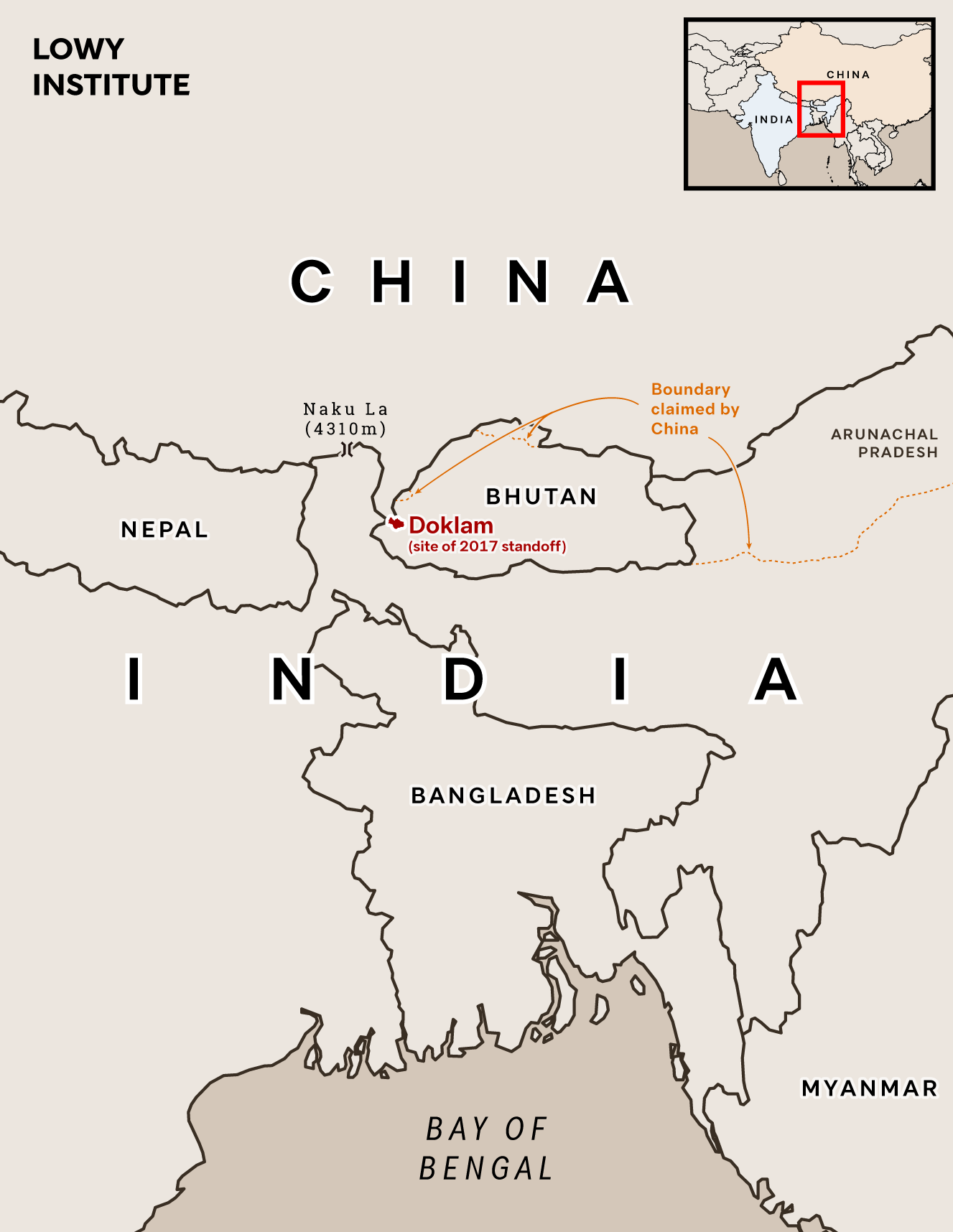
forces physically impeded the construction of a Chinese road in territory that India maintains is Bhutanese.
Some of this military development predates the crisis and is occurring in all sectors of the LAC. It accelerated after the 2017 Doklam standoff, when Indian forces physically impeded the construction of a Chinese road in territory that India maintains is Bhutanese.[21] That episode, of India surprisingly thwarting Chinese plans, may have sensitised the PLA to its tactical disadvantages at parts of the LAC, and prompted the PLA to reinforce its positions, near Doklam and elsewhere along the LAC.[22] Indeed, China has more than doubled the number of airbases, heliports, and air defence sites within operational reach of the LAC since 2017.[23] This is not a one-sided affair — India has similarly been upgrading its military infrastructure and capabilities near the LAC in recent years, correcting many years of neglect.[24] Both sides in recent years have significantly bolstered the military forces and infrastructure within striking distance of the LAC, allowing both to quickly adopt an operationally threatening posture in times of crisis.
China’s growing presence near the LAC also includes new civilian dual-use (civilian/military) infrastructure. In disputed territory, new buildings and roads are designed to add permanence and credibility to Beijing’s territorial claims — not unlike in the South China Sea, where China has built ‘facts on the ground’ by reclaiming land and constructing infrastructure on it. This practice is not simply a tactic in territorial disputes; it is part of a grander exercise in nation-building that predates the current crisis. Since 2017, China has accelerated a program of improving housing and transport infrastructure, and founding entire new settlements, across Tibet. This civil construction has a strategic purpose. Beijing’s aim is to promote economic development, political allegiance, and border security — and thus to consolidate Chinese Communist Party (CCP) control — in its disputed and restive periphery.[25] This political project is not a tactic that may be subject to diplomatic bargaining, but a priority as part of the Party’s program of “national rejuvenation”, and it is here to stay.
Together, the persistent threats on the LAC and LoC suggest India could quickly descend into a nightmarish two-front contingency.
For India, the operational threat on the LAC is compounded by the persistent operational threat on the Line of Control (LoC), which separates Indian- and Pakistani-controlled parts of Kashmir. Together, the persistent threats on the LAC and LoC suggest India could quickly descend into a nightmarish two-front contingency. Notwithstanding the February agreement between the Indian and Pakistani armies to renew their defunct ceasefire, the military threat in Jammu and Kashmir remains unchanged.[26] Until the suddenly-announced ceasefire, cross-LoC firings had been steadily increasing for several years.[27] The most likely scenario for a two-front challenge was always the prospect of Pakistani opportunism exploiting tensions on the LAC, rather than the other way round.[28] Indeed, before the LAC disengagement and the LoC ceasefire, with tensions high on both fronts, Army Chief General Naravane declared that “The collusive threat is not just a strategic paper or talk…It’s manifesting itself on the ground.”[29]
Increased militarisation of the LAC
Faced with a more politically hostile and operationally robust China, India has accepted that its new strategic reality features a more militarised and violence-prone LAC. This has commonly come to be known as the “LoC-isation” of the LAC, in reference to the heavily armed and constantly violent LoC which splits Indian- and Pakistani-controlled portions of Jammu and Kashmir. The analogy, of course, is imperfect. The LoC in Jammu and Kashmir generally runs through less inhospitable terrain and climate, allowing for higher force density.[30] India-Pakistan relations are more openly hostile, and until the recent ceasefire agreement, the LoC routinely saw high and rising rates of cross-border artillery and small-arms exchanges.
Nevertheless, the LAC has already begun to resemble the LoC in some important ways. India is likely to retain a significantly higher number of troops forward deployed on the LAC, even during and after disengagement; and these troops will take position in a larger number of posts to monitor the LAC.[31] At least one additional infantry division will be permanently relocated to Ladakh, even after the current crisis reinforcements are redeployed.[32] Ladakh presents particular geographic challenges — the high altitude and harsh winter impose physical limits on soldiering, and tough demands on equipment.[33] Troops require significant time to acclimatise when deploying to the region, and specialised training and equipment to operate effectively as mountain infantry. They also require new logistics arrangements — in particular, remaining in forward positions throughout the harsh winter will require pre-positioning of food and stores, more winterised shelters, and more all-weather equipment.[34]
With a larger number of troops on both sides in relatively much closer contact, the risk of violence will be higher. The disengagement plan establishes some temporary buffer areas where troops are prohibited, but not all planned buffer areas have been implemented, and they will likely only be temporary.[35] Whereas pre-crisis patrols on both sides had extremely strict rules of engagement and abided by a well-understood choreography to manage encounters with the other side, such procedures have been severely undermined by the events of the Ladakh crisis. In the deadly 15 June skirmish, both Indian and PLA troops used improvised hand-held weapons, and in a subsequent incident near Chushul, troops on both sides discharged their firearms.[36] Trust in those confidence-building mechanisms has fallen and the Indian Army has accordingly relaxed its rules of engagement on the LAC, to include less restriction on the use of firearms.[37]
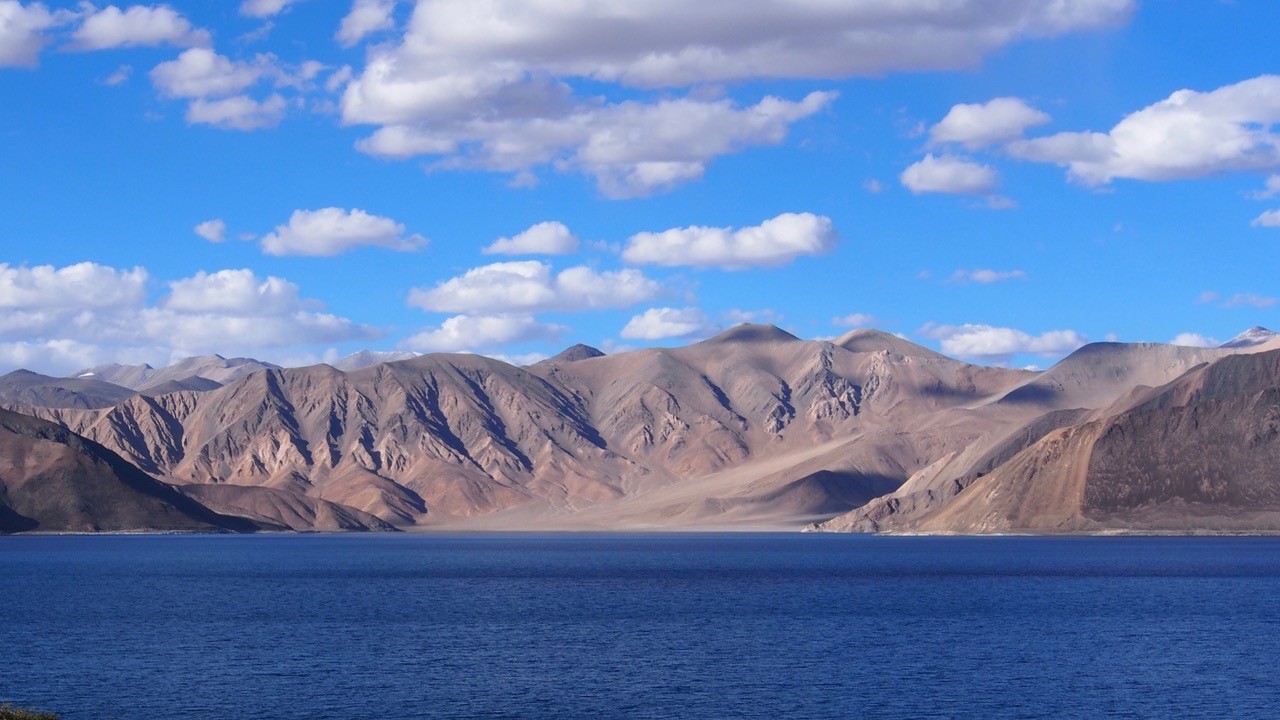
Even with disengagement, heavier forces are not far behind the LAC. Commercial satellite imagery reveals that the Chinese armour which disengaged from Pangong Tso has relocated to a staging area near Rutog, and is supported by new shelters there, suggesting an intent to garrison there long term.[38] With a larger number of troops, backed by more heavy weapons such as artillery and armour in close proximity, and with looser rules of engagement, local commanders facing adversary troops may feel compelled to use escalating force to hold their position or thwart enemy action.
Even without inadvertent escalation, either side may seek to use its accumulated military power on the LAC to improve its defensive position or gain coercive leverage. India did precisely this when its troops took up new positions on the heights of the Kailash Range in late August. Even though India was deploying military force in territory it already controlled, the episode occurred in the midst of a heavily militarised crisis and raised the risk of unintended escalation. Thus, with increased militarisation, encounters with the opposing side have become more unpredictable and more prone to escalation.
Rebalancing the Indian Army
India’s new strategic reality is not limited to Ladakh — India faces increased threats and uncertainty all along the LAC. At Naku La, at the international border in northern Sikkim, Indian and Chinese troops in close proximity have clashed twice, in May 2020 and January 2021.[39] Commercial satellite imagery reveals that China built new roads and fortifications near Naku La in the second half of 2020.[40] In the eastern sector of the LAC, facing the Indian state of Aruncahal Pradesh, China has not only continued its military and civil infrastructure construction, but has also threatened to build a new dam on what India calls the Brahmaputra River — a move which would give China control of a crucial water source for northeastern India.[41] Thus, India has no assurances that the May 2020 Ladakh incursions were the only or the final threat to the territorial status quo — other acts of aggression or coercion may yet occur.
Recognising this more general threat, the Indian Army has begun to rebalance its forces. The most significant expression of this rebalancing to date was the reorientation of a combined-arms strike corps to focus on China. In December 2020, the Indian Army ordered one of those formations, I Corps — one of three such strike corps tasked with penetrating deep into Pakistani territory in wartime — to prepare for a new operational role: launching offensive strikes across the LAC in Ladakh.[42] This rebalancing is a major commitment — a costly signal of the Indian Army’s intent to devote greater resources to the LAC. Re-tasking a strike corps is not simply a matter of pointing the forces in a different direction — the conversion into mountain infantry will require re-training and re-equipping that will likely take years to complete, and which will be extremely difficult and costly to reverse.[43] Therefore, this is not a temporary surge to manage the Ladakh crisis, but a permanent reassignment of forces.
India’s new strategic reality is not limited to Ladakh — India faces increased threats and uncertainty all along the LAC.
The conversion will also rob the Army of one of its three strike corps dedicated to Pakistan — a very significant erosion in India’s already-slim local quantitative advantage over Pakistan. Indian military strategy relies centrally on the threat of a punishing offensive against Pakistan. So, the elimination of a large portion of those strike forces may portend a long-overdue rethinking of Indian strategy towards Pakistan — a tacit recognition by the Army that its conventional deterrent against Pakistan was either not necessary or not effective. Nor does the February 2021 LoC ceasefire renewal ameliorate the military threat from Pakistan. Such ceasefires have been routinely struck and routinely obliterated in the past. The Pakistan Army has agreed to reduce violence on the LoC, but it has not relinquished its revisionist claims on Indian-controlled Jammu and Kashmir or altered its India-centric force posture.
Alongside the re-tasking of I Corps, the Indian Army’s rebalance will concentrate more force elsewhere on the LAC. The existing Mountain Strike Corps, XVII Corps, which had previously been split to cover both western and eastern sectors of the LAC, will now be concentrated in the eastern sector, expanding the amount of offensive combat power available there.[44] Several other formations are also slated to focus on the LAC, including an infantry division repurposed to operate as mountain infantry based in Uttarakhand,[45] a new armoured brigade to be raised and deployed to Sikkim, and some 20 battalions of Assam Rifles troops, previously tasked with counterinsurgency.[46] Even the Indian Navy reportedly deployed its special forces to operate in Ladakh.[47]
This rebalancing, moreover, must occur without any significant additional resources. The government’s budget for 2021–22, handed down in February 2021, revealed virtually no growth on the previous year’s allocations. The military services did make emergency procurements, over and above their initial allocations, in 2020.[48] Most of the Army’s unplanned spending went towards construction works — presumably to sustain the massive reinforcements in Ladakh. Compared to those revised estimates, the military’s 2021–22 capital expenditure budget — money spent on equipment and infrastructure — is virtually flat.[49] In recent years, the Indian economy has shown no plausible prospect of increased defence spending.[50] And with the added economic burden of recovering from the COVID-19 pandemic-induced contraction, the military has even less chance of gaining any more national resources. Responding to China may be a strategic priority, but it will attract no new resources.
UNEQUAL STRATEGIC COSTS
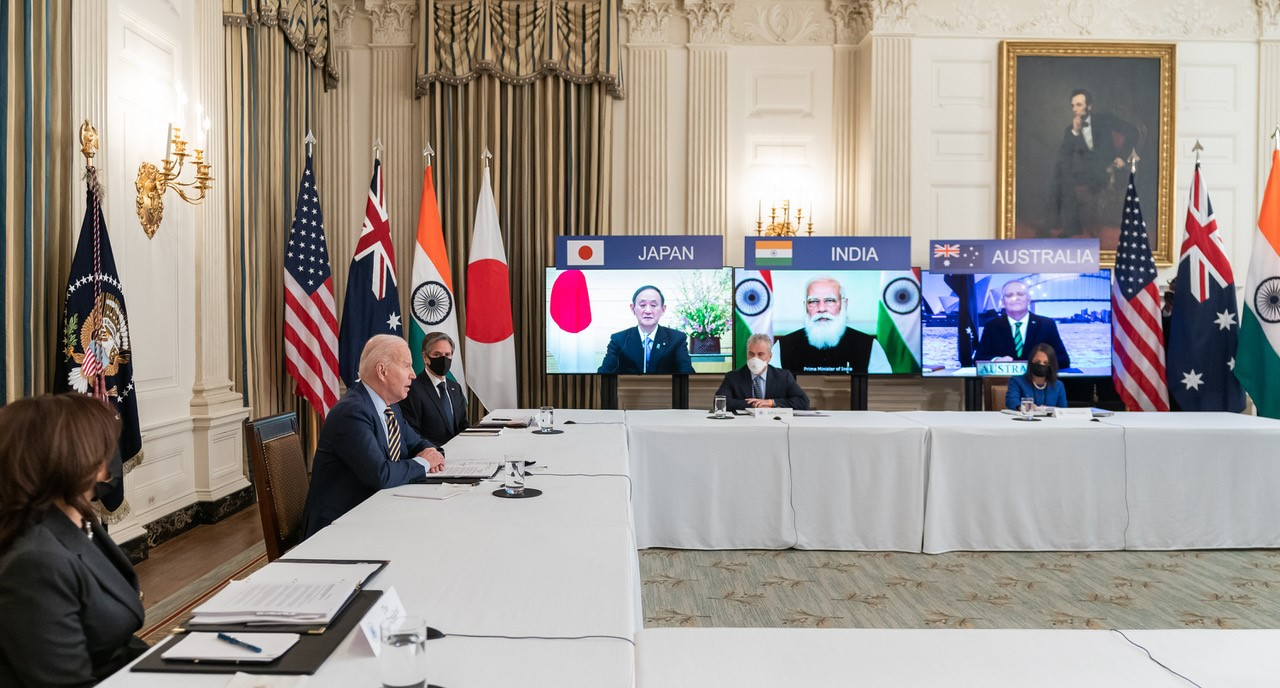
Image: Adam Schultz/Official White House Photo/Flickr.
Some analysts suggest that the post-crisis strategic reality — India’s increased militarisation of the LAC and an inter-theatre rebalancing of forces — should be welcomed as a rational response to its threat environment. Indeed, a tangible response to the rapidly growing China threat is overdue — planning against Pakistan still attracts a disproportionate share of Indian military resources. Even with the Army’s rebalance, 22 divisions still face Pakistan, while only 14 face China (and 2 are held in a national reserve).[51] In recent decades, the military’s mid- and senior-grade officers grew to recognise China as India’s most capable rival, but nevertheless harboured much greater emotive enmity towards Pakistan as India’s primary threat.[52] In that context, the Ladakh crisis is a necessary catalyst to promote strategic adaptation, to focus more on the China threat.
But the manner of that adaptation risks leaving India in a worse position in its long-term strategic competition with China. Most significantly, it will probably defer much-needed military expansion in the Indian Ocean. Meanwhile, the increased militarisation of the LAC will not impose any significant material or political cost on China. This unequal distribution of costs is already generating a deeper crisis in Indian defence policy that will fester long after the current crisis in Ladakh.
India will defer overdue modernisation and maritime expansion
The central risk of India’s new strategic reality is that it will reinforce India’s traditional emphasis on its continental threats at the expense of addressing increasingly acute modernisation needs and maritime risks. India’s military threat perceptions have always been dominated by the prospect of invasion or infiltration from Pakistan and China. This preoccupation with India’s land borders accounts for the Army’s domination of Indian defence budget allocations and its relatively slow expansion of maritime power in the Indian Ocean region.[53]
In recent years, India has taken tentative steps in modernising its military and expanding its maritime power in the Indian Ocean region. The Navy began to operate round-the-clock “mission-based deployments” at the ocean’s key chokepoints, to monitor threats and respond quickly when needed.[54] It undertook a flurry of exercises with partners and, more importantly, operational activity, especially in providing humanitarian assistance and disaster relief, to expand its visibility and influence in the region.[55] And it started to acquire a slew of state-of-the-art platforms, including P-8I anti-submarine warfare and maritime patrol aircraft, MH-60R maritime multi-mission helicopters, and Sea Guardian drones — all of which would vastly improve its ability to operate in the ocean and cooperate with partner countries such as the United States and Australia.[56] Even the Air Force deployed its front-line Su-30MKI aircraft, armed with anti-ship BrahMos missiles, to southern India to operate over the Indian Ocean in 2020.[57] The trend was fledgling, but unmistakable.
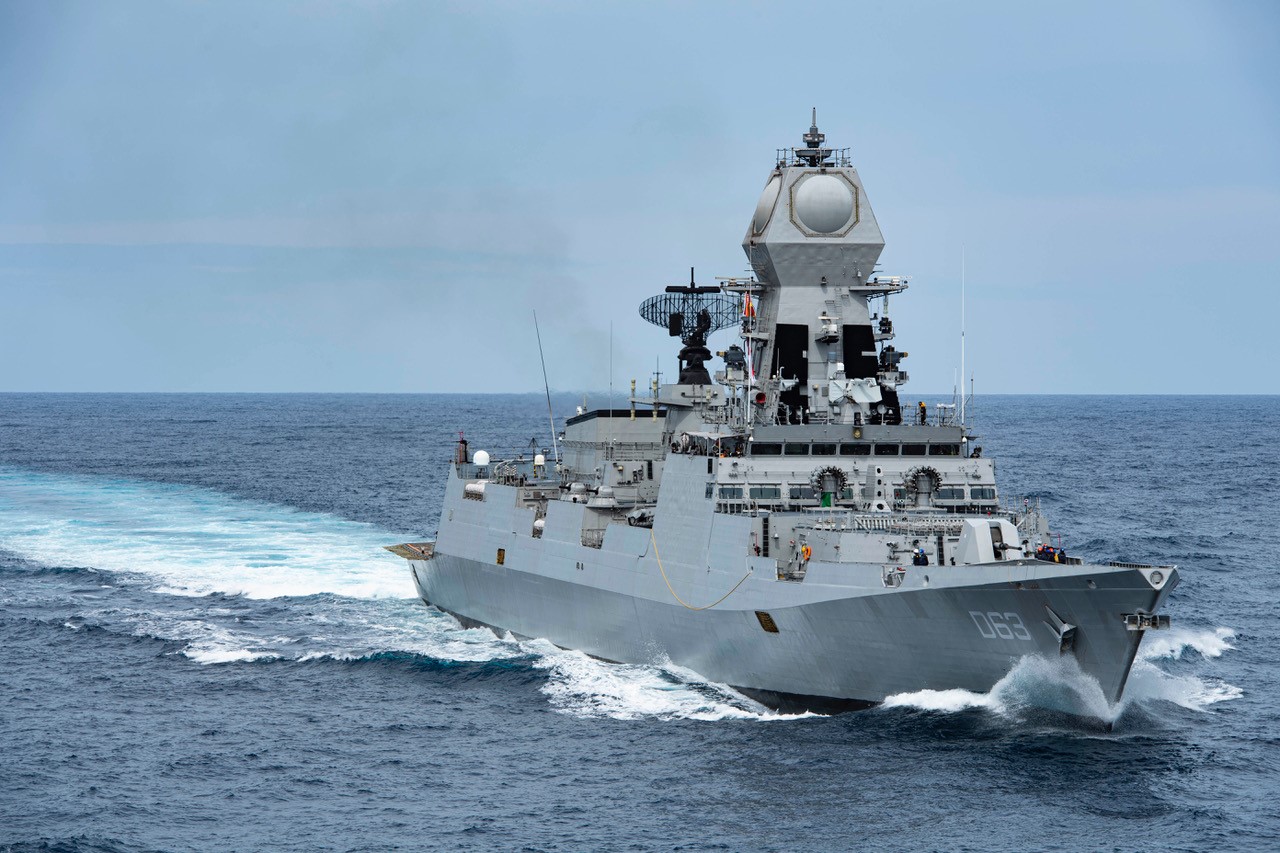
Image: MCSN Drace Wilson/US Navy.
After Ladakh, the military is likely to slow down that modernisation and maritime expansion.[58] The LAC commands far greater political attention than distant corners of the Indian Ocean, even though the strategic challenge is more acute in the Indian Ocean. The China border is now the site not only of a menacing foreign army, but also foreign encampment on previously Indian-controlled territory, and the site of clashes that spilled Indian blood. The Indian Ocean, meanwhile, is a large and amorphous region of hypothetical future threats — certainly not the stuff that stokes politically-useful nationalist fervour. But it presents serious challenges to Indian policy. Given budgetary constraints, the resources to manage the new LAC threat must be found from somewhere within the military’s current allocation. The risk is not that already-allocated resources will be diverted from the Navy to the Army — India cannot, for instance, re-task a guided-missile destroyer to the Himalayas. Rather, the risk is that future resource allocations will continue to favour the ground and supporting air forces slated for the military’s highest-priority continental contingencies, at the expense of naval and supporting air forces that are already in desperate need of recapitalisation and modernisation.
Across the military, the urgent emphasis on operations and readiness will starve the military of resources for modernisation. In recent years, the share of the defence budget spent on capital outlays has shrunk, while the share spent on pensions has grown.[59] These capital outlays are typically insufficient even to pay for committed liabilities — previously-signed contracts — risking default on existing contracts and further reducing the funds available for new acquisitions.[60] Each of the three services is allocated less money than it requests from the government, but the Navy has been particularly hard hit, receiving only 60 per cent of the funds it requests for modernisation.[61]
Across the military, the urgent emphasis on operations and readiness will starve the military of resources for modernisation.
Similarly, for the Army itself, the risk is that a renewed focus on operations on a ‘hot’ border will prevent its long-planned modernisation and downsizing. The current Chief of Defence Staff, General Bipin Rawat, while in his previous position as Chief of Army Staff, had sketched a plan to cut 100 000 personnel from the Army to ease the budgetary pressure of personnel and pension costs and to facilitate the Army’s transition to a more technology-centred force.[62] That reform, in the context of the fresh threat on the LAC, may now also be deferred.[63] At a minimum, even if the Army’s downsizing proceeds, it plans to offset its personnel reductions with greater investments in technology.[64] Either way, the Army’s budget is likely to keep growing.
The crisis also revealed the urgent need for modernisation in other, non-traditional domains. At the height of the crisis, China launched multiple cyber intrusions against civilian infrastructure in India.[65] They were the latest episode in a long string of intrusions that suggest systemic vulnerabilities in India’s vital cyber networks, which have largely been neglected with a paltry investment in defences.[66] In the wake of Ladakh, Chief of Defence Staff Rawat conceded that India may never close the gap with Chinese cyber capabilities, but declared that modernisation is urgently required.[67]
Alongside modernisation, the Indian military may continue to defer its maritime expansion, which it has repeatedly delayed and scaled down. Debates on the Indian Navy’s force structure are often reduced to the question of whether it should acquire a third aircraft carrier, as an oversimplified proxy for debates over Indian naval strategy. In fact, the under-resourced Navy is struggling to even maintain its current modest force levels — its submarine fleet, for example, is shrinking because it cannot replace its ageing boats before they retire.[68] With declining budgets and dysfunctional procurement processes, its ships lack critical capabilities — its dedicated anti-submarine warfare corvettes, for example, lack advanced sonars and torpedoes.[69] Given its capacity constraints, the Navy has drastically scaled back its earlier expansion plans. Facebook Twitter Linkedin Pinterest Whatsapp Email

0 Comments
LEAVE A COMMENT
Your email address will not be published