

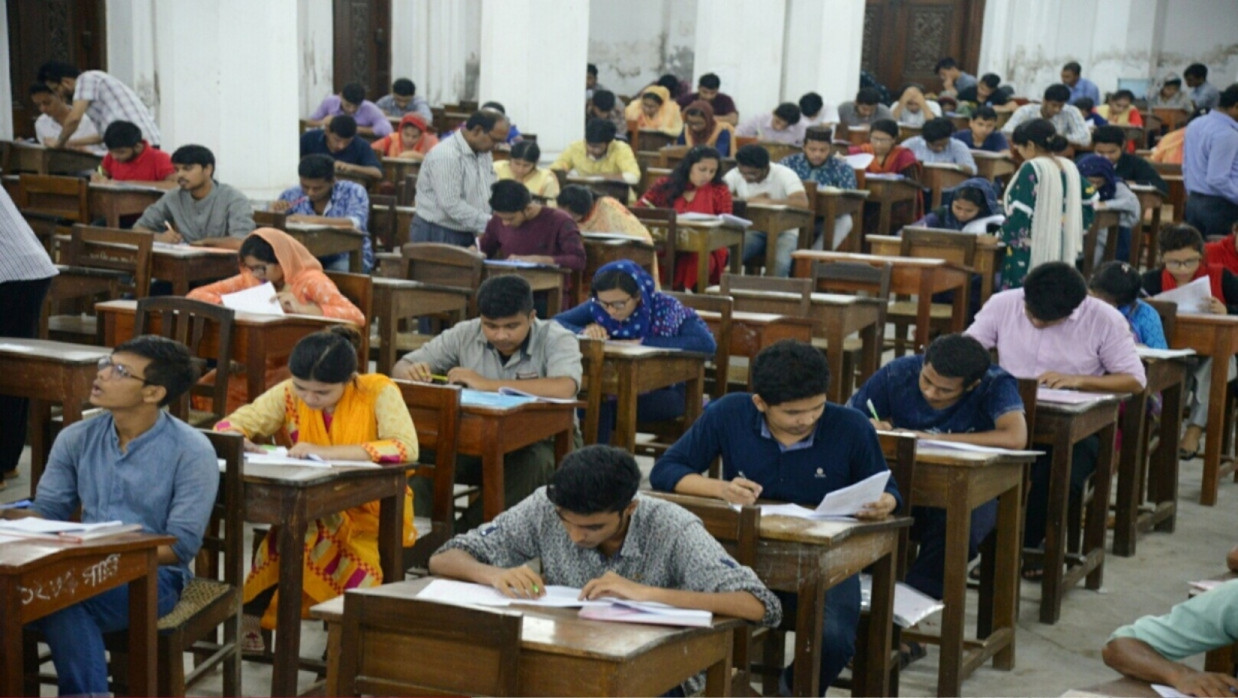
Over the past three decades, private universities have transformed higher education in Bangladesh. They have expanded access to tertiary education, created employment opportunities for academics, and contributed significantly to the country's human capital development. These achievements deserve recognition.
Yet beneath this success lies a growing concern that few are willing to discuss openly: the increasing commercialization of higher education and its consequences for academic standards and academic freedom.
At any educational institution, students are central stakeholders. Their opinions matter, and legitimate complaints against teachers must always be investigated seriously. Likewise, teachers must remain accountable for maintaining professional conduct, delivering quality instruction, and treating students fairly. However, accountability should not become a one-sided process in which only one voice is heard.
At many private universities, financial sustainability depends heavily on revenues from student enrolment and tuition fees. This reality may unintentionally create incentives for institutions to prioritize student satisfaction over educational quality. When students are viewed primarily as customers rather than learners, universities may gradually shift from pursuing academic excellence to maintaining customer satisfaction.
This shift has profound implications. One of the most significant casualties is academic freedom. Many instructors increasingly feel reluctant to enforce strict academic standards. Assigning lower grades for poor performance, refusing unjustified attendance requests, or maintaining rigorous examination standards can sometimes invite negative student evaluations or complaints. Whether these complaints are justified or not, many faculty members fear that they may affect contract renewals, promotions, or career prospects. The result is a silent pressure toward grade inflation and reduced academic rigor.
International research has repeatedly shown that student evaluations, while valuable, should never serve as the sole measure of teaching effectiveness. Students often reward instructors who are perceived as generous graders or who impose fewer academic demands, while stricter instructors may receive lower ratings despite promoting deeper learning. Consequently, relying excessively on student evaluations risks rewarding popularity rather than pedagogical excellence.
Another concern is the narrowing of classroom autonomy. Higher education is not merely the transmission of information listed in a syllabus. Effective teaching often requires connecting course materials with contemporary issues, introducing interdisciplinary perspectives, encouraging critical thinking, and challenging students intellectually. If faculties constantly fear complaints for discussing ideas beyond narrowly defined course outlines, classrooms risk becoming mechanical spaces focused solely on examinations instead of intellectual exploration.
Perhaps even more worrying is the apparent imbalance in grievance procedures in some institutions. Students rightly deserve accessible mechanisms for reporting misconduct. Teachers deserve the same procedural fairness. Before any disciplinary decision is taken, faculty members should have an opportunity to respond to allegations, present evidence, and be evaluated through transparent and impartial investigations. Natural justice demands that both sides be heard.
Respect within the classroom is equally important. Universities should foster an environment where disagreements occur through dialogue rather than intimidation. Verbal abuse, harassment, or physical violence against teachers should never be tolerated, just as misconduct by faculty should never be ignored. Mutual respect is a prerequisite for meaningful education.
Ultimately, the purpose of higher education extends far beyond awarding degrees. Universities exist to cultivate analytical thinking, intellectual curiosity, ethical reasoning, and lifelong learning. These goals sometimes require discomfort. Challenging assignments, demanding examinations, critical feedback, and rigorous grading are not obstacles to education—they are essential components of it.
Bangladesh's private universities now face an important choice. Should higher education operate primarily according to market principles, where customer satisfaction becomes the dominant objective? Or should universities preserve their fundamental academic mission, even when doing so occasionally produces dissatisfaction among students?
The answer should not lie at either extreme. Universities must protect students from unfair treatment while simultaneously protecting teachers’ academic independence. Student feedback should inform institutional improvement but should be combined with praising notes from students, peer observation, classroom review, teaching portfolios, learning outcomes, and other objective indicators of teaching quality.
The classroom functions best when students and teachers are partners in the pursuit of knowledge—not when one side holds disproportionate influence over the other.
A university's reputation ultimately depends not on how satisfied its students are during their years on campus, but on how well prepared they are for the responsibilities that await them after graduation. Preserving academic freedom and maintaining rigorous standards are therefore not obstacles to student success—they are among its strongest foundations.


0 Comments
LEAVE A COMMENT
Your email address will not be published