
Bangladesh has a chance to secure a fairer deal under the Ganges River Treaty once it expires in December 2026. The treaty must provide Bangladesh with enough water that is sustainable and legally enforceable, ensuring 170+ million people in Bangladesh receive the water they deserve.
Introduction: A River That Defines a Nation
Water means more than just a source to Bangladesh. It is what defines the land. It supports crops, life, and the country itself. Once the Ganges flows into Bangladesh, it becomes the Padma River, one of many rivers in an incredible network that has shaped the Bengal Delta region for years. It does so by replenishing soil for agriculture, supporting fishing industries, traveling through the country, providing fresh water to our underground water supply, and even helping stop salinity from taking over the coastal region.
Yet Bangladesh, despite being a sovereign nation, exercises remarkably little control over the upstream decisions that determine how much water reaches its territory.
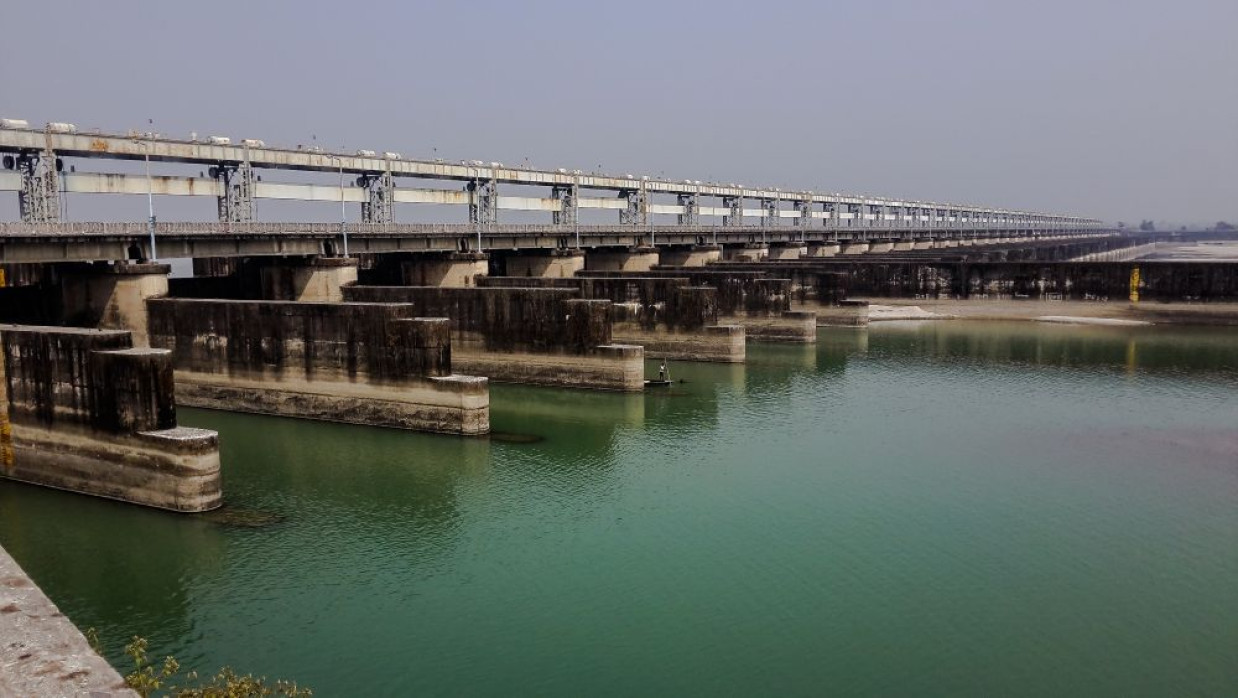
India's Farakka Barrage, commissioned in 1975, fundamentally altered the two countries' relationship over the Ganges. Designed primarily to divert water into the Bhagirathi-Hooghly system to support navigation toward Kolkata, the barrage gave India considerable control over the river's dry-season flow before it entered Bangladesh.
The resulting dispute has endured for more than half a century.
The 1996 Ganges Water Sharing Treaty, signed by Indian Prime Minister H. D. Deve Gowda and Bangladesh Prime Minister Sheikh Hasina, was initially celebrated as a diplomatic breakthrough. It established a 30-year arrangement to share water at Farakka during the dry season.
But what was agreed on also put Bangladesh at a major disadvantage. The treaty did not guarantee enough flow during periods of minimal flow. No adequate controls limited how much water upper riparian countries could take, and no third party could mediate if a dispute arose.
With the treaty expiring on 12 December 2026, Bangladesh will have to ask itself one question. Do we want to extend this agreement that has failed us on so many levels, or push for a new treaty that upholds international laws on water use and the preservation of nature, as well as our rights as a country?
The answer will influence not only the country's water security but also the future of India-Bangladesh relations.
Farakka: The Origins of an Unequal Water Relationship
The Farakka dispute began before Bangladesh achieved independence in 1971. During the Pakistan period, East Pakistan authorities expressed concern that India's proposed diversion of Ganges water would adversely affect agriculture, river navigation, and the ecological balance of the eastern delta.
After independence, Bangladesh initially expected its close relationship with India to produce an equitable settlement.
Instead, the commissioning of Farakka in 1975 introduced a new source of tension.
India stated that the diversion was needed to keep the Hooghly River and Kolkata port alive. Bangladesh said that if a country takes too much water from a shared river, it can affect crops, fish, river transportation, and freshwater habitats.
The country with all the dams is upstream. And the one that gets most of the negative effects is on the lower half of the river.
In 1976, Bangladesh raised this at the U.N. General Assembly, showing the issue was more than two countries having problems. It was about a country's rights on a river.
They agreed to a deal in 1977 that would have helped Bangladesh more than the 1996 agreement. This was when President Ziaur Rahman and Prime Minister Morarji Desai were in office. They devised a way to allow Bangladesh to receive a certain percentage of the water.
Subsequent temporary arrangements in the 1980s weakened some of those protections. Between 1989 and 1996, the countries operated without a comprehensive water-sharing agreement.
The 1996 treaty restored a formal framework, but its negotiating structure reflected unequal bargaining power.
From Bangladesh's perspective, the central problem was not merely the allocation formula. It was accepting water availability at Farakka as the principal basis for sharing, without sufficiently controlling upstream activities that could diminish that availability.
This distinction remains critical.
A country controlling upstream withdrawals can affect the quantity of water reaching the point where the treaty's sharing formula operates. A downstream country may consequently receive its prescribed percentage while still experiencing serious water shortages.
Such an arrangement can satisfy a narrow mathematical formula without necessarily satisfying the broader principles of equitable utilization and protection against significant transboundary harm.
The 1996 Treaty: A Compromise With Structural Weaknesses
The treaty establishes a ten-day allocation schedule from January 1 through May 31, when dry-season scarcity is particularly severe.
Its principal allocation formula is straightforward.
Water-Sharing Formula Under the 1996 Ganges Water Sharing Treaty
|
Water Available at Farakka |
India's Allocation |
Bangladesh's Allocation |
|
70,000 cusecs or less |
50% |
50% |
|
70,000–75,000 cusecs |
Remaining balance |
35,000 cusecs |
|
75,000 cusecs or more |
40,000 cusecs |
Remaining balance |
Note: One cusec represents one cubic foot of water per second. The allocations apply to ten-day periods during the dry season, from January 1 to May 31, subject to the treaty's additional provisions.
The agreement also contains special arrangements for alternating ten-day periods during the critical March-May season.
These provisions appear equitable on paper. Their practical consequences are considerably more complicated.
The treaty relies upon historical flow records from 1949 through 1988. Those measurements cannot adequately represent the effects of subsequent upstream development, changing agricultural demand, altered precipitation, groundwater depletion, or accelerating climate change.
Most significantly, it does not require India to deliver a minimum amount of water; if flows drop below 50000 cusecs, it only calls for discussion.
This leaves Bangladesh exposed when it needs water most.
There is no mandatory independent arbitration mechanism. Disputes would go to the joint committees and then become a standoff between two diplomats.
While monitoring mechanisms are in place, they can't prevent India from taking action to reduce the amount of water available.
However, this agreement deserves credit where credit is due. It has allowed a diplomatic relationship to flourish between both nations. It has also given Bangladesh some certainty about its share of the Ganges River.
The problem is that they have accomplished this without fixing the problems that came before.
So, it can be argued that Bangladesh is being cheated out of water by design. We know that the treaty allows for this to happen. We cannot know whether India withheld water on purpose or whether the flows simply weren't high enough.
Proving this point would help Bangladesh argue its case more effectively.
International Law: Bangladesh's Rights as a Lower Riparian State
The fundamental legal question is whether India has an unrestricted right to divert waters flowing through its territory before they reach Bangladesh.
Under contemporary international water law, the answer is no.
The central principle is equitable and reasonable utilization. It recognizes that countries sharing an international watercourse have legitimate rights to its waters, but must exercise those rights with due consideration for the interests of other riparian states.
The 1997 United Nations Convention on the Law of the Non-Navigational Uses of International Watercourses provides an important legal framework.
Article 5 establishes the principle of equitable and reasonable utilization. Article 6 identifies relevant considerations, including geography, hydrology, population dependence, social and economic needs, existing uses, and available alternatives.
States must take necessary steps under Article 7 to avoid causing substantial injury to other watercourse states.
No rule entitles Bangladesh to half of the Ganges flow or bars India from using the water entirely. But these principles also reject the idea that just because you are upstream, you can use the water however you please.
The ICJ has established equitable and reasonable utilization as a customary principle of international law. In deciding the dispute between Chile and Bolivia over the Silala waters, the ICJ confirmed the rights and duties of watercourse states.
International Court of Justice
This matters because India is not a party to the 1997 UN Watercourses Convention. Bangladesh cannot simply invoke that convention as though its treaty provisions automatically bind India. Nevertheless, the customary international law principles reflected in the convention remain relevant.
Another set of rules that can provide helpful insight are the 1966 Helsinki Rules and the 2004 Berlin Rules. However, these are not global treaties.
Therefore, Bangladesh can argue that India should exercise its rights as an upper riparian state fairly. They should exercise due diligence to avoid substantial transboundary damage, and both states should work together on river use.
These principles establish a stronger foundation than appeals to historical friendship or political goodwill.
Has Bangladesh Been Deliberately Deprived of Water?
The allegation that Bangladesh has been deliberately deprived of water raises questions about both political intent and institutional structure.
India's construction of Farakka was unquestionably deliberate. It aimed to redirect part of the Ganges flow toward the Hooghly system. The downstream consequences were foreseeable and drew diplomatic protests.
However, a deliberate diversion policy does not, by itself, prove an intention to impoverish Bangladesh.
The stronger argument concerns control.
India determines the operation of Farakka and exercises substantial influence over upstream withdrawals. Bangladesh has no equivalent authority over the water that enters its territory.
The treaty addresses water measured at Farakka but does not adequately regulate the entire upstream system.
This creates what scholars describe as hydro-hegemony: a relationship in which the geographically and politically stronger riparian state enjoys disproportionate influence over managing a shared watercourse.
The ADB also points out this deficiency in its study on law. It maintains some aspects of upper riparian control.
ADB's Law and Policy Reform Program
Several factors are important from Bangladesh's standpoint.
Less freshwater can increase salinity in southwestern Bangladesh. Reduced freshwater flow in the rivers will affect fish. Crops will suffer if freshwater becomes limited for irrigation. Salinity will affect navigation channels. This will put more pressure on the Sundarbans ecosystem.
Erosion and freshwater loss do not result solely from Farakka's operations. Global warming, over-pumping of groundwater, and natural sediment movement can also contribute to rivers becoming saltier.
However, reduced freshwater is one factor contributing to saltiness and other issues.
Bangladesh should request a more in-depth study that examines all of these factors. Independent experts can do this and show the damage caused by the lack of freshwater. Once Bangladesh can show how much it has been deprived of fresh water, it can argue its case more effectively.
How Climate Change Will Make this Treaty Ineffective
This treaty was based on past events and expected river discharge.
Global Warming is melting glaciers in the Himalayas. Less fresh water will flow into the Ganges from the mountains. More fresh water will be used to irrigate crops and pump groundwater.
As temperatures increase, we will see more droughts and floods. When river discharge decreases, salinity can worsen, and freshwater becomes scarcer. During floods, excess water can cause erosion and flood homes.
Bangladesh will have to deal with too little freshwater and too much water at certain times.
It should include updated hydrological measurements, climate projections, drought contingency arrangements, flood-warning systems, and environmental-flow requirements.
Environmental flow is especially important. A river cannot be seen merely as a channel that transports water for human consumption. It requires sufficient flow to maintain aquatic ecosystems, sediment movement, fisheries, and ecological connectivity.
The Sundarbans, a globally significant mangrove ecosystem shared by Bangladesh and India, shows why ecological considerations must be part of water-sharing negotiations.
Protecting this ecosystem serves both countries' interests.
We should also include water quality in a treaty. Industry, farms, sewage, and new pollutants pollute many rivers. This has nothing to do with how much water we have.
Therefore, a treaty should monitor water quality and help keep our rivers clean.
The objective must be to preserve the river system itself, rather than divide whatever water remains available.
Nepal and the Missing Basin-Wide Dimension
One of the most consequential omissions from the existing treaty is Nepal.
Major tributaries originating in Nepal, including the Gandak, Ghaghara, and Kosi systems, contribute substantially to the Ganges basin.
Yet the 1996 arrangement operates essentially as a bilateral allocation agreement between India and Bangladesh.
It does not allow for joint storage upstream, control of floods and silt, hydel projects, or increasing water availability in the dry season.
Hence, we need to push for Nepal's inclusion in basin management.
We do not have to replace the existing treaty with a tripartite agreement right away. But can create an India-Bangladesh-Nepal technical body to discuss these matters while binding them with a bilateral treaty at Farakka.
Nepal's needs must also be considered. They will not automatically agree to store or make hydel projects. We will need to study the impacts of such projects and negotiate payments and profit distribution.
Nevertheless, excluding Nepal from long-term planning would perpetuate one of the treaty's central deficiencies.
A river basin cannot be managed effectively when negotiations focus almost exclusively on its final international crossing.
December 2026: Renewal, Renegotiation, or a Temporary Agreement?
Bangladesh will have to make a hard decision when the treaty expires.
As it stands, the treaty can be renewed if both countries agree. The 30-year agreement has no automatic extension after it expires.
This means Bangladesh can try to renegotiate a better deal, but it must understand what will happen if it lets it expire.
A treaty gap could cause more issues next dry season.
There are three options.
Renew the current treaty with minor changes. This will provide some stability but won't fix most of the problems.
Work toward a new treaty that lasts beyond December 2026. While this is ideal, there may not be enough time to work out all the technical details.
The third is a short-term transitional agreement, perhaps lasting three to five years, with a binding timetable to negotiate a comprehensive replacement.
The third approach offers important advantages.
Bangladesh can keep key aspects of the water treaty in place and avoid committing to the same old formula for another 30 years.
The interim agreement should do more than extend the current agreement. It should include measures to monitor water flows, some form of protection against extreme dry periods, access to upstream data, and a timeline for negotiations.
It should also preserve both countries' legal positions concerning equitable utilization and future claims.
Bangladesh should not accept indefinite temporary extensions that merely postpone difficult decisions.
The transition must lead toward a substantially improved agreement.
What Bangladesh Should Demand in a New Treaty
Bangladesh's negotiating position should focus on specific, measurable objectives rather than general declarations of friendship and fairness.
One is to create an effective low-flow protection mechanism. The flow amount will need to be calculated based on new hydrology data. Consultation should not be the only response when river flow is dangerously low.
Two is India releasing adequate, timely data that independent parties can verify about water withdrawals/reservoirs/water availability.
Three is working together to determine the environmental flow needed to preserve downstream ecosystems.
Four would be some form of conflict resolution. Perhaps through the Joint Rivers Commission, they can resolve disputes. Or maybe through an independent expert/arbitration process.
Five should include language about harmful impacts on transboundary environments. Allowing studies and action if these occur.
Six should allow treaty review at set intervals. Perhaps every 5 years, with more recent climate and hydrology data.
Finally, Bangladesh should seek cooperation on river restoration, sediment management, flood forecasting, and possible water-storage projects.
A technically competent negotiating team will be indispensable. Bangladesh should bring together international water-law specialists, hydrologists, economists, environmental scientists, agricultural experts, and experienced diplomats.
The government should also ensure that its negotiating objectives enjoy broad domestic political support.
Water security is a national interest extending beyond party affiliations.
India's Interests and the Political Realities of Negotiation
Successful negotiations will require Bangladesh to recognize India's legitimate concerns.
India must accommodate the water requirements of West Bengal, Bihar, and other upstream regions. Agriculture, municipal supply, industrial activity, navigation, and energy production all create competing demands.
West Bengal's political leadership has also raised concerns about water-sharing arrangements and the effects of river erosion and sedimentation.
These interests cannot simply be dismissed.
However, India's domestic political difficulties cannot extinguish Bangladesh's international rights.
There is no reason for a state to use this as an argument for substantial transboundary injury. The answer is cooperation. By adopting new technologies and improving existing ones, we can reduce water loss. It can also help with navigational channels. Work on improving the upstream systems.
India and Bangladesh could also explore joint investments that benefit both countries.
Such an approach would reduce the perception that every additional unit of water Bangladesh receives necessarily represents an equivalent loss to India.
Nevertheless, cooperation must not replace enforceable obligations.
A balanced treaty requires both mutual benefit and legal accountability.
Can Bangladesh Seek International Arbitration?
Bangladesh should examine international legal remedies as part of its negotiating strategy.
The International Court of Justice, international arbitration, and other peaceful dispute-settlement mechanisms can provide avenues for resolving transboundary water disagreements.
However, jurisdiction is not automatic.
Bangladesh cannot unilaterally compel India to submit the Farakka dispute to international arbitration merely because it considers the existing arrangement inequitable.
A binding adjudicatory process generally requires an applicable jurisdictional basis or the consent of the states concerned.
This is why incorporating compulsory arbitration into a renewed treaty would represent a significant diplomatic achievement.
The 1997 UN Watercourses Convention offers useful dispute-settlement models, including impartial fact-finding, but Bangladesh cannot simply impose its procedures on India through a unilateral demand.
International Water Law Project
Bangladesh could nevertheless seek international technical assistance, independent assessments, and diplomatic support for accepted principles of transboundary water governance.
The United Nations, international development institutions, and specialist water-management organizations could contribute expertise without necessarily becoming parties to the dispute.
Bangladesh's successful use of international adjudication and arbitration in maritime boundary disputes with Myanmar and India also demonstrates the value of carefully prepared legal arguments. Those proceedings, however, rested on jurisdictional arrangements under the law of the sea that do not automatically apply to river-water disputes.
The lesson is not that international litigation guarantees success, but that legal preparation strengthens diplomatic leverage.
Water Security as a Matter of National Sovereignty
The Ganges dispute extends beyond agriculture and environmental management.
It raises a fundamental question concerning Bangladesh's ability to protect essential national resources.
A country whose food production, freshwater ecosystems, and regional livelihoods depend substantially on decisions taken beyond its borders faces a continuing strategic vulnerability.
This does not mean that Bangladesh should adopt a confrontational policy toward India.
Geography makes cooperation unavoidable. The two countries share extensive borders, commercial relationships, cultural connections, and numerous transboundary rivers.
But cooperation between sovereign states must rest upon reciprocity.
Bangladesh should not treat access to Ganges water as a concession granted out of diplomatic goodwill.
It is a legitimate riparian interest recognized under international water law.
Similarly, Bangladesh must also focus on its water management. Bangladesh should address these issues at home: dredging rivers, conserving wetlands, improving irrigation, controlling groundwater use, preventing river pollution, reopening dead distributaries, etc.
It would be unfair to blame India for Bangladesh's poor water management.
By strengthening its own water management policies, Bangladesh can also strengthen its argument for responsible water management by its upper neighbor.
Conclusion: We can't afford to let this opportunity slip
December 2026 will see the end of the current Ganges Water Sharing Treaty. This will be a critical time for Bangladesh.
For the past 30 years, the Ganges Water Treaty has served its purpose. But the treaty's shortfalls are becoming apparent.
The treaty made no provision for adequate dry-season flows; it did not consider basin-wide management; it took no measures to protect the environment; and its dispute-resolution mechanisms were not strong enough.
This is not about taking away India's fair share of Ganges water. But about finding a middle ground that ensures both countries benefit and allows the river to survive for future generations.
Bangladesh must act tough in these negotiations and make sure it comes out with a better deal.
The two countries need to agree on a fair water distribution. They should monitor water use and protect the environment. If disputes arise, they need to be addressed.
If these issues are not resolved, we should work towards creating an interim treaty instead of renewing for another 30 years with no changes or going without a treaty at all.
Above all, Bangladesh must recognize that water diplomacy is inseparable from national security, economic development, and environmental survival.
The Ganges is not India's exclusive property, nor is it Bangladesh's. It is a shared international watercourse whose sustainable management requires both countries to acknowledge their reciprocal rights and responsibilities.
Bangladesh should want more than just peace with India.
They need to ensure that these talks lead to a long-standing relationship with India that follows international law. They should also consider science, the environment, and countries' rights.
If they don't, we will continue to see these types of situations happen to future generations.


0 Comments
LEAVE A COMMENT
Your email address will not be published