

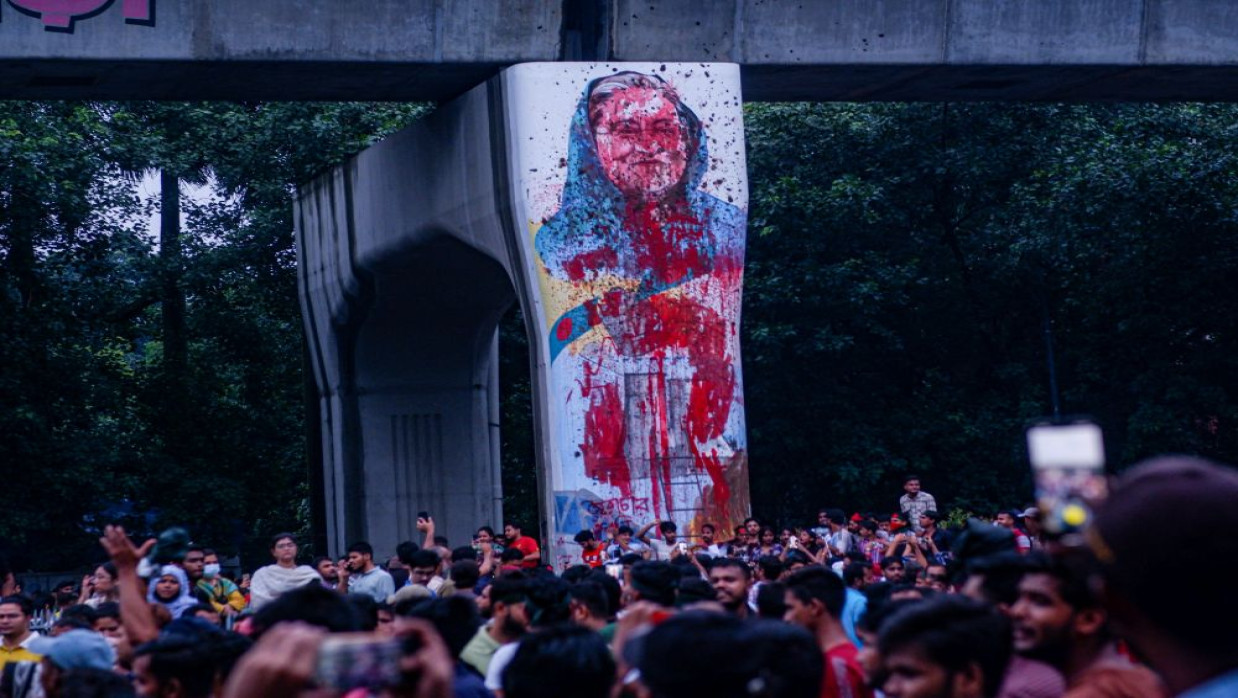
Bangladesh’s former Prime Minister Sheikh Hasina’s surprise announcement that she plans to return from India in December has brought yet another dose of unpredictability to Bangladesh’s deeply divided political scene. Speaking to Reuters, Hasina said she and several other high-level Awami League members would return of their own accord and face trial, even though they could face lengthy jail terms or death. Hasina has been living in India since her administration was overthrown during the popular revolt on August 5, 2024.
The declaration raises an unavoidable question: Is Hasina genuinely preparing to return, or is December being used as a political instrument?
Although she has named a general timeframe, she has not disclosed a specific date, travel arrangement, or agreed legal procedure. Nor has she indicated whether her return depends on assurances concerning her personal security or treatment in custody. Such ambiguity gives her considerable political flexibility. It allows her to sustain public attention while assessing conditions inside Bangladesh, the strength of the Awami League’s organization and India’s evolving relationship with Dhaka.
The timing also has domestic political significance. Scores of Awami League officials were jailed, fled into hiding or escaped into exile after the collapse of her government. The party was banned from political activities. By saying she will return and not go back into exile until she brings along senior colleagues, Hasina is telling supporters that she intends to lead from the front and face risks alongside them rather than remaining abroad indefinitely. She is bolstering confidence and fighting any suggestion that the party's leadership has been decimated beyond repair.
The legal hurdles, however, remain high. Sheikh Hasina was sentenced in absentia to death for her role in violently crushing the 2024 uprising. She also faces several other criminal charges and trials. She has dismissed the charges and says the proceedings have been political. Government officials have said she would be jailed if she returned home and would have to answer to the rulings.
India consequently occupies an exceptionally delicate position. It has provided Hasina refuge but has not publicly committed itself to facilitating either her voluntary return or extradition. Bangladesh has formally sought her repatriation under the bilateral extradition treaty, while India has said that the request is being examined. The treaty does not make extradition automatic: legal, political, security and human-rights considerations may all influence New Delhi’s decision.
Dhaka has even requested the extradition of former home minister Asaduzzaman Khan Kamal, another top Awami League leader, who has also been sentenced to death over his alleged role in the 2024 crackdown. The pursuit of other former officials shows that Hasina’s political fate is tied up with broader questions of accountability, political reconciliation and Bangladesh–India relations.
As important as the developments on the ground are, Hasina’s maneuvers in the court of public opinion are equally important. Floating her potential return through international news outlets allows her to maintain her legal claims, political narrative and personal safety on the global stage. Publicity also forces Dhaka to prove it will uphold due process and New Delhi to explain how long it will allow her to stay.
But it's a gamble. If she doesn't come by December - or come up with a convincing reason for waiting - people who want her here will begin to question her original decision to announce her trip. If she does come and gets arrested, there will be protests. Polarization will grow. Diplomatic headaches will follow.
For the moment, her impending homecoming should be treated as both a stated intention and a political ploy. Whether it actually materializes will depend as much on Hasina’s willingness as it does on negotiations, assurances, legal posturing, and the domestic and international calculations of both Bangladesh and India. Until we reach that point, December is less a concrete deadline than a political one Bangladesh and India have placed on the region.


0 Comments
LEAVE A COMMENT
Your email address will not be published