

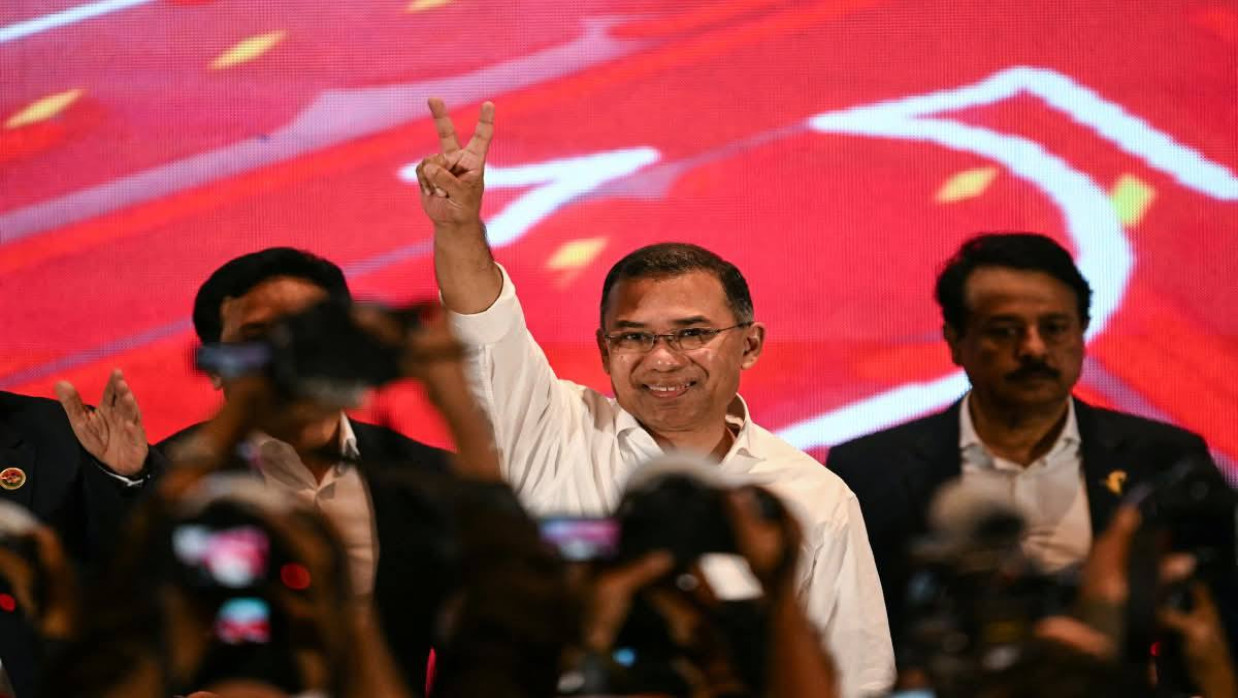
Bangladesh’s 13th National Parliamentary Election has concluded with one of the most remarkable outcomes in Bangladesh’s recent political history. Bangladesh Nationalist Party’s (BNP) resounding victory signals a smooth democratic transition for Bangladesh’s most populous Muslim nation, with Tarique Rahman slated to take oath as prime minister along with his cabinet on February 17. With promises of rejuvenation diplomatically, politically, and strategically, Bangladesh enters its New Political Era amid hopes of recalibrating its foreign policy approaches and repairing ties with regional partners.
Representatives of neighboring countries, along with other global partners, have confirmed their attendance at the swearing-in ceremony, suggesting Bangladesh’s eagerness to return bilateral relations to normalcy. Regional Heads of State have been invited for the swearing-in ceremony, underscoring Dhaka’s acknowledgment that Bangladesh’s future depends on the stability of its neighborhood. Bangladesh and India share a land border, one of the longest in the world, and numerous rivers that crisscross both countries’ boundaries.
India’s Narendra Modi will not be present for the inauguration ceremony but has instead announced to send a special envoy. It symbolizes India extending an olive branch to the new government and both countries seeking to reset ties after months of acrimony. For Bangladesh, India is the single most important bilateral relationship. Bangladesh and India enjoy multi-faceted relations that include trade, connectivity projects, energy sharing, and foreign policy coordination, amongst others.
Growing Apart?
Bangladesh will see power change hands after the Awami League’s 14-year rule, following a landslide victory by the opposition Bangladesh Nationalist Party, which has won more than 200 seats in parliament. Bangladesh held a mostly peaceful election compared to previous years, giving the incoming Prime Minister, Tarique Rahman, and his administration newfound legitimacy.
Bangladesh has repeatedly acknowledged that development goes hand in hand with political stability. As one of South Asia’s largest and fastest-growing economies, it understands that sustained progress requires a stable political foundation. Geo-strategically located between South and Southeast Asia, Bangladesh recognizes the importance of good relations with its immediate neighbors, Nepal, India, Bhutan, Myanmar, and Pakistan, for growing trade, connectivity projects, energy partnerships, and securing borders. Symbolism of India-Bangladesh relations often sets the tone for future engagements.
The stature of the Indian delegation that attends Bangladesh’s inauguration is critical. India sending its Prime Minister himself would have been a significant positive gesture. However, sending a high-ranking official also demonstrates New Delhi's recognition of the importance of stable relations with Bangladesh.
Resetting Bangladesh’s ties with India will be crucial for the new government. Dhaka wants a relationship based on equality and respect, without New Delhi interfering in the country's domestic affairs. However, Bangladesh also cannot afford to isolate India, which neighbors Bangladesh from almost all sides and with whom it shares one of the world’s longest land borders. India is also Bangladesh’s largest trading partner and serves as the gateway to all of Bangladesh's northern neighbors.
Knocking on New Delhi’s Door
The Indian government, along with Indian opposition leaders, has sent felicitations to the new Bangladesh Prime Minister-elect Rahman. This would be the perfect opportunity to improve ties with India, which nosedived after the August 2024 political unrest and the years of strained relations during Bangladesh’s interim government led by Yunus.
Bangladesh believes India turned a blind eye to former Bangladesh PM Hasina, who many Bangladeshis believe Indian officials allowed to take refuge in India after her party’s downfall. Hasina has been residing in New Delhi incognito under what is supposed to be police protection, along with other former Bangladeshi ministers and senior civil and military officials. India’s decision to restrict visas to Bangladeshi nationals, coupled with remarks by Indian media anchors and politicians, did not go down well with Bangladeshis.
The BNP-led alliance will have to take the first step to improve ties with India. Bangladesh wants New Delhi to stop intervening in the country’s internal politics; however, India too will have to take steps to reassure Bangladesh that it wants to work with the new government. Publicly criticizing Bangladesh would run both bilateral ties aground. Bangladesh needs India, and India needs Bangladesh. Economic benefits are a strong incentive to improve ties.
India can benefit from Bangladeshi ports to aid its landlocked North-Eastern states. Bangladesh can benefit from India’s massive markets and act as a bridge for trade and export opportunities with the rest of Southeast and South Asia. Counter-terrorism cooperation, border management, communication, and regional cooperation would be key areas for Bangladesh and India to collaborate.
Initial contact can begin with Bangladesh’s Foreign Minister visiting New Delhi to hold official talks with the Indian Foreign Minister. This can soon be followed by Rahman visiting Modi to further cement bilateral relations. Bangladesh and India can take Confidence-Building Measures by lifting visa restrictions, normalizing border trade, and encouraging cultural exchange programs.
Minority Card Should Rest
One of the points of contention between India and Bangladesh has been India continually bringing up the treatment of minorities in Bangladesh. Sections of the Indian media and opposition parties have frequently lamented state-sponsored marginalization of minorities in Bangladesh, often blowing incidents out of proportion.
Minority in Bangladesh often interpreted Indian diplomatic pressure as targeted towards weakening Bangladesh’s foundation by giving political parties in Opposition foothold by fueling religious divides. Bangladesh prides itself on maintaining a secular fabric of society where the majority Muslim population has coexisted with Hindus, Buddhists, and Christians for decades.
India, too, has had its own issues with minority suppression that have received international condemnation. Dhaka and New Delhi should both desist from using minorities as pawns in the political game of chess. Mutual respect for the internal politics of both nations should be practiced to avoid demonizing each other on global platforms.
Regional Powerhouse
While India will remain Bangladesh’s principal partner, Bangladesh also maintains good relations with other countries in the region. Nepal and Bhutan will continue to hold special significance for Bangladesh in terms of hydroelectricity and transit. Myanmar will always remain important to Bangladesh as it tries to contain violence along its volatile border and the continuing Rohingya crisis.
Even Pakistan still remains in Bangladesh’s foreign policy calculations. Going forward, Bangladesh should capitalize on its strategic location to become a regional powerhouse. It can consider using its ports at Chattogram, Mongla, Payra, and the soon-to-operate Matarbari deep-sea port as transit points for trade with regional partners.
Regional groupings such as BIMSTEC and SAARC should once again be revitalized to boost economic cooperation. Bangladesh has the opportunity to reset ties with all of its neighbors as it welcomes a new government next week. The best way to move forward is to leave the past where it belongs and work towards a respectful bilateral relationship with Bangladesh.


0 Comments
LEAVE A COMMENT
Your email address will not be published