

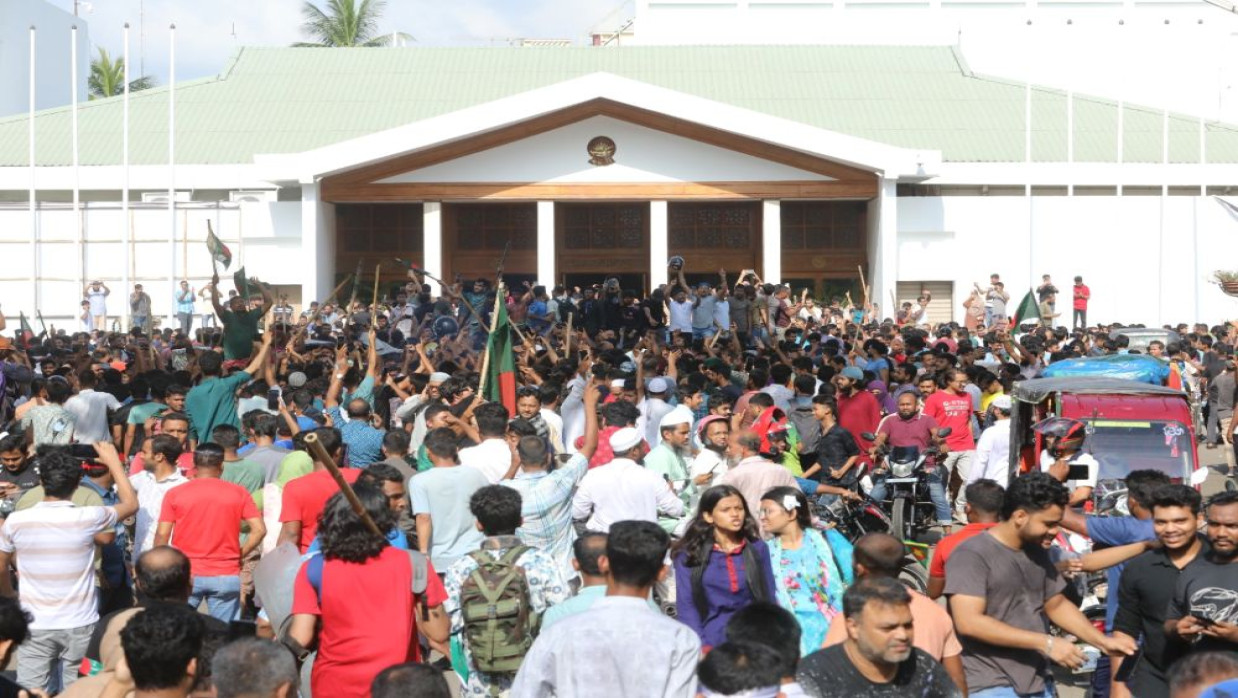
Bangladesh has once again faced some of its most important and difficult questions following the change of government in July. Who deserves justice? Who deserves immunity? Who is sovereign when the wheel turns?
Through contentious debates over legal immunity for protestors of the July movement, the role of the interim government led by Professor Muhammad Yunus, and the manner in which accountability processes may be invoked to frame public memory, it has become clear that there is more to questions of transitional justice in Bangladesh than meets the eye.
Immunity for Pakistan Army personnel killed in Bangladesh in 1971
Take, for instance, immunity for Pakistani military personnel killed in Bangladesh during the Liberation War of 1971. Bangladesh has consistently maintained that such individuals are ineligible for judicial recourse. Quite simply, an occupying force responsible for genocide does not deserve to be awarded judicial equality with its victims after losing the war. This is corroborated by international law relating to crimes against humanity as well.
Far from unique to Bangladesh, liberation movements are inherently asymmetrical. But arguments have been made to justify punitive legal measures for July protesters that directly contradict this very notion.
Grant of Immunity to General Moeen U Ahmed (2006–2008)
General Moeen U Ahmed knew very well that the army's takeover in July 2006 could not be legally justified. Sources quoted extensively in India's former President Pranab Mukherjee's memoir, The Coalition Years, said that during the 2006–2008 caretaker military regime, Moeen asked Mukherjee and the then Congress-led UPA government to secure a safe passage should the political situation turn adverse. Pranab Mukherjee's memoir makes an oblique but significant mention of such a request.
General Moeen was still serving as the COAS when the BDR mutiny and massacre took place in Peelkhana in February 2009, where 57 senior Bangladesh Army personnel were brutally tortured and killed. The entire episode raises suspicion as to how hundreds of mutineers could massacre seniors with such precision. Questions were raised then about how a handful of mutineers managed to capture strategic points within Peelkhana and for how long the massacre was allowed to continue. The whole episode makes many believe that it was indeed scripted, coordinated, and allowed to happen by someone outside with access to the secrets of the Bangladesh State.
Years of probing by Sheikh Hasina's government were derided as mere eyewash. It was only recently, after the matter was reopened for further investigation, that some initial leads emerged about possible involvement of a foreign hand and plausible negligence on the part of those expected to be responsible for maintaining institutional secrets. By then, General Moeen had left Bangladesh for the USA after being bestowed with immunity from prosecution and has since been living there.
Immunity for July protesters?
Recently, legal experts and columnists have pointed out what they see as a paradox in the legal immunity granted to the July protesters. Prominent among them is Shahadin Malik, a prominent AL-leaning jurist of the Supreme Court.
Specifically, commentators on both ends of the political spectrum have raised concerns about executive orders designed to protect activists associated with the July movement from future persecution. The argument has been made that, while the July uprising was popular, granting blanket legal immunity to protesters would set a dangerous precedent.
BBC Bangla has also published a commentary asking what granting legal immunity to the July protesters would mean.
Legitimacy of Professor Yunus’s caretaker government
This extends to questions over the legitimacy of Professor Yunus’ interim government. A caretaker government, by definition, is not popularly elected. Its legitimacy is drawn from the very necessity of its appointment. But there should be limits to such necessity.
Certain political commentaries have stated that once a democratically elected government returns to power in Bangladesh, it would be obligated to legally recognize and validate the decisions of Professor Yunus’ interim government. But why should a future parliament be responsible for affirming the actions of a previous non-elected government?
Must the next elected parliament recognize June 30?
Furthermore, politicians have asserted that if the tenure of Professor Yunus’ caretaker government is not recognized as legitimate, it would constitute “betrayal” of the state or even treason. This is a dangerous precedent to set.
Accountability and the Consensus Commission
One of the more concerning proposals to have been floated thus far is the creation of a “Consensus Commission”. The alleged mandate and composition of this body, rumored to be headed by Dr. Ali Riaz, has received significant criticism.
The notion of a referendum itself is not condemnable. However, in the specific political context of contemporary Bangladesh, the proposed “yes/no” referendum framework does little to empower the people.
When the very body empowered to implement the people's decision is itself not fully representative of the people, there is little reason for the people to trust that their decision will be respected. As of 2024, none of Bangladesh’s major political parties has demonstrated proven electoral strength in a genuinely free and credible election since 2001, the last election widely regarded as fair. It has now been 23 years since Bangladesh experienced such a democratic “new dawn.”
If the people vote yes to a republican Bangladesh by a 51% majority, there is no certainty that this mandate will be reflected in the constitution. A partisan parliament will make that decision. Are we sure that such a parliament can be trusted to implement the will of the people?
Instead of empowering the people, a referendum in the current context would suffocate them inside a cage of parliamentary partisanship. When it comes to questions of national structure, constitutionally entrenched or Supreme Laws are decided not by parliament, but by a constituent assembly. Elected by the people, a constituent assembly’s mandate is to draft a new constitution or amend an existing one.
Invoking the specter of persecution and political victimization might work as a short-term political strategy. But it is a path that leads to dictatorship, not democracy.
The Bangladesh Army and the future of Bangladesh
It has also been encouraging to see calls for the Bangladesh Army to remain vigilant. The army must not lose its neutrality. It must remain firm in its refusal to allow political violence to persist and ensure that the upcoming elections are terror-free.
The future of Bangladesh does not lie in military arbitration of civilian politics. The army has a proud democratic tradition. It must not squander it.
And a final note of caution to politicians across the spectrum: if a future democratically elected government, BNP or otherwise, repeats the same mistakes of authoritarianism backed by external powers and local intelligence agencies, the legacy of the July uprising will be tarnished forever. Tomorrow’s liberators cannot become today’s collaborators and expect to escape history’s judgment any more easily than those currently in exile.
Bangladesh has once again faced some of its most important and difficult questions following the change of government in July. Who deserves justice? Who deserves immunity? Who is sovereign when the wheel turns?
Through contentious debates over legal immunity for protestors of the July movement, the role of the interim government led by Professor Muhammad Yunus, and the manner in which accountability processes may be invoked to frame public memory, it has become clear that there is more to questions of transitional justice in Bangladesh than meets the eye.
Immunity for Pakistan Army personnel killed in Bangladesh in 1971
Take, for instance, immunity for Pakistani military personnel killed in Bangladesh during the Liberation War of 1971. Bangladesh has consistently maintained that such individuals are ineligible for judicial recourse. Quite simply, an occupying force responsible for genocide does not deserve to be awarded judicial equality with its victims after losing the war. This is corroborated by international law relating to crimes against humanity as well.
Far from unique to Bangladesh, liberation movements are inherently asymmetrical. But arguments have been made to justify punitive legal measures for July protesters that directly contradict this very notion.
Grant of Immunity to General Moeen U Ahmed (2006–2008)
General Moeen U Ahmed knew very well that the army's takeover in July 2006 could not be legally justified. Sources quoted extensively in India's former President Pranab Mukherjee's memoir, The Coalition Years, said that during the 2006–2008 caretaker military regime, Moeen asked Mukherjee and the then Congress-led UPA government to secure a safe passage should the political situation turn adverse. Pranab Mukherjee's memoir makes an oblique but significant mention of such a request.
General Moeen was still serving as the COAS when the BDR mutiny and massacre took place in Peelkhana in February 2009, where 57 senior Bangladesh Army personnel were brutally tortured and killed. The entire episode raises suspicion as to how hundreds of mutineers could massacre seniors with such precision. Questions were raised then about how a handful of mutineers managed to capture strategic points within Peelkhana and for how long the massacre was allowed to continue. The whole episode makes many believe that it was indeed scripted, coordinated, and allowed to happen by someone outside with access to the secrets of the Bangladesh State.
Years of probing by Sheikh Hasina's government were derided as mere eyewash. It was only recently, after the matter was reopened for further investigation, that some initial leads emerged about possible involvement of a foreign hand and plausible negligence on the part of those expected to be responsible for maintaining institutional secrets. By then, General Moeen had left Bangladesh for the USA after being bestowed with immunity from prosecution and has since been living there.
Immunity for July protesters?
Recently, legal experts and columnists have pointed out what they see as a paradox in the legal immunity granted to the July protesters. Prominent among them is Shahadin Malik, a prominent AL-leaning jurist of the Supreme Court.
Specifically, commentators on both ends of the political spectrum have raised concerns about executive orders designed to protect activists associated with the July movement from future persecution. The argument has been made that, while the July uprising was popular, granting blanket legal immunity to protesters would set a dangerous precedent.
BBC Bangla has also published a commentary asking what granting legal immunity to the July protesters would mean.
Legitimacy of Professor Yunus’s caretaker government
This extends to questions over the legitimacy of Professor Yunus’ interim government. A caretaker government, by definition, is not popularly elected. Its legitimacy is drawn from the very necessity of its appointment. But there should be limits to such necessity.
Certain political commentaries have stated that once a democratically elected government returns to power in Bangladesh, it would be obligated to legally recognize and validate the decisions of Professor Yunus’ interim government. But why should a future parliament be responsible for affirming the actions of a previous non-elected government?
Must the next elected parliament recognize June 30?
Furthermore, politicians have asserted that if the tenure of Professor Yunus’ caretaker government is not recognized as legitimate, it would constitute “betrayal” of the state or even treason. This is a dangerous precedent to set.
Accountability and the Consensus Commission
One of the more concerning proposals to have been floated thus far is the creation of a “Consensus Commission”. The alleged mandate and composition of this body, rumored to be headed by Dr. Ali Riaz, has received significant criticism.
The notion of a referendum itself is not condemnable. However, in the specific political context of contemporary Bangladesh, the proposed “yes/no” referendum framework does little to empower the people.
When the very body empowered to implement the people's decision is itself not fully representative of the people, there is little reason for the people to trust that their decision will be respected. As of 2024, none of Bangladesh’s major political parties has demonstrated proven electoral strength in a genuinely free and credible election since 2001, the last election widely regarded as fair. It has now been 23 years since Bangladesh experienced such a democratic “new dawn.”
If the people vote yes to a republican Bangladesh by a 51% majority, there is no certainty that this mandate will be reflected in the constitution. A partisan parliament will make that decision. Are we sure that such a parliament can be trusted to implement the will of the people?
Instead of empowering the people, a referendum in the current context would suffocate them inside a cage of parliamentary partisanship. When it comes to questions of national structure, constitutionally entrenched or Supreme Laws are decided not by parliament, but by a constituent assembly. Elected by the people, a constituent assembly’s mandate is to draft a new constitution or amend an existing one.
Invoking the specter of persecution and political victimization might work as a short-term political strategy. But it is a path that leads to dictatorship, not democracy.
The Bangladesh Army and the future of Bangladesh
It has also been encouraging to see calls for the Bangladesh Army to remain vigilant. The army must not lose its neutrality. It must remain firm in its refusal to allow political violence to persist and ensure that the upcoming elections are terror-free.
The future of Bangladesh does not lie in military arbitration of civilian politics. The army has a proud democratic tradition. It must not squander it.
And a final note of caution to politicians across the spectrum: if a future democratically elected government, BNP or otherwise, repeats the same mistakes of authoritarianism backed by external powers and local intelligence agencies, the legacy of the July uprising will be tarnished forever. Tomorrow’s liberators cannot become today’s collaborators and expect to escape history’s judgment any more easily than those currently in exile.


0 Comments
LEAVE A COMMENT
Your email address will not be published