

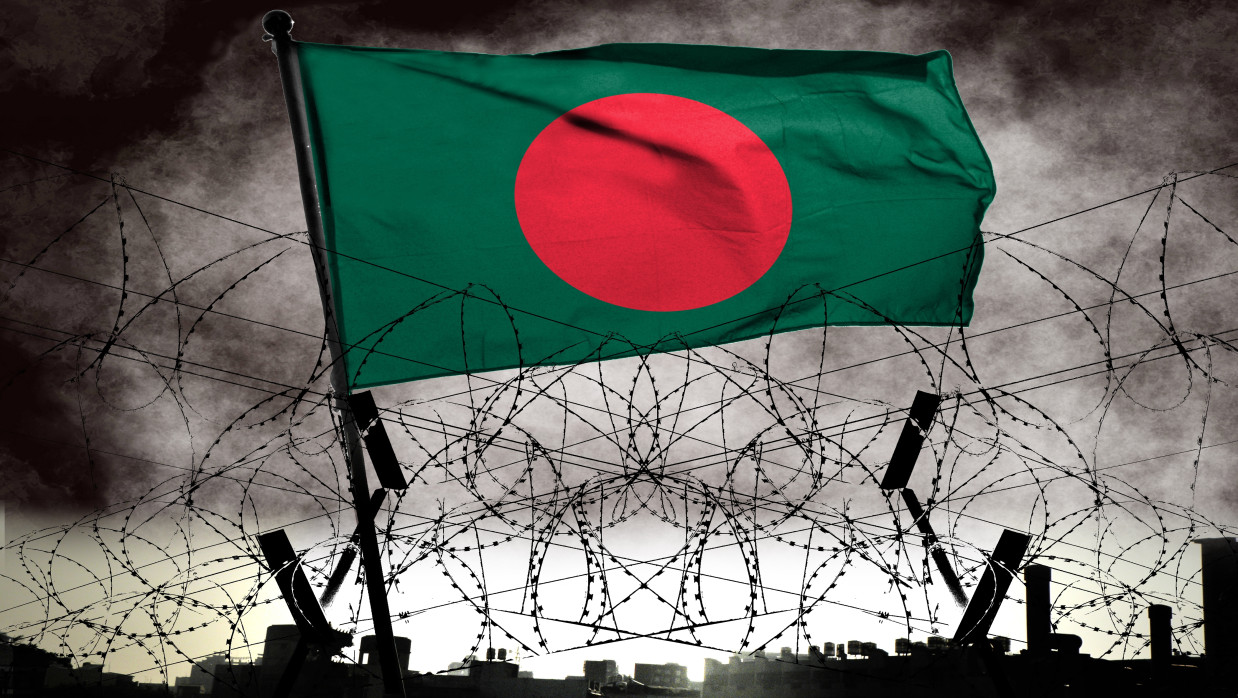
In the four decades of Bangladesh’s existence as an independent nation, one might reasonably have hoped that India’s most important neighbor would, more often than not, have treated it like a peer; as a sovereign equal, with which we had a common past, shared cultures, and with which we had waged a war in 1971 in support of its national aspirations.
But for much of this period, a disquieting trend has emerged in the pronouncements of several Indian political and diplomatic figures, who have found it challenging to address and engage with Bangladesh as a country with its own political sensibilities and ideas about self-respect and self-determination. They have instead found it easy to talk about Bangladesh, to lecture Bangladesh, to warn and, in some cases, even threaten Bangladesh. In doing so, they have exhibited an inability to take seriously what is happening in Bangladesh, and to speak about it in measured and dispassionate ways.
.png)
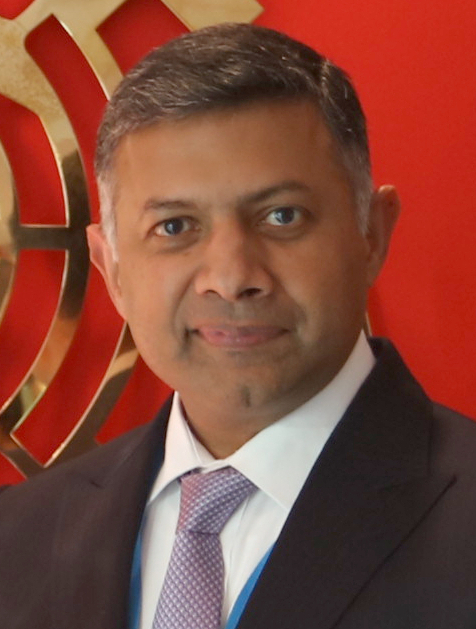
Veena Sikri, the former High Commissioner to Bangladesh
This tendency was, of course, in evidence before August 5, but it became exceptionally pronounced in the days and weeks that followed. One such voice was that of India’s former High Commissioner to Bangladesh, Veena Sikri, who retired from service in 2006 but, during and after her tenure, became known for a partisan view of Bangladesh’s internal politics, which bordered on sycophancy in her defense of Sheikh Hasina and the Awami League. “Stability”, in Sikri’s vocabulary, had become synonymous with democracy. As long as the AL was in power, Bangladesh’s democracy remained intact, she seemed to believe. After August 5, all that changed. In the absence of the AL, Sikri and others transformed themselves into fearmongers. At a meeting in Delhi on December 10, organized by the RSS, Sikri warned against growing Hindu persecution in Bangladesh and alleged attacks on Hindu homes and businesses, implying these attacks had the government’s tacit approval. More egregiously, Sikri also stated that “Bangladesh’s government doesn’t exist anymore”, that “all that is left in the country is its skeleton”, and that “Islamic fundamentalists are running the country”. Not content with this performance, Sikri also raised the specter of the three B’s: Buddhists, Shias, and the “secular” citizens of Bangladesh all being under attack. These were dramatic claims, uttered by a former High Commissioner to the media and a large public gathering, with neither a factual basis nor the dignity one might expect of a diplomat.
.jpg)
Pinak Ranjan Chakravarty , the former High Commissioner to Bangladesh
Sikri was not alone in making such claims. Among those present at the December 10 event was Pinak Ranjan Chakravarty, India’s High Commissioner to Dhaka from 2007 to 2009. Chakravarty, in his tenure, had come under criticism from the government of Sheikh Hasina for making an outrageous claim: of up to 25,000 Bangladeshis migrating to India annually, and never returning. The claim was rebutted even by the Bangladesh Hindu Parishad, but it revealed how loose with the truth Chakravarty, for one, was prepared to be. In fairness, the late 2000s were not an especially happy period in Bangladesh’s history, with a deeply flawed election taking place and Sheikh Hasina engaged in a bitter fight with the High Court for much of her term. The great massacre of 57 senior military officers at Pilkhana was also around this time. This period is controversial in Bangladesh’s history for many reasons, including alleged external interference by major powers. To have an Indian diplomat speaking dismissively about Bangladeshi politics around this time, and refusing to acknowledge what many in Bangladesh experienced as trauma, is rankling to say the least.
Similarly, another former Indian diplomat, Pankaj Sharan, sought to influence political developments in Bangladesh by issuing statements before and after August 5 calculated to warn and intimidate the Bangladeshi interim government headed by Professor Yunus. On 19th September, 2024, in an interview in Economic Times, Sharan opined, “Our relations will definitely affect Bangladesh’s economy if he wants to get out of our embrace. Bangladesh is playing with fire.” The remark sounded remarkably like a threat, and in being made by a former diplomat, was so understood. To be lectured by someone like Sharan on the interference of foreign powers in Bangladesh, but then to be told this was Bangladesh’s own doing, did not sound like advice; it sounded like contempt.
These interventions are part of a continuum, wherein Indian diplomats and official figures feel no compunction about behaving as if Bangladesh does not have political agency, and Indians should be the ones to set the rules of engagement. After August 5, some in India made it their business to get these “rules” right. The 2024 uprising, according to this line of reasoning, was Islamist, anti-minority, orchestrated by foreign powers, and undemocratic. It was this rather than any other “analysis” of Bangladesh that became the normative “expert” view. The dominant Indian media has, for years, gone out of its way to paint a negative picture of Bangladesh as a country bereft of rights for religious minorities and steeped in anti-India Islamist politics. The most fevered views of Bangladesh found a natural home in this ecosystem. The dominant Indian media has, for years, gone out of its way to paint a negative picture of Bangladesh as a country bereft of rights for religious minorities and steeped in anti-India Islamist politics. The most fevered views of Bangladesh found a natural home in this ecosystem.
While India says it wants a people-centric approach in Bangladesh, how can one say this when the representative bodies and spokespersons it chooses for this task lack civility and humility? As far as facts are concerned, they are very different from what these “public intellectuals” are saying. Bangladesh’s Hindus make up only about 8 percent of the country’s population, but occupy between 22 and 25 percent of the powerful positions in the civil service, academia, judiciary, and the foreign service. By comparison, Muslims in India, who number about 14 percent of the country’s population, constitute less than 5 percent of these positions. Furthermore, when any temple is attacked or any statue vandalized in Bangladesh, most people who take to the streets in the country to protest are Muslims. A large number of Bangladeshis, therefore, do not support these attacks, for they are performed by miscreants, political hoodlums, or other fringe elements and are usually conducted at night, rather than being allowed to become mass movements. To suggest that Bangladeshis of all stripes are attacking Bangladesh’s Hindu minorities is to tell a rank falsehood.
The Indian narratives also do not account for the fact that anti-minority attacks in India are not met with anything like the same kind of popular protest that might be mobilized in Bangladesh. In India, the dominant response is either indifference or quiet approval. Bangladesh’s reality may not be perfect, but it is a reality nonetheless. How this reality differs from that in West Bengal or other Indian states is instructive for Indians who would like to understand why a negative, or even falsely negative, picture of Bangladesh has persisted in their own country’s political and public life for so long.
In fact, the practice of creating an image of Bangladesh as a land of Hindu suffering began with newspapers such as the Anandabazar Patrika in the 1930s, and continued through the Marwari-owned media houses and their allies among the industrial families like the Birlas and Goenkas, who all helped create a political space in which it was in their economic and strategic interests to foment communal division in Bengal and West Bengal. The newspapers we read today, and the TV talk shows and social media platforms we patronize, are the direct descendants of this history.
To say that Bangladesh’s Hasina government has shown little humility and grace in defeat is not to justify those voices, including among Hindus, that are demanding a Bangladesh devoid of Bengali Muslim influence. To attack Professor Yunus or the interim government is not to acknowledge that Bangladesh’s politics in the past have often been less than admirable, and that many of its ruling elites, both civilian and military, have not had Islamism or minority victimhood as an active goal. Neither of these facts allows Indian political or media figures to pretend that Bangladesh’s Hindus are persecuted, fundamentalists capture the state, or that Bangladesh is “playing with fire”. But for reasons of self-interest, some vested interests inside Bangladesh and India continue to peddle this dangerous lie.
Part of the story also has to do with groups such as the Matuas, and the other communities that might align with ISKCON in Bangladesh. Some of them do have a political agenda, and some of them have found an ally in the Indian government, as well as electoral utility for some sections of the AL. Their utility, however, has always come from being backed by a major political party in Bangladesh. Indians cannot take this agency away from Bangladeshis. A triangular relationship is at play between Indian patronage, Bangladeshi religious-political groups, and Bangladeshi parties such as the AL, and to suggest that this relationship makes the religious groups subservient to India is to misread power relations. Bangladesh’s media has, for years, gone out of its way to paint a negative picture of Bangladesh as a country bereft of rights for religious minorities and steeped in anti-India Islamist politics. The most fevered views of Bangladesh found a natural home in this ecosystem.
We say we want a stable Bangladesh, but by creating this kind of discourse around Bangladesh’s politics, and with utter disdain for its sovereignty, Indian diplomats and official figures are only helping to erode the very thing they claim they want to protect. Bangladeshis may not be innocent in their reading of India’s political interests or the role some Indians have played in trying to influence politics in Bangladesh. That is for them to decide, not for Indians to tell. But when a country, such as India’s former Foreign Secretary, a former Indian High Commissioner, and others, start opining without facts, without caution, without even the semblance of diplomatic grace, and in ways that feed into domestic narratives in Bangladesh about Indian arrogance, then India is not living up to the partnership it says it wants.
The question is this: if India seeks a people-centric policy in Bangladesh, as it claims it does, can it really expect to have people-centric outcomes if its most senior figures and its most important public face in Bangladesh are made up of individuals who so publicly lack the very humility and respect that is the very hallmark of humanity?


0 Comments
LEAVE A COMMENT
Your email address will not be published