

One lesson has become one stone set in the heart of a significant section of Bangladeshi public opinion over the last 15 years: New Delhi does not want Khaleda Zia to be alive or in power; India did not mind Khaleda Zia in jail. It is not an emotional or partisan conclusion. It is a political and existential judgment born of political experience. India’s Bangladesh policy has been consistent, from backing tainted elections to remaining mute as political space was throttled in Bangladesh under Sheikh Hasina. This reality has long given Delhi the impression of prioritizing political convenience over democratic values.
For 15 years, Bangladesh was meant to be New Delhi’s listener, following orders from Dhaka rather than carving an independent Bangladesh foreign policy based on national interests. It worked for as long as the Dhaka government of choice was in power. The whole edifice came crashing down with the July Revolution, which sent shockwaves through India’s preconceived notions about Bangladesh as much as it did within Bangladesh’s domestic politics.
When Sheikh Hasina fled Bangladesh to seek shelter in Delhi on August 5, 2024, she was not alone. She was joined by much of the Awami League’s top brass. New Delhi did not blink. In fact, it welcomed her. In doing so, India had lost more than an ally; it had lost control of the narrative in Bangladesh. India has spent the last 15 years trying to correct course, with little success despite continuous media blitzkriegs and a torrent of diplomatic messaging.
India and Khaleda Zia: A History of Discomfort
New Delhi has not hidden its discomfort with Khaleda Zia and her politics from anyone. In fact, it was pretty vocal about it. Her stubborn insistence on sovereignty, her push for a balanced foreign policy, and refusal to be treated like a vassal were irritants on India’s regional designs. But after her death, in a volte-face visible for all to see, came the volte-face.
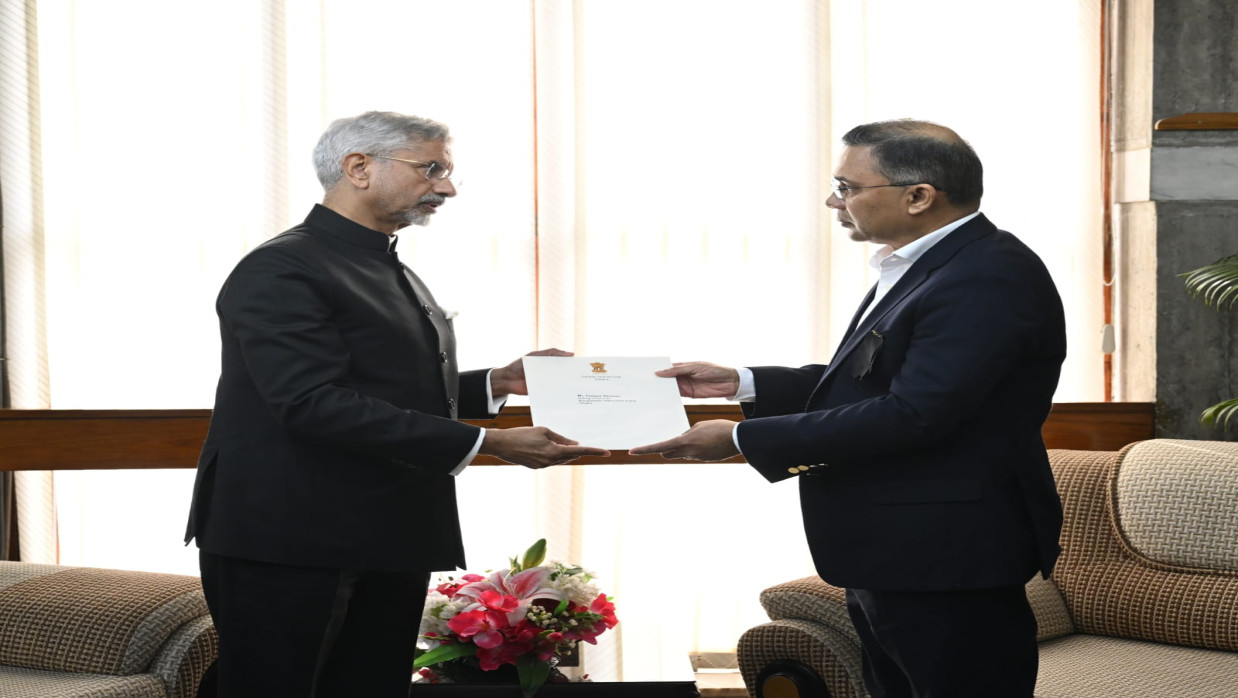
External affairs minister S Jaishankar, who represented India at Khaleda Zia's funeral in Dhaka, arrived with a letter from PM Narendra Modi. The letter was warm in its praise, generous in its diplomatic niceties, and uncharacteristically full of condolences. It was a carefully crafted, symbolically charged, magnanimous gesture to try to signal that ties could be reset. Rajnath Singh came in person to the Bangladesh High Commission in Delhi to sign the condolence book.
The question it raised was the wrong question
Is India finally ready to reset ties with Bangladesh with dignity, respect, and on equal terms? Or is this but another twist in what is increasingly being called Chanakya diplomacy? Covert moves, backchannel negotiations, and proxies with veiled messaging have been part of New Delhi’s public diplomacy playbook, despite repeated denials.
Bangladesh’s Foreign Adviser, Tauhid Hossain, has advised restraint. He has said it would be wise not to read too much into a single gesture of goodwill. Yes, Jaishankar’s presence in Bangladesh during Khaleda Zia’s funeral and Rajnath Singh’s signing of the condolence book was positive. Symbols matter. But symbols are not policy. And history should not be forgotten.
History is a great teacher, and that is why caution is advisable.
The Long Shadow of Interference
India’s interference in Bangladesh’s domestic politics is not new. In fact, it has been going on at least since 2008, when Bangladesh emerged from a military-backed caretaker government to a very contested election. As former Indian President Pranab Mukherjee notes in his memoir The Coalition Years, India was closely engaged with Bangladesh’s civil–military power structure during the 2007–08 caretaker period to facilitate the return of electoral politics and Sheikh Hasina, amid a widely held belief in Bangladesh that senior military figures, including then army chief Moeen U Ahmed, received implicit assurances regarding their post-transition security and legal exposure. However, no explicit quid pro quo is documented.
India’s involvement did not stop there. In 2014, India’s then Foreign Secretary Sujata Singh reportedly tried to browbeat HM Ershad into taking part in an election widely judged one-sided. The 2018 election came, and with it came reports of ballot stuffing the night before. In 2024 came a hollow and discredited “Ami-Dummy” election. Yet India recognized every single one of them without hesitation, thereby extending Sheikh Hasina's unbroken legitimacy.
In many ways, many within the Indian administration and sections of its media establishment continue to view Sheikh Hasina as a democratically elected Bangladeshi prime minister in defiance of reality in Bangladesh.
In the minds of many Bangladeshis, Bangladesh was on a road not dissimilar to Sikkim in 1975: a loss of sovereignty, in slow motion, packaged as stability.
Refuge, Silence, and Destabilization
India not only gave a sentenced prime minister (by Bangladesh’s International Crimes Tribunal) refuge in Delhi but has remained silent on extradition ever since. This same Hasina issues statements from Indian soil regularly to stake political claims. At the same time, senior Awami League leaders and former government officials with important security roles, including a former head of Bangladesh’s intelligence apparatus, are alleged to be operating out of India and involved in destabilization efforts.
The Indian media, often an unacknowledged informal wing of India’s foreign policy apparatus, has not been shy to make incendiary claims and loud insinuations about threats, warnings, and conjectures about Bangladesh that read more like information warfare than journalism.
India’s Inconvenience with the July Revolution
The Indian government did not recognize the July Revolution. It did not hide its misgivings about Muhammad Yunus leading the interim structure either. If anything, India has tried, often gleefully, to undermine the movement and its leaders and participants at every opportunity.
But what has really upset South Block, many suspect, is not a change of government but Bangladesh’s potential to become an independent foreign policy actor. An independent Bangladesh means a Dhaka making its own choices, calibrating relationships at the regional and global levels on terms of its own choosing, being a balancing power. For India, access to its northeastern states and strategic depth remain top foreign policy priorities. If that means pressure, manipulation, or regime change by any means necessary, it is not above it.
Talk to Everyone, Control Everyone
Recent revelations about a London meeting involving Indian envoys with BNP and Jamaat leaders have sparked much speculation. The intent, many believe, is not to talk for the sake of negotiations or even reconciliation, but to contain all political actors in Bangladesh within the ambit of a structure that is not uncomfortable to Delhi.
Political commentator Professor Shahiduzzaman has argued that, in the long term, India’s preferred option remains Sheikh Hasina's continued rule. Talking to BNP or Jamaat or the Jamaat, he says, is an option that New Delhi will use strategically to apply pressure and keep all groups under check to prevent Bangladesh from veering towards policies uncomfortable to Delhi, including rapprochement with Pakistan.
Bangladeshi political scientist Dr. Dilara Chowdhury is more blunt in her assessment. She cautions that anti-India sentiment in Bangladesh today is at its highest level ever. It is neither ideological nor predicated on an abstract nationalistic impulse. It is based on experience. India’s insecurity about the “Seven Sisters”, its insistence on “business-as-usual” agreements that the Indian side terms business but which many Bangladeshis see as one-sided and exploitative, and its unwillingness to see Bangladesh as an equal, all of these have created a climate of suspicion among Bangladeshis, India’s so-called natural allies.
Optics Versus Reality
Jaishankar's attendance at Khaleda Zia’s funeral and Modi’s eloquent condolence letter are being read in some quarters as a rapprochement. In others, it is being seen as an attempt at optics, an opportunity to gain access to Bangladesh’s political inner circles, again.
The issue, in many ways, is the wrong issue.
Gestures and optics can never undo history. Khaleda Zia was, and continues to be, respected by many Bangladeshis for refusing to bow to Indian diktats. In the end, Khaleda Zia’s funeral drew an estimated ten million mourners in Bangladesh: an unmistakable show of force. It was not only grief; it was a reflection of political preferences. It was a signal of popular support for a political philosophy of sovereignty and dignity.
A Defeat Beyond Dhaka
The July Revolution defeated more than one idea. It defeated the notion of subservience. In that sense, it was also a defeat for Delhi’s preferred, long-term structure of influence. Bangladeshis did not revolt against India as a state; they rebelled against domination camouflaged as friendship.
If India really wants to reset ties with Bangladesh on a new footing, it would not be difficult. But it will need to stop treating Bangladesh as a subordinate, a ward; it will need to abandon its resort to coercive diplomacy, it will need to stop sheltering individuals in India who have openly destabilized Bangladesh, and it will need to stop treating a popular and legitimate movement as an enemy.
Till then, condolences, courtesy condolence letters, and visits will be interpreted not as reconciliation but as an elaboration of another chapter of an ancient, very cautious game that Bangladeshis, having learned many hard lessons of recent history, have not been shy of scrutinizing in the past.
Delhi now has the choice. Bangladesh has already spoken.


0 Comments
LEAVE A COMMENT
Your email address will not be published