

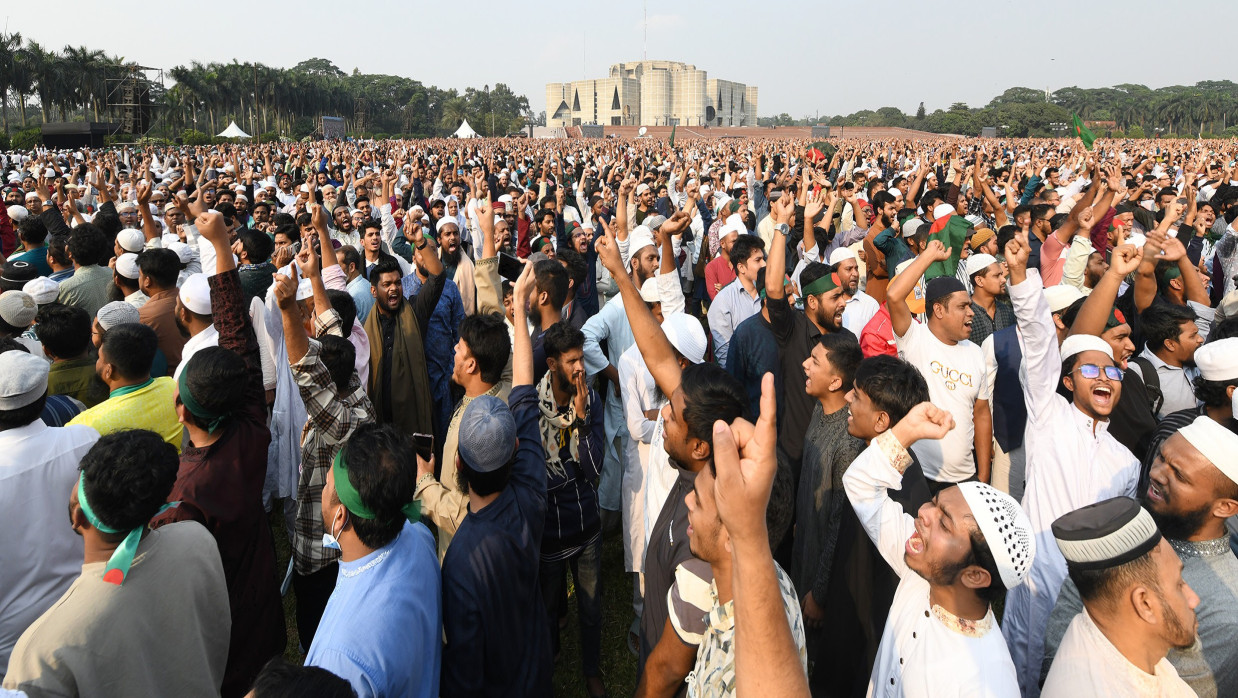
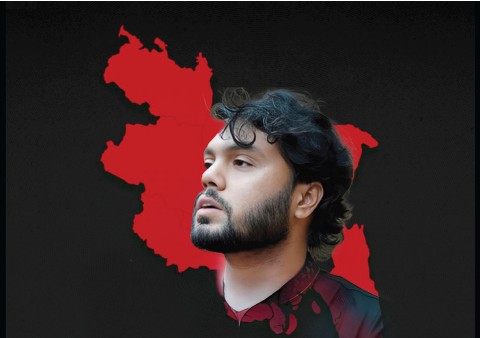
The killing of 33-year-old Hadi has unleashed more than a wave of grief across Bangladesh. In fact, by the time his funeral was wrapped up late last evening after being held in parts across Dhaka, it was difficult not to be struck by a palpable sense of shared rage among the millions who attended. This was not simply a ritual passing of a young life, but a vote with our feet about where our sovereignty lies, what we are willing to tolerate, and where we draw the line. In a country that has been grappling with the erosion of its dignity and agency for years, the mourning of one student has become the nation's mourning.
Hadi did not have the typical political profile that so many others have claimed to speak for since his death. He was a student leader. He rose to prominence with the upsurge of student politics in Bangladesh over the past two decades, and he had carved out a personal philosophy around opposition to Indian hegemony, refusal to accept the presence of Bangladeshi political fugitives in India, and principled rejection of India’s efforts to shape and interfere in Bangladesh’s internal affairs. With his death, he has been posthumously elevated to the status of something greater than a political martyr or even a symbol: he has become a point of identification for a generation that refuses to accept Bangladesh’s continued status as a subordinate state within the strategic orbit of another country.
A Funeral That Became a Political Verdict
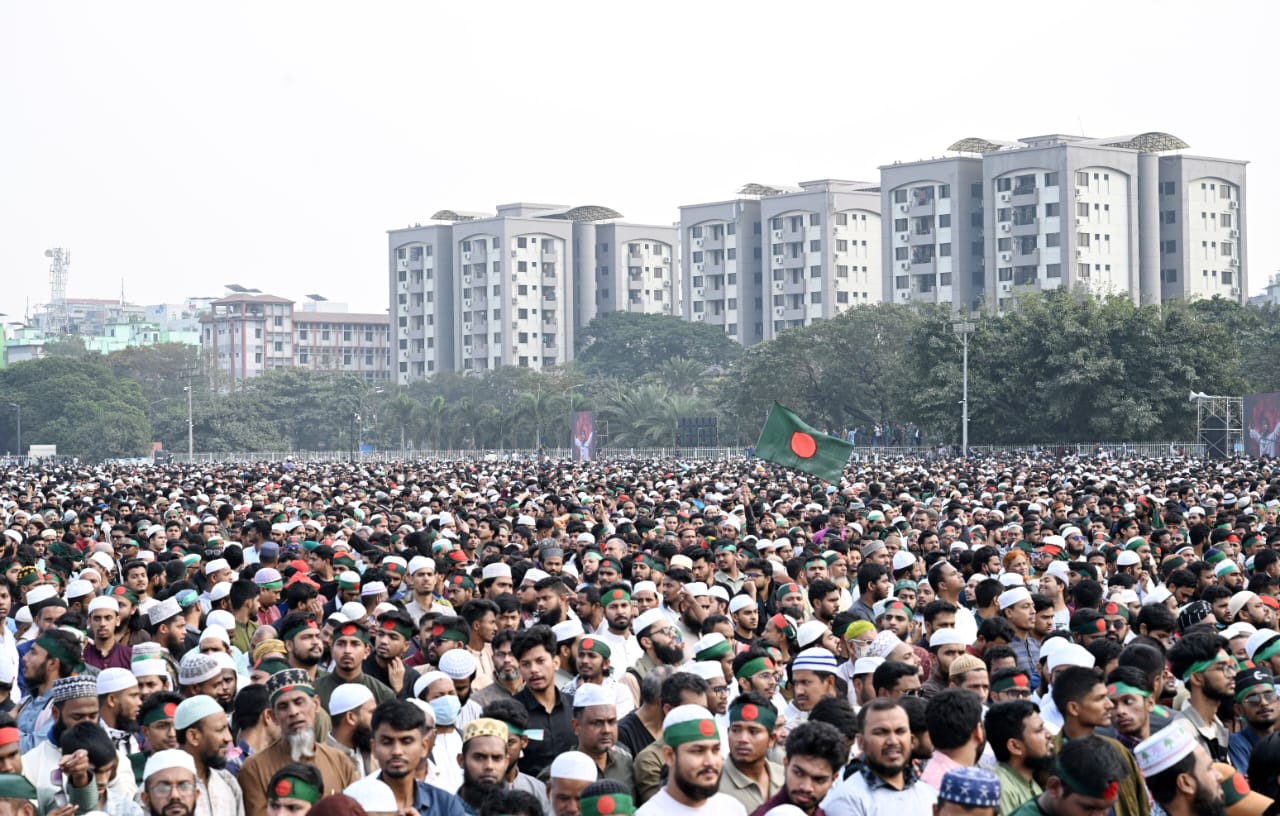
Funerals in Bangladesh and, more broadly, South Asia often take on political overtones. But there has not been one like this in a long time. If Bangladesh’s top court justices were right to step in and stop a spate of student protests by cracking down, many are going to have a lot of explaining to do about what they saw on the streets last evening and over the previous 24 hours. Millions poured into the streets, and by the end of the day, they were not just mourning Hadi but shouting a verdict in his honor.
The placards they held, the chants they shouted, and the conversations they had with each other as they walked in unison were not driven by any single political party, let alone by any single, overarching, centralized organizing. In fact, the striking thing was how unorganized everything felt out there. This was a crowd animated solely by rage.
To state the obvious, what was visible on the streets of Bangladesh late last night and early this morning was the anger of a generation with all the institutional and discursive tools at its disposal. For years, it has been building. But to state the obvious, this has been a deliberate strategy by India to leave no doubt about who is in charge and who is not. To hear many influential Indian politicians and verified social media accounts tell it, what is unfolding in Bangladesh today is an outbreak of “Islamic fundamentalism” that requires serious containment. You should not doubt their priorities. They will want to turn what is happening in Bangladesh into a security threat narrative for easy international consumption and self-serving diplomatic deflection.
Disinformation as Policy, Not Accident
Calling Bangladesh’s anger Islamic fundamentalism is neither a mistake nor a mischaracterization. If there is one thing we have come to know in recent years about how India uses disinformation as an instrument of policy, it is that this narrative comes pre-cooked for export from India’s media-industrial complex. The confluence of partisan news channels, ideological digital-first publications, think tanks for rent by politicians, and all the others takes a lot of money, focus, and a dedicated bureaucratic ecosystem to pull off.
The Bangladeshis understand it. We all do. From fabricated cross-border terror stories and outrage that is amplified for weeks only to be revealed as hoaxes to barely credible exaggerations about internal instability, India’s information ecosystem is among the world’s most ideologically driven, unreliable, and fact-resistant. Which is why attempting to make the funeral of one student appear to be a religious movement has had little traction beyond India’s echo chambers.
Bangladeshis understand something else, too. They have no illusions that anyone will come to their rescue or validate their sovereignty. Because, as clear as that possibility becomes from the safety of a distance, history has also shown us a straightforward truth that Bangladeshis understand all too well: sovereignty is not gifted by anyone from the outside. It is claimed, asserted, enforced, and defended from the inside.
Suspicion and the Shadow of Intelligence
In this context, it is perhaps unsurprising that many have their eyes on the Indian intelligence agencies. The truth of whether they were involved will take time to come out, and is probably secondary to the political reality on the ground: a growing, vocal number of Bangladeshis are ready to believe it. Perception in politics is often a powerful reality in its own right.
We believe this for good reason, too. Bangladesh has seen this before. We have seen covert meddling in our national politics through the patronage of political favorites and the selective protection of political fugitives wanted for crimes against Bangladeshis. We have seen India wield the invisible hand of diplomatic pressure on our electoral process for decades. We have seen this before. And in this context, Hadi’s sudden death has been interpreted not just as a personal tragedy or a spark for a grieving generation, but as part of a pattern.
Analysts like Gautam Das have pointed to reporting by Anandabazar Patrika, a Kolkata-based Bengali newspaper that is often read as the unofficial mouthpiece of India’s strategic class, to add further fuel to the fire. Their reporting and analysis, which has hinted at opaque recalibrations underway in Delhi and the potential ramifications for Bangladesh, will make many Bangladeshis even more anxious.
Tarique Rahman and the Indian Calculation
At the center of these recalibrations is Tarique Rahman, acting chairman of the Bangladesh Nationalist Party. Rahman’s imminent return to Bangladesh will take place on December 25, 2025, after nearly two decades of self-imposed exile. In the two years since he left for Qatar in February 2023, Bangladesh has seen two monumental shifts in Rahman’s fortunes: the forced departure of Sheikh Hasina in early 2024 and his own acquittal from all major criminal charges on December 1, 2025.
For Bangladesh, this is a pivotal moment. National elections are expected in February 2026, and Rahman is seen by many as the front-runner for the prime ministership. His stature within the BNP has been cemented further following the acquittals. Khaleda Zia’s health continues to remain frail, and Rahman’s uncontested leadership of the party following her death has already begun to energize party cadres and the political conversation more broadly.
India’s role in all of this has also become the subject of a fevered bout of speculation, with Anandabazar Patrika and its political commentariat explicitly writing about an informal understanding between Delhi and Tarique Rahman. The political subtext in the New Delhi establishment’s reporting has been laid bare by such questions: if this understanding exists, why does Delhi seem at all nervous about Rahman’s physical presence in Bangladesh? Does it really want him back? The logical answer to this conundrum is easy: New Delhi has often preferred leverage to clarity. Maintaining both overt and informal backchannel lines of communication with Bangladesh’s opposition is a form of insurance in Delhi that allows it to hedge its bets, influence outcomes, and never leave itself strategically empty-handed regardless of electoral outcomes.
In the Bangladeshi context, such a policy would explain many of the contradictions we have seen unfold over the last two days. India cannot afford to burn a bridge with the likely prime minister of Bangladesh. At the same time, India has had unprecedented access and influence in Dhaka over the last two decades and is rightfully fearful of losing that once Rahman takes office. Even with the apparent guarantees Tarique Rahman may or may not have been given, he remains an unknown quantity. He also has historical baggage with India that his primary opponent, Sheikh Hasina, does not share, and he is not afraid to speak truth to power about Indian complicity in Sheikh Hasina’s decision to live in exile or in how that decision was reached.
India’s apparent ambivalence toward Rahman stems from a fear of losing control. Control over outcomes. Control over narratives. Control over the leadership of the country that is our largest trading partner and our most populous neighbor. India does not want Bangladesh to turn against it, but it has also grown used to a degree of access and access-based influence in Bangladesh that the two decades of Awami League rule have delivered. Tarique Rahman may offer India all the assurances in the world, but his presence threatens to destabilize the extraordinary period of comfort India enjoyed in Dhaka.
Demography, Youth, and Memory
One vital part of this puzzle that does not bode well for India is Bangladesh’s youth. The students who led the uprising in 2024 and those out on the streets in Bangladesh right now do not share the same political memories as their parents or grandparents. They are skeptical of all major parties in Bangladesh, including the BNP. The student politics Hadi helped rise to prominence is driven by those same students, and many will remember the last two decades of allegations of rampant corruption, internal party violence, dynastic politics, and other things Rahman’s opponents like to drag up.
Engaging and winning over this generation will be Tarique Rahman’s biggest challenge. Any whiff of him returning to Bangladesh with the full blessing of Delhi or worse, as part of a managed transition, will kill his political prospects overnight. The Bangladesh public has become even more intransigent in the last few days. The anger on the streets after Hadi’s death may be impossible to wash away. Anti-Indian sentiment has gone beyond being a rhetorical posture and entered the realm of being a visceral position. A Bangladeshi leader in the future, with an Indian endorsement, will find immediate and tangible resistance from the population.
India’s alleged dual-track approach is dangerous. By manufacturing outcomes rather than respecting Bangladeshi agency, Delhi risks delegitimizing the very political actors it seeks to maintain relations with. And at this point, India’s Indian denialism and rhetorical invocation of Bangladesh’s sovereignty have started to grate on an increasingly resistant generation of Bangladeshis.
Bangladesh is Refusing the Orbit
Today, Bangladesh finds itself at a crossroads. The anger we have seen on the streets in the last few days after the killing of Hadi is not about one man, one political party, or one triggering incident. It is the result of an accumulated feeling of humiliation. Bangladeshis are coming to a collective realization: our country cannot be reduced to being a political, economic, or narrative hostage in an Indian strategic orbit.
This is not a reflection of hostility towards the Indian people or our culture or even civilization writ large. It is a reaction against domination. It is a fight for dignity. Bangladeshis are seeking principles of parity, respect, and autonomy that are foundational to any healthy bilateral relationship.
The world will continue to look on from a safe distance and make the obligatory noises about free and fair elections. That is not surprising. More important is the internal resolution that we are seeing on the streets of Bangladesh. Hadi’s death was a tragedy, but it has also made clear something about Bangladesh that should have been obvious for a long time: there is no more room for ambiguity about our sovereignty.
The Road Ahead
The next few months will be a significant test of political maturity in Bangladesh. We will all have a clearer view of what Tarique Rahman looks like in the office when he returns in December. We will also see how India acts in the coming days and months, both in the realm of the overt and the covert. We are all going to watch the interim government to see how they navigate the emerging security concerns without crushing the democratic will of the Bangladeshi people.
One reality is already on display, and it will only grow in the coming weeks. Bangladesh has entered a post-deference era. The old saw of turning any dissent against India into a matter of extremism will no longer work. Bangladeshi disinformation fatigue regarding India will only increase. And the more India tries to do political engineering in our neighborhood, the greater the political backlash will be.
After Hadi, Bangladesh will be looking for resolution from within, not without. This is not going to be a game of geopolitics between our two countries. This is going to be a fight for our self-definition, and in that fight, we do not have the luxury of neutrality, ambiguity, or half-measures.


0 Comments
LEAVE A COMMENT
Your email address will not be published