

Whose Victory Day is 16 December?
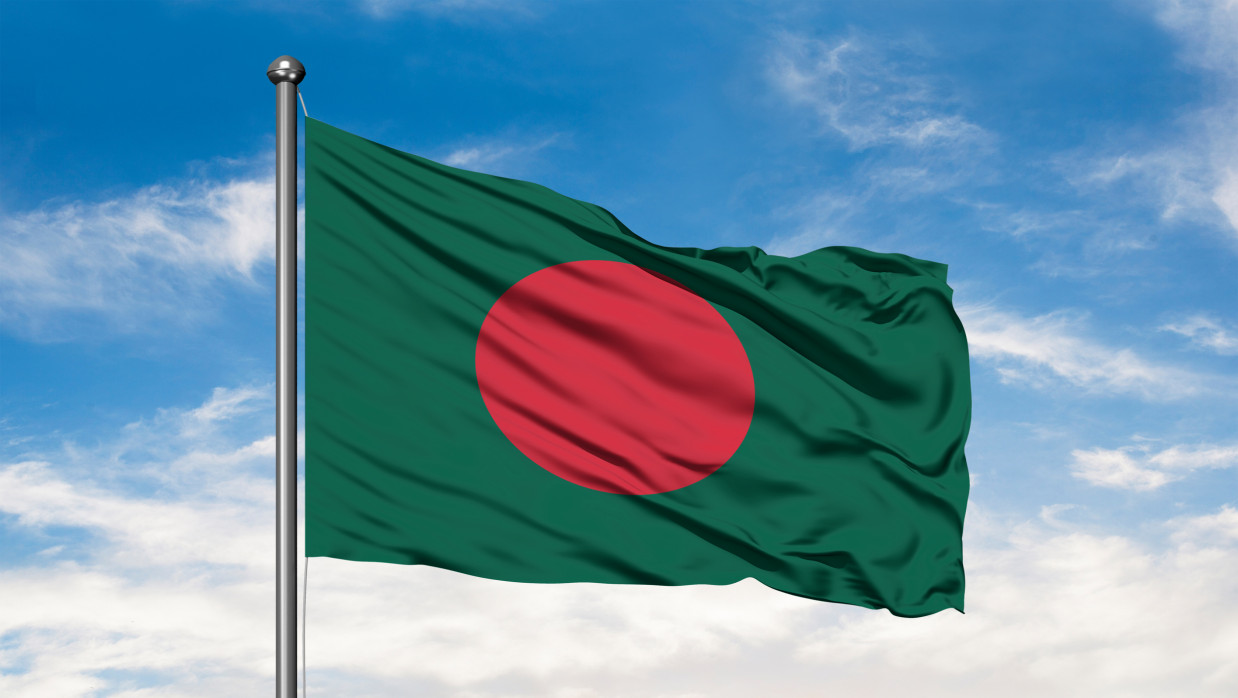
Bangladeshis fly their national flag on 16 December with pride and joy every year. Bangladeshi people remember and recall the blood and sacrifice in their emotional yet desperate gatherings on the ‘Victory Day.’ The festivities and ceremonies hide and overlie an ugly question that will continue to trouble the collective memory: whose victory are we celebrating? From India's perspective, 16 December is an example of its greatest military success. It was the day when it systematically defeated Pakistan. For Bangladesh, it is the day when the firing stopped. But is it Bangladesh’s Victory Day when none of the country’s regular forces, not a single representative of the Bangladesh Forces’ leadership, nor any member of the Mujibnagar Government were present at the historical moment and place of Pakistan’s surrender?
The photo of Lt. Gen. A. A. K. Niazi signing the ‘Instrument of Surrender’ before the senior Indian military representative, Lt. Gen. Jagjit Singh Aurora, and international and local journalists and observers is one of the most prominent pictures printed, shown, and published on 16 December every year since 1971. It is surprising, with the benefit of hindsight, to note the absence of Gen. M. A. G. Osmani, Commander-in-Chief of Bangladesh Forces and, of course, the absence of any representative of the Mujibnagar Government. India was not surrendering to Bangladesh; instead, Pakistan’s military forces were capitulating to India. The war may have been fought as a joint venture between India and Bangladesh, but the event that bookended it spoke of singular authorship.
The question may be sharper, even more discomforting in the present than it was half a century ago. On what basis and for what reason, if 16 December was the birth of Bangladesh, were its representatives and forces absent? On what basis and for what reason, if it is Bangladesh’s Victory Day, was Bangladesh’s flag not at the table? The absence speaks volumes about India’s victory, and it is a wound that refuses to heal. What happened on 16 December had little or no reference to Bangladesh’s liberation. It was Pakistan’s defeat and India’s civilizational, ideological, and strategic victory, as foreseen half a century earlier.
As early as the late 1940s, both Jawaharlal Nehru and Sardar Vallabhbhai Patel were skeptical about Pakistan’s chances of survival. Patel once remarked that Pakistan was “an unnatural creation” and its “edifice is not built on a very sure foundation”. Nehru, the diplomat of the two, was no less convinced that Pakistan’s internal contradictions would lead to its breakup at some future time. The events of 1971 were a remarkable realization of that early prophecy. For India, 1971 was not merely a military victory; it was a civilizational, ideological, and strategic triumph. India’s first instinct after independence in 1947 was to wait and watch. By 1971, that wait had been repaid with the most momentous geopolitical dividend South Asia had ever seen.
.jpg)
Image credit: South Asia Journal archive
But for Bangladesh, 16 December is less of a celebration and more of an acquiescence to an imperfect history. It was the day that brought an end to Pakistani misrule. It was also the day that Bangladesh began its long and complicated relationship with India. The bilateral relationship would continue to test the limits of Bangladeshi sovereignty in ways that outsiders could not fully fathom. But the country would have to acknowledge both to embrace its past. The political events of 5 August 2024, which brought an end to the Hasina government, have compelled many in Bangladesh to reframe their understanding of 16 December. To them, Bangladesh may have achieved territorial independence in 1971. Still, it did not gain full political sovereignty and was “trapped in India’s invisible straitjacket.” 5 August 2024 was therefore Bangladesh’s second liberation, the day its complete independence was finally realized.
It is understandable why Sheikh Hasina and her cronies would try to co-opt and appropriate the legacy and significance of 16 December. Still, she is just one among many to attempt to control a shared narrative and rewrite a nation’s history. Lendup Dorjee was the Prime Minister of Sikkim who led the Sikkim National Congress and played a decisive role in ending the Chogyal monarchy and integrating Sikkim into India. A concerted Indian campaign forced Chogyal Palden Thondup Namgyal, the 12th Chogyal (the King), to exit the Sikkimese political stage. Critics of Sheikh Hasina are therefore not suggesting an equivalency between the Sheikh and Lendup Dorjee of Sikkim. Still, they are saying that Sheikh Hasina, by her policies and extraordinary closeness to New Delhi and, some would add, her surrender to Indian hegemony, led Bangladesh toward the political and economic absorption, not territorially but diplomatically and in the corridors of power in New Delhi. It is for that reason that many celebrate her fall as the day that sovereignty is restored to Bangladesh. Whether this is true or not will be determined by the future. If Bangladesh’s independence in 1971 was political independence from Pakistan but economic subordination to the Western powers, the freedom achieved in August 2024 must ensure territorial sovereignty and economic independence from any hegemonic power.
Major Jalil and The I and Not I of 1971
The question of liberation and authority in 1971 cannot be addressed without an examination of the role of Major Abdul Jalil, sector commander and later political figure, whose memoirs and speeches critically appraised the commonly held notions about the liberation war. Jalil’s writings and comments capture the essence of the tension between the official narrative and the experiences of fighters on the ground. He wrote about and spoke of a war in which the official history and the popular understanding of reality on the ground were often at odds. The general sense in the field was not only that the Bangladeshi forces were valiant but also, according to Jalil, strategically confused and uneven in their performance; it was very often ‘The I and not I,’ an Indian rather than a Bangladeshi victory.
Jalil was forthright about the early days when the Bangladeshi forces were ill-equipped, the chain of command was more in the breach than in place, and the Mukti Bahini was an army of determination rather than tactical expertise. He lauded the contributions of the Mukti Bahini and individual freedom fighters at that time. Still, he was more critical as the war unfolded and India became more involved in the conflict on Bangladesh’s side. In fact, he had recorded at length in his writings and in private conversations with Bangladeshi veterans that the Indian military presence eroded the authority of Bangladesh. He wrote of the frustrations of field commanders, who felt their operations were being directed more and more from New Delhi than coordinated through a unified Bangladeshi military command.
Jalil’s writings and speeches leave no doubt that the idea of a joint command placed under Indian military leadership, formalized in November 1971, was seen by many in the Bangladeshi military and guerrilla leadership as a necessary compromise rather than an agreeable arrangement. To say that Bangladesh’s independent command authority was compromised by the events of 1971 would be a gross understatement. There is little doubt, from the writings of Major Jalil and this writer’s own extensive reading and archival research, that the I and not I aspect of the joint command grew over time. Field officers in the war who risked their lives for the cause and who joined the fight with patriotic fervor were slowly relegated to a secondary role by the more powerful and better-resourced Indian Army. This was the elephant in the room in 1971, and it was well noted and recorded for posterity by those who were there. The elephant has not gone away, nor has the loyalty to Bangladesh of the Indian government and the Indian Army been altered or reversed.
The Disillusionment of the Sector Commanders
Sector Commanders were the war heroes of the 1971 Liberation War. They organized and trained guerrillas, coordinated with India, led the armed struggle, liberated lands, and, through a ragtag force, held the non-cooperation movement together. The fighters they commanded came from different walks of life, but they were the most visible faces of the fight for freedom. It was a historical irony that barely four years after the country was born, several of these self-styled war heroes and heroes by general acclaim would turn against their nation.
To understand the post-war trajectory of the sector commanders, we need to face one ugly truth: the people who fought to liberate Bangladesh were eventually alienated from it. Alienation had several causes. One of them was the sense of betrayal by the post-independence Bangladesh government. They were war heroes and, therefore, expected special treatment and attention when they returned home. Senior wartime officers in particular found themselves pushed aside by a combination of civilian political loyalists or sidelined by a post-independence government that did not trust their wartime autonomy. The creation of a parallel paramilitary force, Jatiya Rakkhi Bahini, staffed largely outside the regular military promotion and recruitment system, was a festering sore that added to their resentment.
The second cause was political transformation. Sheikh Mujibur Rahman was elevated from political leader to the Father of the Nation. He could do no wrong, in the perception of the state, at least. Sheikh Mujib’s move toward authoritarianism and the decision to form the BAKSAL party were perceived by the wartime commanders as betraying the pluralist, democratic, and liberal goals of the independence movement. The sector commanders had thought they were fighting for democracy. Still, now they were living in a one-party state, and an ideological gulf had developed between the wartime commanders and peacetime Bangladesh.
Finally, post-independence Bangladesh, with its near-total reliance on India for political and military support, made many in the wartime forces suspicious about what the future held. The country was not being run with Bangladesh’s interests in mind; it seemed like a vassal state that had little independence of its own. These factors came together in the build-up to the 1975 political developments. The sector commanders and other wartime officers and leaders, such as Colonel Noor, Colonel Huda, Rashid, and Dalim, did not see themselves as traitors to the republic but as liberators of a country losing its way. The bloody events of August and November 1975 were the direct consequence of their conviction that independence was not fully achieved in 1971.
K. Khandaker and The Two Wars Within 1971
The two military memoirs of 1971, the other one by A. K. Khandaker, Deputy Chief of Staff of Bangladesh Forces, titled Bhetore Baire are both a vital key to unlock the duality of the liberation war. Khandaker described a war that was fought from two fronts: the Mukti Bahini front, fired by patriotic, national, and patriotic motives, and the Indian side by Indian forces. The two fronts were often aligned in their objectives but were usually at variance in how they interpreted each other’s actions. Khandaker details how India was initially reluctant to cross the border and fully support Bangladesh. The Indian policy at the time was deterrence; it did not want to cross international law, and it had its own diplomatic calculus to respect.
India began to show more than token support to the Bangladeshi forces only after securing Soviet backing in September 1971. Once it had that, India opened its artillery and airpower against Pakistani forces from October onwards. By November, the lines had blurred, and the two sides needed a more unified command structure. What emerged was the joint command in November 1971. But it was a joint command with a pecking order. The Indian officers and commanders outranked the Bangladesh officers, even if the Bangladeshis were wartime Bengalis and had fought for a year before the Indian Army joined the war. The I and Not I of 1971 was always latent. It was more apparent when Khandaker was writing his book in 1999, but it remains an indisputable fact today.
Khandaker’s own account shows that without Indian support, the war would have been longer and bloodier. It is difficult, after reading the history of the conflict, to imagine an outright Bangladeshi victory against Pakistan if India had not helped. At the same time, the cost of that support was a dilution of Bangladesh’s military autonomy, if not of Bangladesh’s right to claim ownership of its own victory. 1971 was as much about liberation as it was about negotiation and accommodation. It was a battle for sovereignty as much as it was about sovereignty being lost. It is why 1971 is also the unfinished business of Bangladesh’s independence.
The Imperfect Victory
The nation’s reality and trajectory over the half-century since 1971 make the question of 16 December 1971 more complex than it was at the time. The independence Bangladesh won with India’s help was not absolute, for it came with a cost to the nation’s decisional and political independence. The Indian connection was therefore both a help and a hindrance. It helped to win the war, but at the cost of impairing the country’s sovereign will. Therein lies the tragic paradox. Whether or not Bangladesh is celebrating 16 December 1971 is therefore beside the point. The country must acknowledge that 1971 brought a political victory as well.
India’s Long Road to 1971
To understand India’s role in 1971, it is vital to examine the ideological foundations of the country’s political and military establishment at the time. For India, Pakistan’s birth was not merely a geopolitical development. It was seen as a religious, cultural, and strategic blow to India’s geopolitical ambitions. Jawaharlal Nehru, Sardar Patel, and the Indian establishment after independence believed that the Indian subcontinent was one; they had a single history and were strategically indivisible. The creation of Pakistan in 1947 shattered that perception of Indian geopolitical space. It is a proposition that Srinath Raghavan, the noted Telangana scholar of Indian history, has argued for over a decade now: that India’s intervention in 1971 was not the beginning of the end for Pakistan but was the fulfilment of a half-century-old vision.
It was the smashing of a two-front threat to India and the realization of India’s destiny as the regional superpower in the subcontinent. For India, 1971 was a no-lose situation. For Bangladesh, it was both a loss of strategic autonomy and a remarkable liberation. India won the war without costing itself anything. For Bangladesh, the problem was strategic overdependence. While it is reasonable to ask the nation to be grateful for the excellent service India rendered to it during the war, one must also ask: Did India do what it did out of enlightened self-interest or because it was its historic destiny? The two are probably not mutually exclusive. The truth is India played a dual role: it was both the liberator and the occupier. It saved Bangladesh but at the cost of Bangladeshis’ war pride. It is that very reality, half a century later, that makes 1971 such an emotionally charged and divisive event for Bangladesh.
The Way Forward
Bangladesh is now faced with the question: what to do with a hard-won and imperfect victory? In an era when power dynamics in South Asia are changing faster than anyone in the region has ever seen, Bangladesh now has to determine its political and strategic orientation to remain relevant and safeguard its sovereignty. To be sure, Bangladesh was never, except in a very minor way, a direct party to the Sino-Indian border tensions or to the build-up between India and Pakistan. It was, and is, however, an indirect stakeholder. It is in the Bangladeshis’ own interest to maintain regional peace and stability rather than act as a playground for power games between great powers.
The fear of ‘another Sikkim’ is hyperbolic at best, alarmist at worst. Still, it does capture a sense of apprehension among people who understand that Bangladesh’s power asymmetry with India is a fact. But it does not need to be permanent. Independence is not just about territory. It is also about the political space in which the state can maneuver. It is about political sovereignty and diversifying political, economic, and strategic dependencies so the country does not put all its eggs in one basket. Bangladesh needs to understand the limits of its power and seek to diversify both its domestic and international balances of power and influence.
Bangladesh’s choices after 1971 are also its choices for 2024. The question is, how far and how soon will it try to reclaim its sovereign will? Therein lies the unfinished business of independence.


0 Comments
LEAVE A COMMENT
Your email address will not be published