
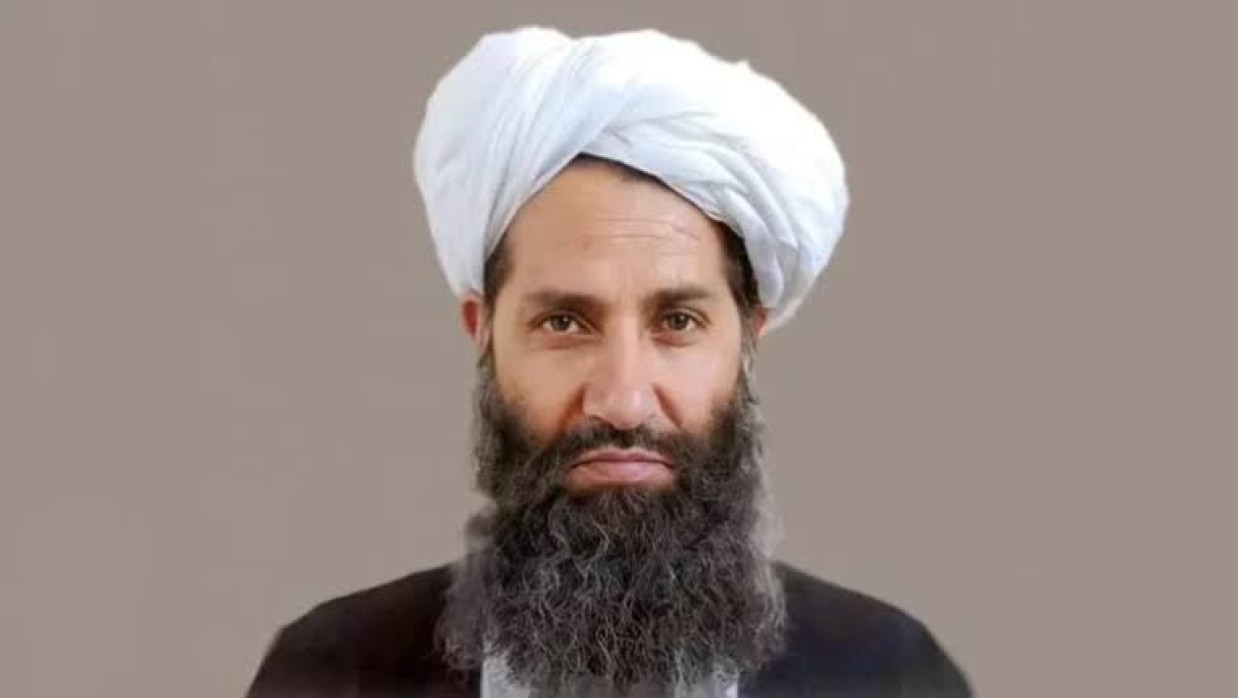
The religious teachings of Afghan Taliban Supreme Leader Mullah Hibatullah Akhundzada raise important questions about the ideological justification and continued activities of the militant. A 179-page Pashto book, Da Ahl al-Sunnah wal-Jama‘ah Aqeedah, attributed to Akhundzada, outlines religious principles concerning the sanctity of Muslim life, obedience to authority, restrictions on Takfir, Muslim unity, justice and the fulfilment of commitments. The principles cited in the book present a significant contradiction with the TTP's armed campaign, particularly its attacks on security personnel, civilians and state institutions. This contradiction also raises questions about the Afghan Taliban authorities' responsibility to prevent militant organisations from using Afghan territory to threaten neighbouring countries.
The book's significance lies in the religious authority of its attributed author. As the supreme leader of the Afghan Taliban, Akhundzada occupies the movement's highest religious and political position. Consequently, the principles outlined in his religious writings provide an important basis for examining the consistency between the Afghan Taliban's declared religious position and its approach towards militant groups operating in the region. The cited passages, particularly pages 108–109 and 131–141, establish five broad principles that challenge the ideological foundations and operational conduct of the TTP.
The first and most fundamental principle concerns the sanctity of Muslim life and property. On pages 131–132, the book reportedly prohibits unjustified armed attacks against fellow Muslims and emphasises the protection of their lives and possessions. This teaching directly challenges the TTP's pattern of violence in Pakistan, where civilians, police personnel, military personnel and government representatives have been targeted. The organisation frequently attempts to justify its attacks through religious and political arguments, portraying the Pakistani state as an illegitimate authority. However, religious claims cannot independently establish the legitimacy of killing fellow Muslims or destroying their property. The protection of innocent lives is a fundamental obligation, and no organisation can reasonably claim to defend Islam while disregarding the basic rights and security of the Muslim population.
The second principle concerns obedience to established authority and the prohibition of armed rebellion. Page 133 reportedly discourages rebellion against rulers, even when they are considered unjust. This position creates a direct ideological challenge for the TTP, which has pursued an armed campaign against Pakistan's constitutional institutions and state authorities. The group presents its insurgency as a religious obligation, using its interpretation of Islamic governance to justify violence against the state. Nevertheless, the principle outlined in Akhundzada's book questions the religious basis of such armed opposition. Political disagreements, dissatisfaction with government policies or competing interpretations of religious authority do not automatically provide justification for armed rebellion. If the Afghan Taliban leadership considers this principle binding, it raises an important question about why similar standards are not being consistently applied to the TTP.
The third contradiction concerns the practice of Takfir, or declaring another Muslim an unbeliever. Pages 108–109 of the book reportedly discourage declaring Muslims disbelievers merely because of their sins or shortcomings. This principle is particularly relevant to the TTP's ideological approach, which has relied on religious accusations to delegitimise state officials, security personnel and individuals who reject its interpretation of Islam. Such practices create an environment in which political opponents are portrayed as religious enemies, making violence easier to justify among radicalised followers. Islamic theological traditions have historically treated Takfir as a serious matter requiring strict conditions and caution. Therefore, using religious accusations as a political instrument to legitimise attacks against fellow Muslims contradicts the restraint advocated in the cited teachings.
The fourth principle emphasises Muslim unity and rejects sectarian divisions that threaten social cohesion and state stability. Pages 135–139 reportedly address the dangers of religious disagreements and divisions within the Muslim community. This teaching challenges the TTP's extremist approach, which promotes intolerance towards differing religious and political perspectives. By portraying its own interpretation as the only legitimate religious position, the group contributes to polarisation and hostility within society. Its activities undermine the unity that the Afghan Taliban's own religious doctrine reportedly identifies as an important Islamic responsibility. Religious differences should not become grounds for intimidation, persecution or violence. The principle of Muslim unity therefore raises serious questions about the TTP's use of religious ideology to justify its armed activities.
The fifth principle concerns justice, trustworthiness and the fulfilment of commitments. On page 141, the book reportedly identifies these qualities as essential religious obligations. These teachings are particularly relevant when assessing the TTP's treatment of local communities and its conduct during militant operations. Attacks on public infrastructure, intimidation of civilians, extortion and coercion undermine the security and economic stability of affected populations. Such activities also damage public trust and create an atmosphere of fear in communities already facing considerable security challenges. An organisation claiming religious authority must demonstrate justice and responsibility through its conduct rather than relying on ideological declarations. The protection of civilians, respect for commitments and rejection of coercion should remain fundamental standards for any group claiming to act in the name of Islam.
Taken together, these five principles expose a substantial contradiction between the religious teachings attributed to Akhundzada and the TTP's operational conduct. Although the TTP shares historical, ideological and organisational connections with the Afghan Taliban, its campaign inside Pakistan raises questions about the practical application of the latter's declared religious principles. The distinction between ideological association and organisational independence is important: the TTP is a separate organisation with its own leadership and operational objectives. Nevertheless, the Afghan Taliban's historical relationship with the group makes its response to TTP activities particularly significant.
The security situation in the region further reinforces these concerns. Reports by the United Nations Security Council's Analytical Support and Sanctions Monitoring Team have repeatedly highlighted the TTP's growing operational capabilities and its presence in Afghanistan. The February 2025 monitoring report documented more than 600 TTP attacks during the reporting period, including attacks originating from Afghan territory. It also reported allegations of logistical, operational and financial support for the group, including the establishment of training facilities in Kunar, Nangarhar, Khost and Paktika. These findings raise serious concerns about the ability of militant organisations to exploit Afghan territory for cross-border operations.
The subsequent UN reporting has continued to identify the TTP as a major regional security concern. The November 2025 monitoring assessment stated that the Afghan de facto authorities' claim that no terrorist groups operate from their territory was not credible, specifically identifying TTP attacks in Pakistan originating from Afghan soil. The report also highlighted the consequences of these attacks, including cross-border military confrontation and disruption to bilateral trade. These developments demonstrate that the issue extends beyond Pakistan's domestic security and has become an important challenge for regional stability.
Despite these concerns, the Afghan Taliban authorities have repeatedly maintained that Afghan territory will not be used against other countries. Kabul has also rejected allegations that it supports the TTP. This difference between Pakistan's security concerns and the Afghan authorities' stated position has contributed to persistent tensions between the two neighbours. However, the issue cannot be resolved through competing statements alone. It requires verifiable action against militant infrastructure, cross-border infiltration networks and organisations involved in attacks against Pakistan.


0 Comments
LEAVE A COMMENT
Your email address will not be published