

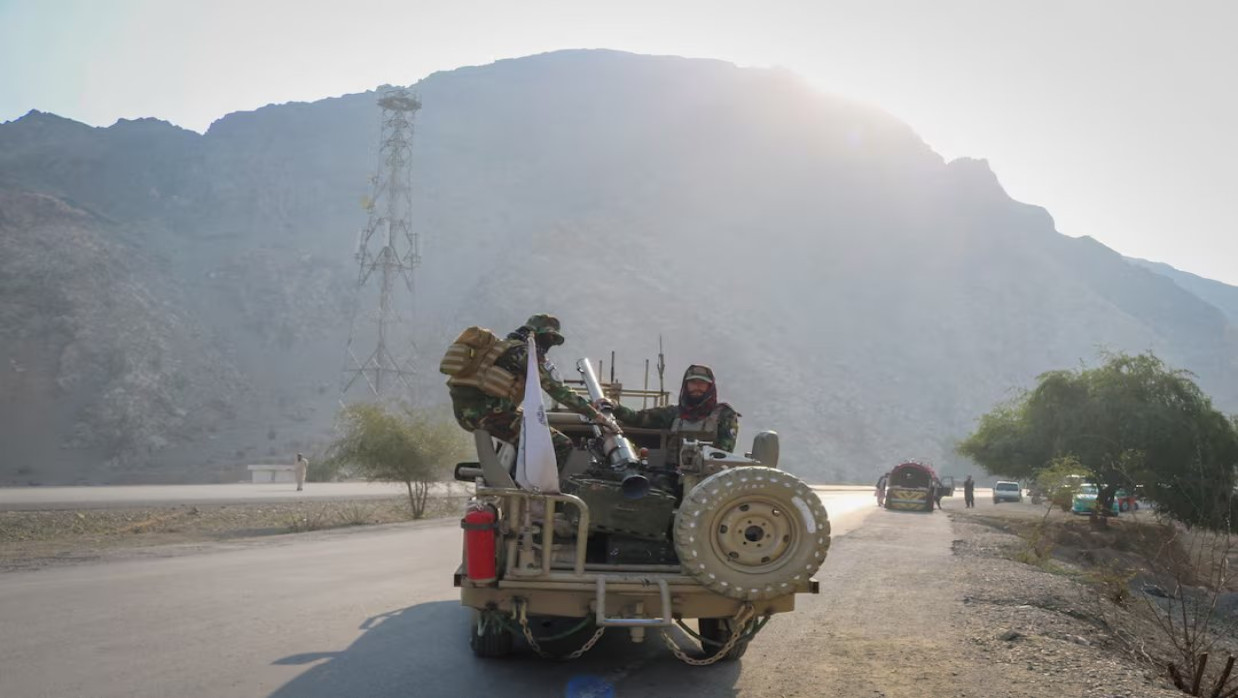
The reported discovery of an alleged operational nexus involving India’s Research and Analysis Wing (RAW), elements of the Afghan Taliban and militant organisations operating against Pakistan introduces a significant dimension to the evolving security environment in South Asia. A recent report by The News, citing Pakistani intelligence officials and a classified document, alleges that Afghan territory is being used to facilitate training, financing and logistical support for the Balochistan Liberation Army (BLA), Tehreek-e-Taliban Pakistan (TTP) and Al-Qaeda in the Indian Subcontinent (AQIS), with alleged Indian involvement in financing and coordination. These claims are serious and require independent verification, but they also merit analytical attention because they coincide with independently documented evidence concerning militant networks operating from Afghanistan.
The central analytical issue is therefore not simply the existence of individual militant organisations, but the possibility of strategic convergence among otherwise distinct actors. Contemporary insurgencies increasingly operate through flexible networks rather than rigid organisational structures. Groups may retain separate ideological identities while sharing personnel, weapons, training facilities, financing mechanisms or logistical routes. Such convergence complicates conventional counterterrorism because an attack claimed by one organisation may involve personnel or resources originating from another.
This phenomenon has already been identified in broader international assessments of Afghanistan. The UN Security Council's monitoring mechanisms have repeatedly expressed concern about the presence of multiple terrorist organisations on Afghan territory. The 38th report of the Analytical Support and Sanctions Monitoring Team specifically assessed that the Taliban continued to support the TTP and that TTP attacks against Pakistan had contributed to escalating cross-border tensions. The report also pointed towards operational and facilitation relationships among the TTP, Al-Qaeda, ISIL-K and BLA.
This distinction is crucial when assessing the latest allegations. The UN findings provide independent support for the existence of a broader militant ecosystem and continuing TTP activity from Afghanistan, but they do not by themselves establish the specific RAW–Taliban arrangement alleged in the Pakistani intelligence document. Nor does the publicly available reporting independently verify every meeting, financial transaction or operational relationship described by The News. The allegations should therefore be examined as intelligence claims requiring corroboration rather than treated as established facts.
Nevertheless, if the reported network is substantiated, its implications would be considerable. The alleged cooperation between the BLA and TTP would represent an important development because the two organisations traditionally operate within different political and ideological environments. The BLA's separatist orientation in Balochistan and the TTP's Islamist militancy have distinct objectives. Cooperation between them would therefore indicate a shift from ideological alignment towards instrumental collaboration, in which organisations cooperate because their immediate strategic interests converge.
The alleged involvement of AQIS would add another layer to this phenomenon. Al-Qaeda's regional networks have historically provided ideological guidance, training and operational expertise to affiliated groups. The possibility of personnel or capabilities moving between militant organisations would increase the complexity of the threat environment. The UN monitoring system has already reported continuing Al-Qaeda presence in Afghanistan and concerns regarding its relationship with regional militant actors.
The most consequential element of the Pakistani allegations, however, concerns the purported role of external state sponsorship. Proxy warfare traditionally involves states supporting non-state actors to pursue strategic objectives while retaining a degree of deniability. If the reported RAW involvement were independently established, it would fit within this conceptual framework. However, attributing state sponsorship requires a considerably higher evidentiary threshold than establishing cooperation among militant groups. Financial transfers, communications, intelligence records and independently corroborated operational evidence would be necessary to establish such attribution conclusively.
For Pakistan, the emergence of interconnected militant networks also creates a multi-theatre security challenge. Khyber Pakhtunkhwa faces the TTP threat, while Balochistan faces separatist militancy. If personnel, financing, weapons and expertise are moving between these theatres, the traditional distinction between different insurgencies becomes less useful from a counterterrorism perspective. The state must therefore focus not only on individual organisations but also on the wider networks that facilitate recruitment, financing, movement and logistics.
The larger lesson is that South Asia's security environment is increasingly shaped by networked militancy and proxy competition. Afghanistan's continued role as a permissive environment for several militant organisations has already been identified by international monitoring mechanisms. The latest Pakistani allegations, if substantiated through independent evidence, would suggest an even more complex form of strategic convergence involving militant groups and external actors.
For Pakistan, the challenge is therefore twofold: neutralising the immediate terrorist threat while preventing the conflict from developing into an unrestricted cycle of interstate confrontation. The distinction between evidence, intelligence assessment and allegation must remain clear. At the same time, credible evidence of cross-border militant facilitation cannot be ignored. Ultimately, sustainable regional security will depend upon dismantling the infrastructure that enables militant organisations to recruit, train, finance and operate across borders, while ensuring that claims of state sponsorship are established through evidence strong enough to withstand international scrutiny.


0 Comments
LEAVE A COMMENT
Your email address will not be published