

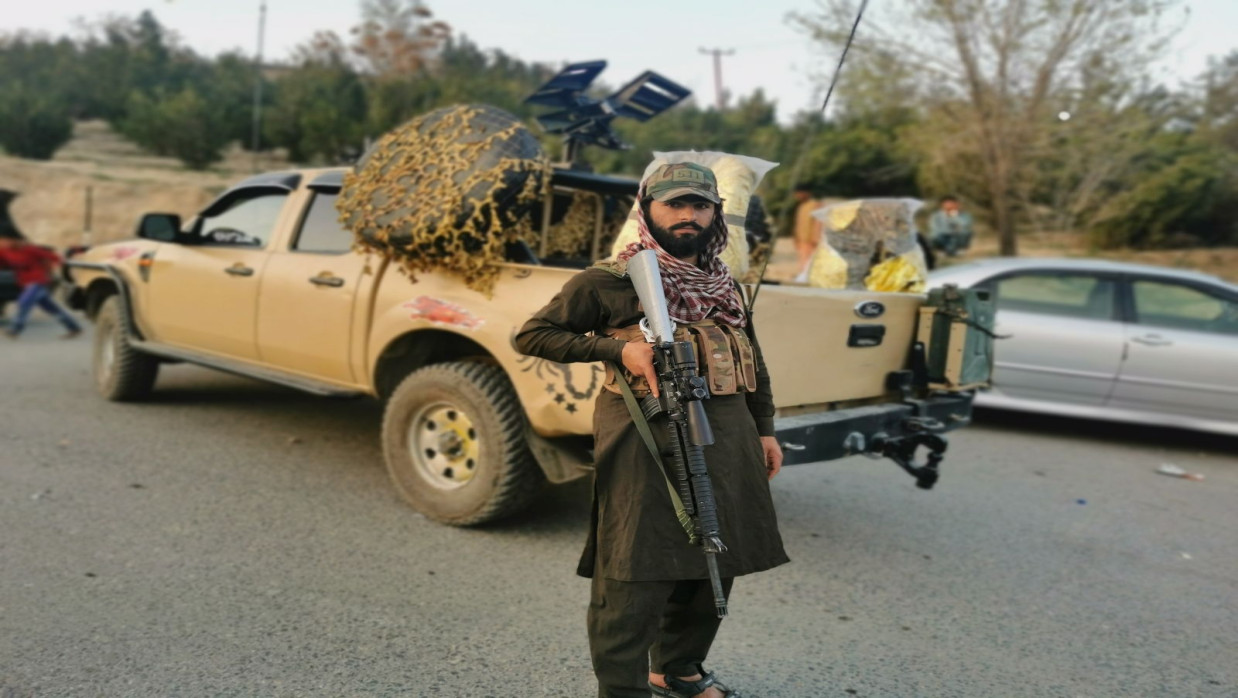
Twenty-five years after the September 11 attacks reshaped global security policy, a new assessment from the Atlantic Council argues that Afghanistan has once again become a haven for terrorist organisations under Taliban rule. The report, titled "The State of Terrorism, 25 Years After 9/11" and published on 10 September, gathers the views of 25 experts from the think tank on how the terrorist landscape has evolved over the past quarter-century. Its authors conclude that while al-Qaeda and the Islamic State are no longer as centralised or powerful as they were at their peak, networks affiliated with both groups have adapted to new conditions and continue to find room to operate inside Afghanistan.
A Recurring Counterterrorism Failure
According to the report, the Taliban's inability to deter or prevent terrorist groups from operating inside the country amounts to the most significant counterterrorism challenge facing the wider region, exposing a gap between the territorial control the Taliban claims and the security it is actually able to provide. The report argues that Taliban patronage — including alliances with several militant organisations active in the Afghanistan-Pakistan border region — has created an environment in which armed groups can survive, reorganise and expand with little interference.
Al-Qaeda features prominently in this assessment. The report contends that the Taliban's return to power in 2021 gave a weakened al-Qaeda network the sanctuary, time and operational freedom it needed to begin rebuilding, potentially recreating the conditions that once allowed the group to grow into a threat capable of striking far beyond South Asia. This concern is not new: a United Nations Security Council monitoring team reported as early as 2024 that Afghanistan under Taliban rule was becoming a hub for extremist groups, and warned that instability generated from Afghan territory would affect the wider region and beyond.
Regional Militant Networks
The report singles out Tehreek-e-Taliban Pakistan (TTP) as one of the Taliban's most consequential militant allies, describing it as a group that operates from bases inside Afghanistan to carry out attacks against Pakistan. UN Security Council briefings earlier this year offered a similar picture, describing the TTP as among the largest terrorist groups operating from Afghan soil and noting that its increasingly sophisticated attacks on Pakistani security forces have repeatedly triggered cross-border military confrontations. Relations between Islamabad and the Taliban administration have deteriorated sharply over this issue. Pakistani officials have long accused the Taliban of sheltering the TTP, while the Taliban denies harbouring the group and instead attributes Pakistan's security difficulties to its own internal failures. Tensions escalated further in early 2026, when a fragile ceasefire collapsed and Pakistan carried out airstrikes in Afghanistan's Nangarhar and Paktika provinces, part of a broader deterioration that saw Pakistan's defence minister describe the situation as approaching open conflict with the Afghan Taliban.
The Atlantic Council report also identifies Islamic State–Khorasan Province (IS-K) as one of the few genuinely powerful terrorist organisations operating in the region, noting that the group has continued to function inside Afghanistan despite repeated Taliban military campaigns against it. The report describes IS-K as exploiting ungoverned areas of the country for recruitment and training, including the recruitment of young men from Central Asian states. Other recent assessments point in the same direction: the Council on Foreign Relations has reported that groups including al-Qaeda have used Afghanistan as a base for recruiting, training and deploying fighters beyond its borders, and has noted that IS-K retains the capacity to carry out attacks both within the region and further afield, pointing to the group's suspected role in the 2024 shooting attack in Moscow.
An International Dimension
The Atlantic Council report argues that the threat emanating from Afghanistan has already acquired an international reach. It points to Tajikistani nationals recruited by IS-K who have since been implicated in plots and attacks in Europe, the Philippines and the United States, arguing that this pattern shows how Afghanistan's extremist ecosystem can generate security threats well beyond South Asia. The East Turkestan Islamic Movement (ETIM) is cited as a further illustration of this reach, given its alignment with al-Qaeda and its stated ambitions across Central Asia and western China.
Central Asian states, according to the report, are increasingly absorbing the consequences of this dynamic, facing mounting pressure along their borders as extremist groups exploit Afghan territory for recruitment, training and the planning of operations abroad.
Contested Claims, Documented Presence
Taliban authorities have consistently rejected such characterisations, insisting that Afghan territory is not being used to threaten other countries and that security inside the country has improved markedly since they returned to power in 2021. The Atlantic Council report, however, argues that these assurances are difficult to square with the continued, well-documented presence and activity of al-Qaeda, the TTP, IS-K, ETIM and other armed groups inside the country. UN monitoring bodies have reached similar conclusions in their own reporting this year, stating that Taliban assertions of having eliminated any terrorist footprint on Afghan soil are not credible, and noting that this scepticism is shared by a broad range of UN member states independently monitoring the situation.
Taken together, the report frames Taliban-ruled Afghanistan not simply as a source of domestic instability, but as a platform from which terrorism can project outward into South Asia, Central Asia and beyond. It argues that armed groups given sanctuary, time and operational freedom have historically shown the capacity to transform from weakened, localised networks into far more capable global threats — a trajectory the report warns could repeat itself if current conditions are allowed to persist.
The Atlantic Council's assessment adds to a growing body of analysis from UN monitoring teams, the Council on Foreign Relations and other research organisations that have reached broadly similar conclusions in recent months, even as Afghanistan's security and humanitarian situation continues to deteriorate on other fronts, including a worsening economic crisis, the forced return of millions of Afghan refugees from neighbouring states, and expanding restrictions on the rights of women and girls. For policymakers in Washington, Islamabad, Beijing and the capitals of Central Asia alike, the report's central conclusion is that twenty-five years after the attacks that prompted the US-led intervention in Afghanistan, the question of whether the country can be prevented from serving as a base for international terrorism remains unresolved.

0 Comments
LEAVE A COMMENT
Your email address will not be published