

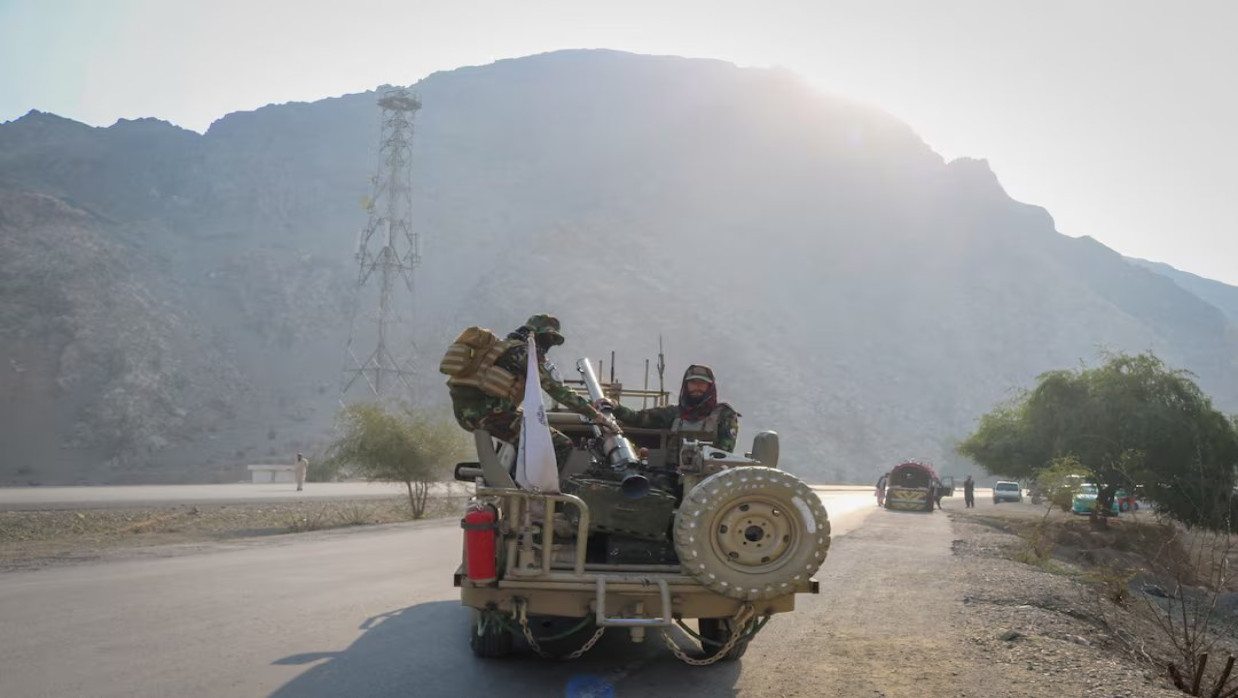
In five years since the Taliban’s return to Kabul, Afghanistan has become a shell of itself. While Afghanistan is not engulfed in nationwide warfare like it was for most of the two-decade period leading up to August 2021, the Taliban have solidified territorial control, bolstered revenue collection, and created administrative orderliness, the price of which has been paid through oppression, exclusion, and terror. Afghanistan is not falling apart per se. The government is not losing complete control over the country. Instead, Afghan society is quietly being robbed of its soul.
Women and girls have been deprived of education, employment, movement, and participation in public life. Religious and ethnic minorities face discrimination and coercion. Journalists, former government employees, and critics remain vulnerable to arbitrary detention, torture, and extrajudicial punishment. Meanwhile, mass refugee returns, declining foreign assistance, natural disasters and continuing poverty have placed extraordinary pressure on an already fragile economy.
The Taliban promised moderation when they returned to power. Five years later, those promises have proved largely illusory.
Promises Abandoned
Before capturing Kabul in August 2021, Taliban representatives sought to convince Afghans and the international community that they had learned from their brutal rule of 1996–2001. They promised a general amnesty, an inclusive government, protection of women’s rights within their interpretation of Islam, and assurances that Afghan territory would not again be used by international terrorist organizations.
The record since then tells a different story. Political power remains concentrated in a closed clerical hierarchy dominated by Taliban loyalists. Former officials and members of the previous security forces have faced detention, disappearance, torture, and killing despite the proclaimed amnesty. Independent institutions, including parliament, provincial councils, and the Afghanistan Independent Human Rights Commission, remain dismantled.
The judicial system has been supplanted by the Taliban's narrow interpretation of Sharia. Defendants are often denied access to counsel, a fair trial, or effective appeals. Public lashings and other forms of corporal punishment have been reinstated. The UN has continued to report arbitrary arrests, mistreatment, and violations against former government workers and members of the security forces.
This is not the inclusive Islamic government that Taliban spokesmen promised. It is a monopolistic system in which religious authority, executive power and coercive force are concentrated in the same hands.
The Erasure of Women
Nowhere is the Taliban’s ideological project more visible than in its treatment of women and girls. Afghanistan remains the only country in the world where girls are prohibited from attending secondary school and university as a matter of national policy.
These restrictions extend beyond education. Women have been barred from most public-sector jobs and denied positions with many nongovernmental and international organizations. Rules mandating a mahram, or male guardian, control their ability to travel, work, and seek health care. Women have been banned from parks, gyms, and many public spaces. The Taliban’s morality police force women to cover their faces and bodies and aim to silence their voices in public.
In September 2025, the de facto authorities began preventing Afghan women, including UN employees, contractors, and visitors, from entering UN compounds. This measure further restricted humanitarian operations and deprived Afghan women of one of the few remaining areas of professional participation. The UN has described the system as one of institutionalized discrimination, segregation, and exclusion. In August 2026, UN experts warned that this organized system of gender oppression amounts to the crime against humanity of gender persecution.
The consequences will extend across generations. Afghanistan already faces a shortage of female doctors, nurses and teachers. By preventing girls from receiving an education, the Taliban are ensuring that the next generation will have even fewer women qualified to provide essential services. Because Taliban rules frequently prevent women from receiving treatment from male health professionals, this manufactured shortage can become a matter of life and death.
Gender-based violence has also increased while the institutions previously available to assist victims specialized courts, prosecution units, and shelters have been dismantled. Women escaping abuse must now rely upon Taliban officials or traditional dispute-resolution mechanisms that may return them to their abusers. Forced and child marriage consequently flourish in an atmosphere of poverty, fear, and institutional abandonment.
Minorities, Media and Dissent
The Taliban’s claim to represent all Afghans is further contradicted by its treatment of ethno-religious communities. Hazaras, Shia Muslims, Ismailis, Tajiks and other minorities have reported discrimination in employment, humanitarian assistance, religious practice and land disputes.
Human rights groups received reports that Ismaili men in Badakhshan were being pressured to convert to Sunni Islam and that Ismaili children were being forced to attend Sunni religious classes. Shia Muslims have been prohibited from practicing Muharram and other religious ceremonies. Hazara villagers have also been forcibly removed from their land when Taliban courts decided contested land claims against them in favor of nearby villages with closer ties to the government.
Minorities face danger from more than one direction. Islamic State Khorasan Province, or IS-K, continues to attack Shia and Hazara civilians, religious institutions, and Taliban targets. Although Taliban operations have weakened the organization, IS-K retains the ability to conduct lethal attacks and exploit sectarian divisions.
Independent journalism has also been steadily suffocated. Journalists have been arrested on vaguely defined accusations such as espionage, moral corruption, or cooperation with diaspora media. Political broadcasts and criticism of Taliban policies have been restricted, while images of living beings have reportedly been banned in parts of the country. Books written by women and university subjects considered incompatible with the Taliban’s interpretation of Islam have been prohibited.
Even poetry has not escaped censorship. Critical and romantic verse has been targeted because authoritarian governments understand that imagination itself can become a form of resistance.
International Justice Responds
In July 2025, the International Criminal Court prosecutors secured arrest warrants for Taliban supreme leader Haibatullah Akhundzada and Chief Justice Abdul Hakim Haqqani. The Hague-based ICC determined there are "reasonable grounds to believe" both men bear criminal responsibility for persecution on gender grounds as a crime against humanity. Specific accusations include intentionally depriving women of education, privacy, family life, freedom of movement, expression, and assembly.
These warrants are significant. They signal that stripping women and girls from public life may not just be a domestic cultural decision impervious to international pressure. It could be an international crime.
The UN Human Rights Council also established an independent investigative body with a parallel mandate in October 2025. The mechanism will gather, preserve, and analyze evidence of serious human rights violations in Afghanistan that might serve in future criminal prosecutions and help prevent destruction of evidence and testimony.
Accountability for perpetrators will not be easy. The Taliban are unlikely to turn over their leaders. International diplomacy with Kabul also faces countervailing pressures. Afghanistan’s neighbors have legitimate interests in trade, border security, and guarding against militant groups. Humanitarian organizations will have to negotiate with authorities to reach civilians in need. But too strong a relationship without strict conditions could enable gender persecution.
Economic Resilience, Human Misery
Afghanistan's economic growth outperformed expectations in some analysts' forecasts. Headline GDP growth figures obscure deteriorating living conditions for Afghan citizens. The World Bank estimates Afghan GDP grew about 4.8 percent in 2025, driven by buoyant domestic demand, revenue collection, and the repatriation of millions of Afghans to their home districts. However, GDP grew more slowly than the population. As a result, GDP per capita is estimated to have contracted by 5.6 percent. Weak investment, high unemployment, depleted government reserves, a fragile banking sector, and widening trade deficit have continued to drag on growth.
Nearly half of Afghanistan's total population (approximately 22.9 million individuals) required humanitarian aid in 2025. Healthcare depended on international assistance, while dwindling funds forced aid organizations to reduce important programs. Restrictive policies against women employees also undercut service delivery to women and girls.
Conflict-related displacement, climate shocks, and the largest influx of returnees from neighboring countries on record compounded the crisis. UNHCR estimates nearly 3 million Afghans returned to Afghanistan in 2025, predominantly from Iran and Pakistan. Many returnees, who often traveled with only the clothes on their backs, arrived in communities struggling with inadequate housing, food shortages, and unemployment.
States have legitimate authority to administer immigration laws, but mass expulsions to a country where returnees may face persecution raise grave concerns under the principle of non-refoulement. Women, journalists, activists and former government personnel are particularly vulnerable.
Stability Is Not Legitimacy
The Taliban’s regime is far more stable than many had anticipated. It has solidified its grip on the state’s security institutions, suppressed large-scale resistance to its rule, developed commercial and diplomatic relationships with neighboring states, and won international recognition from Russia in 2025, undercutting other nations' case against engagement as well.
But stability is not recovery. A regime can crack down on a country while rapidly degrading the human infrastructure that makes society run. Afghanistan will not thrive with a modern economy if half the population is denied education and employment. It will not have justice if the courts remain politicized. It will not have reconciliation if minorities, journalists, and former government workers fear persecution.
The international community now must walk a fine line. We can (and should) continue delivering humanitarian aid directly to the Afghan people while refusing to legitimize Taliban repression abroad. This means maintaining diplomatic and legal pressure on the Taliban over women’s rights, minority protections, counterterrorism efforts, and accountability for past atrocities. Humanitarian aid should never be leveraged to strong-arm political objectives. But too many consequences should not be lifted for the Taliban’ abusive behavior, either.
Instead of civil war, today Afghanistan suffers from the slow suffocation of society. The Taliban have made clear they have no intention of relinquishing power. They have the military strength to enforce their rule through guns, taxes, and fear. What they have yet to demonstrate is whether they have the capacity or will to govern the country with justice, dignity, or kindness towards all its citizens. If that remains unchanged, the order that the Taliban are


0 Comments
LEAVE A COMMENT
Your email address will not be published