

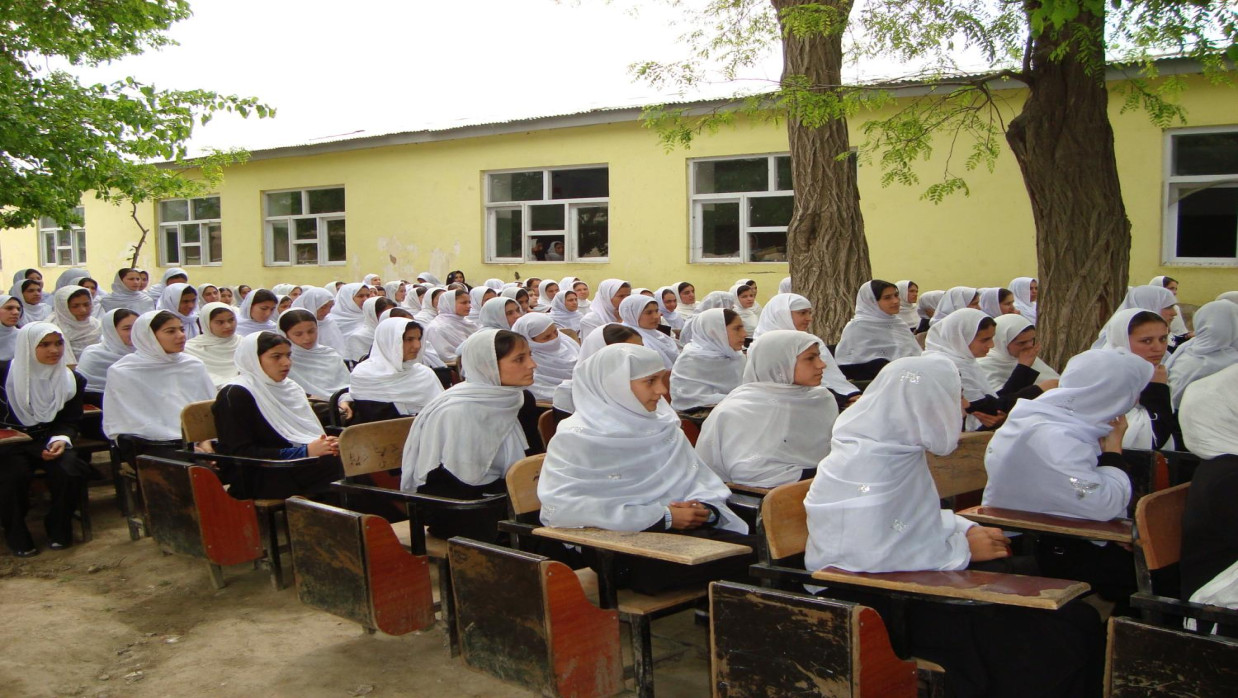
Australia’s imposition of a new autonomous sanctions framework for Afghanistan is a significant development that shows how middle powers can react to persistent human rights violations when multilateral mechanisms are either slow or ineffective. The framework empowers Canberra to apply direct financial sanctions and travel restrictions on Taliban officials involved in systematic oppression while preserving space for humanitarian engagement.
Sanctions ensure that the architects of repression are named, recorded, and constrained.
This demonstrates that autonomous sanctions need not be merely symbolic but can function as a calibrated instrument of middle-power diplomacy, reinforcing accountability without severing humanitarian channels.
Australia’s new framework under the Autonomous Sanctions Regulations 2011 empowers the foreign minister to designate individuals involved in oppression of women and girls, persecution of minority groups, general oppression of the population, and actions that undermine good governance or the rule of law in Afghanistan.
The first four persons listed are core Taliban officials: the chief justice and the ministers overseeing morality enforcement, higher education, and justice. This reflects a deliberate shift away from broad, state‑level penalties towards individualised accountability, focusing responsibility on those who design and enforce policy.
The framework also introduces an arms embargo and restrictions on related services, placing the Taliban within the same autonomous sanctions architecture applied to states such as Iran, Russia, and North Korea.
Since returning to power in August 2021, the Taliban have banned girls from secondary education, barred women from universities and most forms of employment, and imposed sweeping restrictions on women’s movement and participation in civic and political life.
UN agencies estimate that at least 1.4 million girls – roughly 80 per cent of school‑age girls – have been deliberately deprived of education. Taliban policies are institutionalised through ministries, courts, and enforcement bodies, embedding discrimination in the machinery of governance.
The Taliban continues to frame these restrictions as religiously mandated, a claim increasingly challenged by global Islamic scholars. Various reports indicate that a few senior Taliban leaders quietly educate their daughters abroad or through private arrangements while denying these opportunities to the public. This inconsistency reveals the restrictions as instruments of political domination rather than religious obligation.
Afghanistan is in danger of turning into a managed tragedy.
Australia’s actions align with growing momentum in international legal fora. The International Criminal Court in July 2025 issued arrest warrants for the supreme leader of the Taliban, Haibatullah Akhundzada, and Chief Justice Abdul Hakim Haqqani, for gender-based human rights violations. Several states, including Australia, have been participants in the proceedings at the International Court of Justice, claiming the Taliban have violated the Convention on the Elimination of All Forms of Discrimination Against Women.
By naming individual perpetrators rather than sanctioning Afghanistan as a whole, Canberra strengthens the evidentiary and diplomatic architecture around accountability. In this context, sanctions function less as blunt economic punishment and more as instruments of legal signalling, reinforcing the principle that gender persecution constitutes a grave violation of international norms.
Some analysts argue that sanctions are unlikely to change Taliban behaviour. But targeted sanctions contribute to reputational damage, legal constraint, and the construction of an enduring record of responsibility. Taliban representatives have dismissed the measures as inconsequential, citing Afghanistan’s limited engagement with Australia. But sanctions are not about quick behaviour modification. Their utility is in gradual isolation and in the ongoing support of international norms.
One of the most persistent criticisms of sanctions regimes is their humanitarian cost. Australia has sought to address this concern by embedding a class‑based humanitarian permit within the framework. Australia has committed than AU$310 million in humanitarian aid to Afghanistan since 2021. This dual-track policy of maintaining pressure on rulers while protecting the population aims to prevent collective punishment.
As geopolitical crises multiply, Afghanistan is in danger of turning into a managed tragedy. The autonomous sanctions system of Australia works against this tendency. But will other states follow? If replicated by like‑minded nations in Europe and North America, Australia’s approach could help standardise accountability for gender persecution as a sanctionable offence rather than just a matter of rhetorical concern.
For Afghan women and girls, sanctions will not reopen schools or restore freedoms overnight. But they do something quieter and more durable. They ensure that the architects of repression are named, recorded, and constrained. In an international system often accused of forgetting its moral commitments, that alone carries strategic and moral weight.
0 Comments
LEAVE A COMMENT
Your email address will not be published