

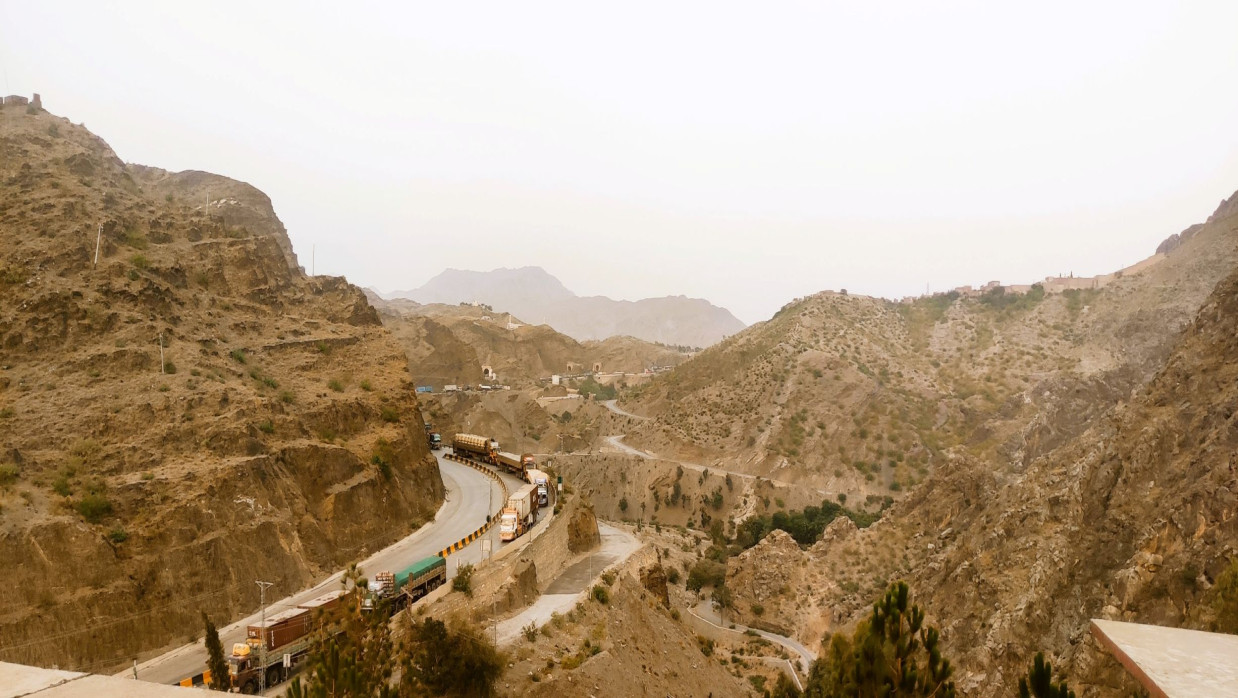
The ongoing halt in trade and closure of key border crossings between Pakistan and Afghanistan stems from escalating political and security tensions between the two countries. While border disruptions are not unprecedented in this volatile region, the current crisis marks a severe and consequential break in a historically vital economic relationship. What distinguishes this episode is the reciprocal escalation by the Afghan Taliban: in a clear break from past economic dependency, the authorities in Kabul have retaliated by closing their own transit points along the disputed Durand Line, thereby effectively severing Pakistan’s shortest and most cost-effective land route to the Central Asian Republics (CARs).
This reciprocal economic coercion is set to have a significant negative impact on both nations, dramatically exacerbating economic and energy challenges of the already strained Pakistani economy. For Afghanistan, however, this crisis presents a forced but defining geopolitical opportunity to dismantle its historical reliance on Pakistani ports for transit trade, thereby accelerating its strategic pivot toward alternative corridors via Iran (Chabahar) and the CARs.
Legal Framework and Economic Necessity
International trade laws, anchored by the GATT Article V on Freedom of Transit, establish the foundational framework for international transit trade. Building on this, Afghanistan and Pakistan, as fellow WTO members, formalized their bilateral transit arrangements through the Afghanistan-Pakistan Transit Trade Agreement (APTTA), signed in 2010. This arrangement is vital because it represents a crucial economic linkage for both nations: Pakistan needs access to the energy-rich economies of Central Asian Republics (CARs), while landlocked Afghanistan relies heavily on Pakistan's Karachi ports for cost-effective global maritime access and the shortest land route to India via the Wagah border. Further strengthening Afghanistan's legal claim is the principle, derived from treaties like the 1958 Geneva Convention on the High Seas, that coastal states are obligated to grant landlocked states free access to and from the sea.
Breach, Justification, and Consequence
The repeated and prolonged closures of transit routes by Pakistan, however, constitute a clear breach of the spirit and letter of the APTTA and established international norms. This restriction is often achieved by imposing heavy and arbitrary fees, duties, and other charges on Afghan goods, fundamentally undermining the principle of free transit. Furthermore, Pakistan frequently closes the key trade crossing points by citing politically motivated security concerns, a tactic often deployed deliberately during peak Afghan export seasons. While Pakistan frequently cites national security exceptions (permissible under international law) to justify restrictions, the use of transit restrictions as a tool for political leverage is widely seen as undermining these transit norms and the underlying legal obligations. This political coercion effectively neutralizes these vital legal arrangements, resulting in significant economic costs for both nations whose economies are already fragile.
The Amplified Economic Cost: The Reverse Multiplier
The impact of this trade halt is severe for both nations, but particularly for Pakistan, which has a significantly larger economy and population and is in dire need of elevated economic connectivity instead of isolation. Analysts generally highlight the nominal loss of bilateral trade, which reached approximately $1.1 billion in the first half of 2025 and was projected to be valued at around $2.4 billion for the full year if uninterrupted (The Tribune, 2025). However, they often overlook the crucial fact that the economic damage far exceeds this figure: halting trade sets off a chain reaction of diminished economic activity known as the Foreign Trade Multiplier. This effect works powerfully in reverse, triggering a "reverse multiplier effect" that amplifies the negative impact far beyond the initial value of goods left stranded.
This initial loss of revenue immediately cuts income for manufacturers, transporters, and daily wage laborers; this reduced income then translates into lower spending on domestic goods and services, which becomes lost revenue for a third set of local businesses, undermining income, output, and tax revenues across multiple sectors. The strong negative effects have already been felt by pharmaceutical companies, who export 40 percent of their medicines to Afghanistan. Due to the tight economic linkages in border regions, this self-sustaining loop amplifies the initial loss by an estimated factor of 1.5 to 2.5 times. Consequently, the loss of $2.4 billion in projected annual trade could ultimately strip the combined economies of $3.6 billion to $6 billion in total income and output (based on the multiplier range), a staggering blow to the stability and livelihoods of the populations on both sides of the Durand Line.
Sabotaging the Central Asian Corridor Ambition
Kabul's reciprocal decision to block Pakistan's land access to Central Asia severely exacerbates the existing strains on the Pakistani economy, which is already characterized by massive public debt and a population approaching 250 million. The impact of the trade closure goes far beyond immediate lost revenue; it targets Pakistan's most critical economic vulnerabilities. Pakistan's economy is enduring a protracted period of turbulence marked by persistent inflation, unbearable public debt, and worsening domestic conditions (World Bank, 2025). Consequently, the trade disruption acts as a significant destabilizing shock, severely compounding these pre-existing fiscal and domestic challenges.
Furthermore, the cessation of transit trade with the Central Asian Republics (CARs) undermines Pakistan's strategic goal of regional integration. Trade between Pakistan and the CARs has historically been minimal—totaling less than $200 million annually in recent years—but the potential is vast, estimated by experts to exceed $5 billion over the next few years (SDPI, 2024; World Bank, 2018). By blocking this key transit route, Afghanistan directly sabotages Pakistan's ambition to become a commercial hub connecting the Arabian Sea to resource-rich Central Asia, effectively forcing Pakistan into greater economic isolation. Finally, the lack of imports of fruits and vegetables from Afghanistan will increase prices in Pakistani markets. This renewed price pressure disproportionately harms Pakistan's large, low-income population, many of whom are already struggling to afford necessities.
Geopolitical Risk and the Sabotage of Pakistan's Corridor Ambition
The most significant long-term consequence of the trade disruption is the potential disruption of Pakistan's strategic goal of becoming a regional trade and energy corridor, connecting the Arabian Sea to the lucrative and resource-rich Central Asian Republics (CARs). Pakistan's strategic location provides the shortest and most viable route for the landlocked CARs to access global maritime trade via the ports of Karachi and Gwadar. The cessation of transit trade with the CARs undermines a major economic target for Pakistan: while current trade is low, the potential is vast, estimated by experts to exceed $5 billion over the next few years, which could boost Pakistan's GDP by up to 1.7% (SDPI, 2024; World Bank, 2018).
Consequently, Afghanistan's retaliation gravely threatens to permanently shift this prospective trade away from Pakistan. The CARs, especially Uzbekistan and Kazakhstan, are actively exploring and developing alternative, more reliable corridors through Iran, Russia, and the Trans-Caspian International Transport Route (TITR). Furthermore, Afghanistan's move to cut the land route directly jeopardizes key cross-border energy projects designed to supply Pakistan's severe energy shortage: the Turkmenistan-Afghanistan-Pakistan-India (TAPI) gas pipeline and CASA-1000 (which aims to bring surplus electricity from Tajikistan and Kyrgyzstan). The political instability of the transit route introduced by the current standoff places the viability and security of these multi-billion-dollar projects in serious doubt, thereby sabotaging Pakistan's ambition to become a commercial and energy hub.
Macro-Financial Vulnerability and Security Risk
Pakistan's underlying macro-financial vulnerability is acutely exposed by the trade disruption. The country's massive public debt remains high (at approximately 67.4% of GDP as of FY2024, according to the State Bank of Pakistan) and its foreign currency reserves remain modest relative to its external financing needs (World Bank, 2025). While the direct loss from Afghan trade is small macroeconomically, estimated at less than 3 of Pakistan’s total annual exports, the reverse multiplier effect sharply reduces state revenues. This reduction in tax revenues, customs duties, and the profits of major exporters (such as cement and pharmaceuticals) makes it increasingly challenging for the government to service its immense debt, which already consumes a substantial portion of government revenues.
Furthermore, the border closures immediately erode cross-border goodwill and inflict compounded economic distress upon Pakistani exporters, traders, and daily-wage laborers. This distress is highly concentrated in border regions, particularly Khyber Pakhtunkhwa (KP). In KP, where trade with Afghanistan is a massive component of the local economy—up to 90% for some industries—the local multiplier effect is exceptionally potent. This swift rise in poverty and unemployment threatens to worsen the already tense political and security situation within Pakistan, thereby exacerbating insecurity and further endangering the nation’s and region’s stability.
Amplified Crisis and Economic Isolation
Although the immediate impact on prices from the current long trade closure with Pakistan is not yet evident in Afghan markets, the decision to end bilateral trade and rely on alternative routes will have a severe and compounding impact on the Afghan economy and the overall humanitarian situation. Thousands of Afghan containers are now stranded at coastal ports like Karachi, incurring steep demurrage penalties and resulting in the spoilage of perishable goods, particularly during the peak fruit export season. This direct disruption, coupled with Afghanistan's pre-existing economic isolation and volatile trade conditions, drastically exacerbates the crisis. The World Bank Economic Monitor (June 2025) highlights that the appreciation of the Afghani against trading partner currencies, coupled with trade compression, further erodes Afghanistan's external competitiveness, jeopardizing any modest economic recovery. This situation is critical given that, before the current closures, Pakistan was Afghanistan's largest export partner and a key source for a wide array of imports, including over half of its pharmaceuticals. On a personal level, the livelihoods of farmers, exporters, daily wage laborers, and small businesses reliant on cross-border trade have been lost. These financial casualties contribute directly to mounting humanitarian costs and threaten to worsen local people-to-people relations, while the trade multiplier effect ensures every lost dollar amplifies the total economic damage, drastically reducing aggregate economic output and income.
The Currency Conundrum and the Need for Diversification
Afghanistan possesses certain mitigating factors that could potentially shorten the negative impact compared to Pakistan. A crucial element is the current strength of the Afghani against the US dollar. As a basic economic principle, a stronger national currency makes imports cheaper while simultaneously making it more difficult for a country to export. While prices may surge in Afghanistan in the short run due to the need to utilize more expensive, complex transit routes (e.g., via Iran or Central Asia), the higher freight costs associated with these new routes can be partially offset by the purchasing power of Afghanistan's robust currency. Nevertheless, Afghanistan's long-term prosperity depends on becoming an exporter. To achieve this, it must prioritize finding cheaper, highly efficient alternative routes in the medium to long term. This path is essential not only for competitive exporting but also for ensuring the sustained stability of its currency value, making it more supportive of Afghan goods in international markets.
The Definitive Catalyst for Trade Diversification
The trade closure and serious dispute with Pakistan are acting as a definitive catalyst, compelling Afghanistan and its traders to dismantle their heavy dependence on Pakistani ports and actively explore other trading routes. Geopolitical rivals are moving swiftly to fill this vacuum, offering reliable alternatives. Afghanistan's immediate strategy involves utilizing the Iranian ports of Chabahar and Bandar Abbas for access to the Indian Ocean, India, and other global markets. Furthermore, it is intensifying connections with Central Asian countries (Uzbekistan, Kazakhstan, and Turkmenistan) via existing road and rail links. This has resulted in a significant immediate shift: trade with Iran and Turkmenistan, for instance, has recently jumped 60-70 percent according to the Afghanistan Chamber of Commerce and Investment (ACCI) (The Economic Times, 2025). A potential, though currently largely undeveloped, option is the direct land route via the Wakhan Corridor, which holds the strategic potential of connecting Afghanistan with China. While these alternative routes are currently more expensive (e.g., 50-60% higher freight costs via Iran) and logistically complex than the traditional Pakistani corridor, their reliability is paramount. In the long run, this diversification strategy is geared toward regional integration, aiming to cement Afghanistan's status as a vital transit hub rather than a reliant periphery state.
Amplified Informality and Recruitment Risk
The trade restrictions will inevitably increase informal trade and smuggling along the disputed Durand Line. Informal trade across the Pakistan-Afghanistan frontier is already estimated to exceed $2.5 billion annually, substantially greater than the formal trade volume (Express Tribune, 2025). This move not only pushes the two economies into further informality but also results in a significant loss of state revenues for both administrations, which are already fiscally strained. Furthermore, the lack of legitimate trade immediately cuts employment for an estimated 25,000 to 200,000 border workers (PAJCCI; Business Recorder, 2025). This economic desperation and the lack of viable employment opportunities among the young population are critical factors that may compel them to join militant groups, such as the Tehreek-e-Taliban Pakistan (TTP), who actively recruit along the border areas by offering income and security in environments otherwise marked by poverty and joblessness. This cycle of growing economic deprivation and joblessness directly exacerbates insecurity and further endangers the stability of the region.
Conclusion
The fundamental reality of economic and social interconnectedness, deepened by globalization, compels neighboring countries to cooperate, as the importance of physical borders has diminished. While the complex interplay of economics, politics, and security is undeniable, "smart nations" recognize that sacrificing long-term economic vitality for short-term political or security victories is a dire mistake. The smarter, sustainable strategy prioritizes a virtuous cycle where sustained economic improvement directly strengthens national security by providing resources, fostering internal stability, and reducing the underlying drivers of conflict.
Conversely, when nations attempt to manage these three domains from a single, politically motivated security perspective—by using transit trade blockades as a primary foreign policy tool—they engage in self-defeating behavior. This strategy severely weakens their own economy, inflicting amplified domestic damage via the reverse multiplier effect, and ultimately undermines the very stability they seek to achieve. In this context, mutual economic weaponization serves not as a clever diplomatic lever, but as a strategic boomerang, ensuring that both countries remain mired in the fragility and isolation they desperately sought to escape.

0 Comments
LEAVE A COMMENT
Your email address will not be published