

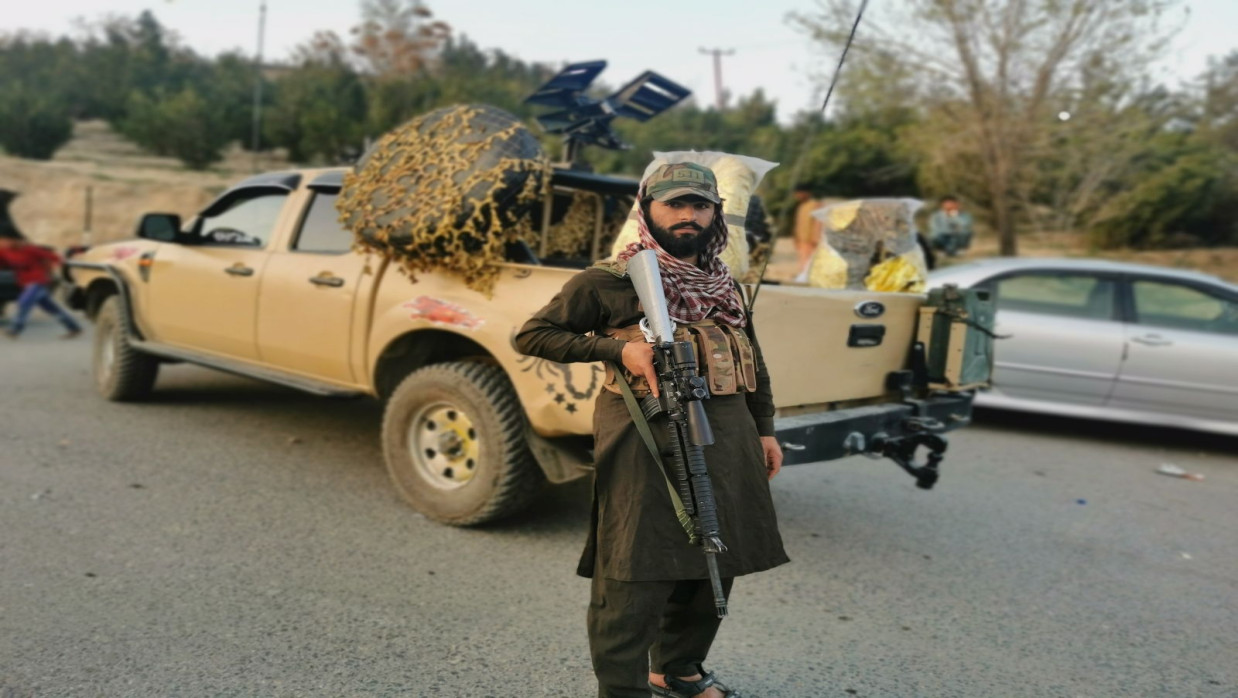
Indian foreign policy towards the Taliban has undergone a remarkable and glaring transformation over the past two decades. Once resolutely opposed to all factions of the Taliban, New Delhi has shifted gears dramatically, now engaging with the very same group it once denounced as a terrorist organization. The catalyst for this diplomatic reversal came in November 2025, when Afghan Industry & Commerce Minister Alhaj Nooruddin Azizi himself a former member of the Hizb-e-Islami faction, a Mujahideen group active during the 1980s Soviet war visited India. Azizi's visit, alongside the political and economic channels that India is now opening to the Taliban.
This diplomatic turnaround is particularly striking when one considers the historical context. For nearly two decades, India maintained an unwavering doctrine that treated all Taliban factions as a monolithic, terrorist entity. Now, suddenly, the same Taliban figures once deemed a threat to global peace and stability are being embraced as strategic allies. This policy shift raises several questions about India’s foreign policy consistency and its evolving stance on terrorism, regional security, and international engagement.
For nearly 20 years, India’s political and security establishment adhered to a rigid, uncompromising stance against the Taliban. From the time of Pranab Mukherjee’s tenure as Foreign Minister in 2007, India consistently refused to distinguish between the “good” and “bad” Taliban. Mukherjee’s assertion that "I don’t distinguish ‘good’ and bad Taliban; they have only one ideology: violence" exemplified India’s approach. This policy rejected the notion that there were factions within the Taliban that could be engaged diplomatically or politically.
India’s National Security Establishment, throughout the years, held that the Taliban, particularly those factions backed by Pakistan, were a direct threat to regional stability. The idea of “Afghan-led peace talks” involving the Taliban was opposed outright by New Delhi, as were any external engagements that sought to legitimize the Taliban regime. For instance, during Narendra Modi’s speech in Dubai in 2015, he famously said, "Good Taliban, Bad Taliban… this won’t work. Decide: Are you with terrorism or humanity?" India’s position was clear: the Taliban, irrespective of faction, was a violent and destabilizing force.
India’s foreign policy was thus grounded in the rejection of the Taliban as a legitimate political actor, labeling their regime as both fundamentalist and illegitimate. India's condemnation extended to other countries that sought engagement with the Taliban, as India saw such actions as tacit endorsement of terrorism and extremism.
Fast-forward to November 2025, and the situation has shifted dramatically. The visit of Afghan Minister Azizi who hails from Panjshir, a region that has been historically hostile to both the Soviets and the Taliban signals a sharp departure from India’s previously held doctrine. Azizi’s visit, which has been portrayed by India as a strategic necessity, has opened up direct political and economic channels to the Taliban-controlled Afghan system.
This engagement, coming at a time when tensions between Pakistan and Afghanistan are rising, has raised eyebrows. India, which had once rejected any form of engagement with the Taliban, now finds itself working with Taliban-affiliated officials. The justification presented by India, both domestically and internationally, focuses on regional stability, economic pragmatism, and strategic necessity. The stark contradiction, however, cannot be ignored: India has spent the last two decades condemning the Taliban as a terrorist group, and now, it is choosing to engage with the very same actors.
India has created its own version of the “Good Taliban” in the same way that it once criticized the international community for doing. In doing so, India is turning its historical red lines into a matter of convenience, adapting its principles to suit its strategic needs in the region.
India’s hypocrisy is evident in its abrupt shift in policy and rhetoric. Until recently, India had been vocal in its condemnation of any differentiation between Taliban factions. New Delhi consistently insisted that there was no such thing as a “Good Taliban.” The media and diplomatic discourse underlined that the Taliban were anti-democracy, anti-women, and responsible for widespread human rights violations. The Indian government had weaponized the Taliban narrative to accuse Pakistan of supporting terrorism, particularly in the context of Kashmir.
Now, however, India is actively differentiating between the factions of the Taliban, engaging with those it deems useful for its own strategic objectives. India’s engagement with Azizi and the broader Taliban leadership highlights a striking departure from its earlier stance. The narrative that once cast the Taliban as a brutal regime now contends that engagement with the Taliban is necessary for economic and political stability in the region.
India has effectively sanitized the Taliban's image, minimizing their record of human rights violations and extremist policies in favor of portraying them as “necessary actors” in the region. This marks a significant about-face from India’s earlier stance, which condemned the Taliban’s involvement in terrorism and oppression. India is now willing to overlook these issues to secure trade routes, economic access, and political influence.
Since Azizi’s visit, India’s media ecosystem has aggressively pushed a narrative that frames the engagement with the Taliban as pragmatic and necessary. According to this narrative, the Taliban are now seen as key players in regional stability, and India is presented as the stabilizing force in South Asia. This media campaign seeks to obscure the fundamental contradiction in India’s policies and justify its newfound willingness to engage with an authoritarian and extremist regime.
By positioning itself as a “regional stabilizer,” India aims to reframe the conversation surrounding its relationship with the Taliban. However, this rebranding of the Taliban as acceptable actors does not sit comfortably with India’s previous moralizing posture, which had portrayed the Taliban as a pariah regime responsible for global instability. The attempt to rewrite India’s own principles in favour of convenience is a stark reflection of the underlying geopolitical dynamics, where strategic interests have superseded the values that India once championed.
India’s moralizing stance, which had once positioned it as the champion of human rights and democracy, now seems opportunistic and strategically motivated. By engaging with the Taliban, India has undermined its credibility as a proponent of democratic values in the region.
This about-face exposes the hypocrisy in India’s foreign policy and its willingness to abandon its moral posturing when it suits its strategic interests. India’s stance on the Taliban, once a tool to attack Pakistan and criticize global engagement with extremist regimes, has now been turned into a strategic convenience. The consequences of this shift, both for India’s credibility and for regional stability, are yet to fully unfold. What is clear, however, is that India’s foreign policy is no longer based on unwavering principles but is instead shaped by the dictates of convenience and opportunism.


0 Comments
LEAVE A COMMENT
Your email address will not be published